Showing posts with label malt. Show all posts

Saturday, 10 September 2016

a morning with maltsters, part one


The Orkney Science Festival is held annually. It's always a great week of varied and interesting events, talks, demonstrations and fun. This year there was a Malt and Malting seminar with a special tour of the Maltings at the Highland Park Distillery, Kirkwall. There were only a dozen places available and we were lucky to get tickets. We spent a fascinating morning with malting, brewing and distilling experts. It was all about the malt.

Making the malt for brewing and distilling is exactly the same process. The difference in processing techniques happens after the mash tun. A brewer takes the sweet liquid from the mash tun, calls it "wort" and adds hops or herbs, then ferments it into beer or ale. The distiller takes the sweet liquid, calls it "the wash" ferments it into alcohol and then distils it. The wort and the wash are two names for the same thing, the sweet liquid that is obtained from the mash tun. Every brewer who makes ale or beer from the grain knows what wort is because they work with it. People who have never made an ale or beer from the grain are perhaps a bit confused about what it is.
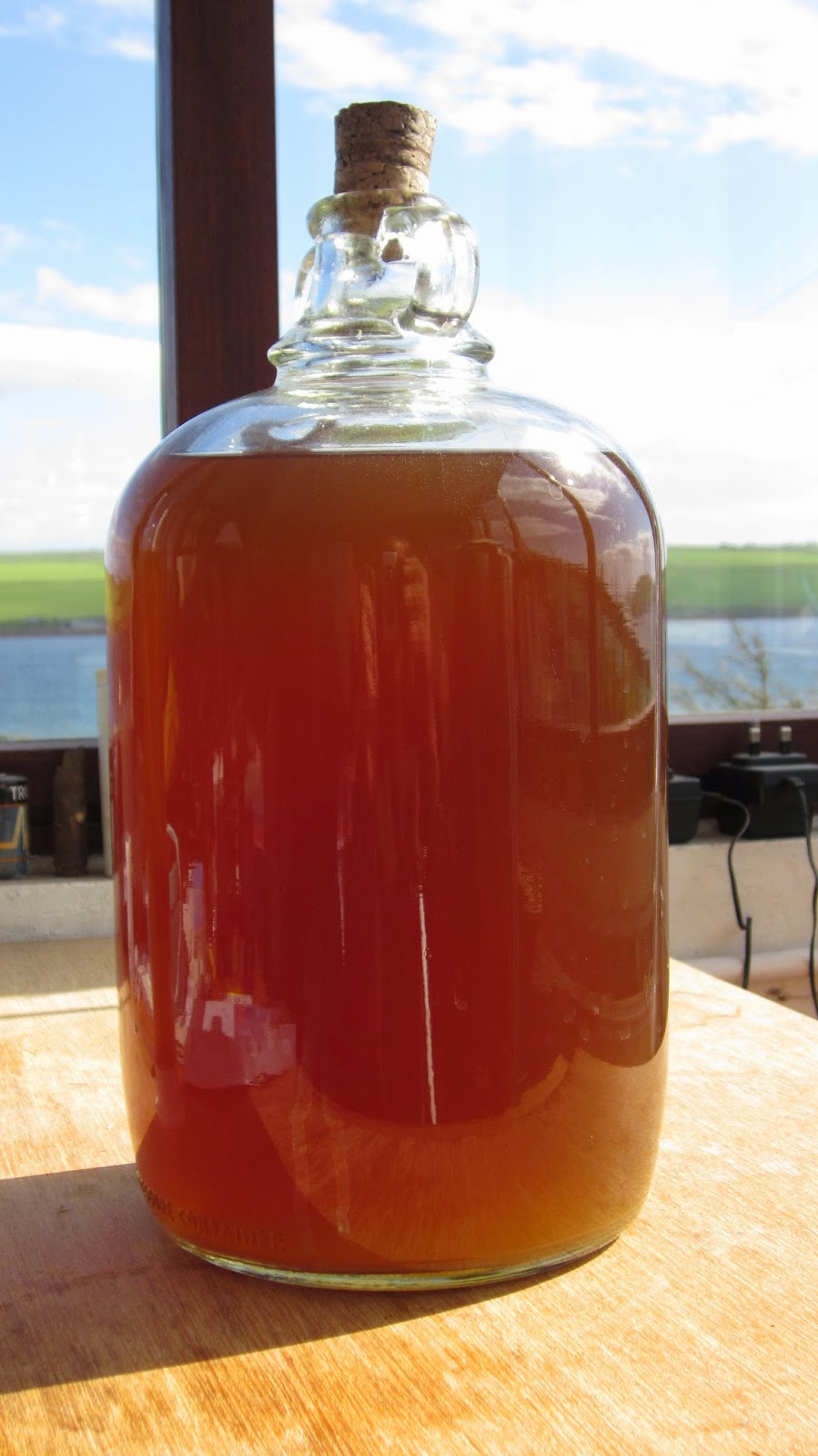
wort or wash?
Depends if you are a brewer or distiller.
source here
Dr Tim Dolan gave the first talk of the morning, explaining the fundamental aspects of what malt is, the biochemistry of malt, how it is made and a little of the history and development of the industry. His career in the malting and distilling industry goes back 40 years and he now teaches the subject. The other speakers were Marie Stanton, Distillery Manager of the Highland Park. She shared her knowledge of floor malting, then led us on a wonderful tour around the Maltings. The third speaker was Eric Walker, recently retired, a man with a distinguished background in all aspects of the malting, brewing and distilling industries. He talked to us about the prehistory and history of making malt and explained some technical details. They were quite a team and between them they had a huge amount of knowledge and experience of making malt.

"Malting is a process utilised by the Ancients to produce palatable alcoholic beverages: ale and beer"  (Eric Walker)

In previous years there have been talks about brewing and distillation, usually organised by the Institute of Brewing and Distilling. Tim told us that he thought it was about time there was a Science Festival event about malt, the Cinderella subject, because malt is the crucial ingredient for ale, beer and whisky. What is malt? It is grain that has been germinated under controlled conditions, then dried carefully in a kiln. Making malt has been a skill, an art and a craft for a very long time. Over the years I have given a few talks at the Science Festival. I was pleased that Tim remembered me and had been to my presentations on malting in prehistory, neolithic ale, grain barns and my most recent "Where were the Viking Brew Houses?" a couple of years ago.

The advent of the combine harvester in the 1940s transformed the grain harvest. The ancient and traditional way of harvesting grain by hand was extremely hard work, it was a time when the whole community worked together to bring the harvest home. On Orkney, where I live, grain was harvested by hand and stacked in stooks in the field until as recently as the 1950s. In case you don't know what a stook is, I looked online and found this painting by British artist Heywood Hardy (1843-1933). Painted in 1872, it depicts a typical scene of the time. I like the detail of the stook and you can see how they were made. The effort and hard work involved in making them can only be imagined.

 Corn Stooks by Bray Church by Heywood Hardy (1872) see here

This oil painting was done just a few years before Henry Stopes published his book about Malt and Malting, an Historical Scientific and Practical Treatise in 1885. It is now available to read online. Oxford University took the trouble to scan it in, many thanks to them for that. I first read it when I borrowed a copy from a brewing scientist when I began my research. It's such an important book and it is an excellent snapshot of the malting industry in the late 19th Century. Henry Stopes mentions the work of Louis Pasteur, who had recently published his work on Germ Theory which was to make such a huge impact on the brewing industry.

But I digress. Let's get back to the talk about malting.

Tim explained the biochemical processes of germination, with the embryo being the living part of the grain and the endosperm being the starchy food store. Malt, he said, is a living thing. It must be handled and processed carefully and correctly by the maltster. This was a point that was made several times throughout the morning. First, the harvested grain is steeped in water. It's crucial to allow air rests. The steep tank is drained of water at regular intervals. If the grain is left in water without air rests it will drown and this means that it will not begin to germinate.

Thanks to scientific research into grain germination physiology and biochemistry which began in the 1960s, we now know that when grain is  sufficiently wet and aerated, gibberellic acid is released from the embryo and the aleurone cells. This stimulates enzymes which convert the grain starch into sugars, the food source for the plant.

All grains can be malted. Barley is considered to be the best grain for malting but wheat, rye and oats can also be malted. Here's a useful diagram of the internal structure of a barley grain in the early stages of germination.

ancient malt and ale : malting and mashing

The craft and skill of the maltster lies in getting the grain to start growing, but not too much. This is known as modification and there is some excellent and detailed information about what malt is and how malt is made on the Maltster's Association of Great Britain web site.

The Highland Park has three traditional malting floors where the grain is spread out after steeping. Raking and turning the malt is a crucial part of the process. We were told that this helps to maintain an even temperature and it also prevents rootlets from tangling. On the malting floor the barleya malted barley grain more details here begins to germinate. When the maltster sees the root and shoot being about four fifths the length of the grain, it is sufficiently modified and ready to be carefully and gently dried in the kiln.  a malted barley grain more details here

Modern techniques of making malt involve the use of Saladin boxes and drums. There are also huge germinating kilning vessels which can make three to five hundred tons of malt at a time. All year round. The quality of the malt can be controlled because it is easy to maintain precise temperatures and levels of moisture. The third speaker of the day, Eric Walker, gave an interesting talk about the industrialisation of malting and I'll write that up later. In the meantime, here's something I wrote about where the malting floors have gone.

Barley is self pollinating. Dr Tim Dolan emphasised this several times, but I wondered why was he making this point so many times? It was because it's so significant in understanding barley breeding. There were not so many varieties of barley in the past as there are today. The science and practice of cross breeding barley began at Warminster Maltings in 1904. This was news to me. Rather than tell you the story myself, here is the account from the Wiltshire Community History web page:

"The most famous name in local malting was that of Dr. Ernest Sloper Beaven, and his reputation is international. He was born in 1857 to a Heytesbury farming family, who moved to Boreham Farm at Warminster in 1868. Beaven said that he began to observe barley closely from 1878 and he became associated with Frank Morgan, Warminster’s leading Maltster. Beaven’s first experiments had been with onions and potatoes but from 1900 he was growing, selecting and crossing barley from seven initial different ‘races’. In 1904 he acquired fields on the Boreham Road for a nursery and in 1914 he launched ‘Beaven’s Plumage Archer’ strain of barley and continued with seed trials for the next 27 years. Beaven could claim that 85% of the total U.K. acreage of barley was grown from the progeny of just four plants, three of which had been selected in the nursery at Warminster between 1900 and 1904."

In the last one hundred years or so, much has been learned about barley and the biochemistry of germination, however, there is still much to be learned. Although some of the mystery and magic of malting has been studied and explained by scientists, some things about barley are little understood.

One of these is latent dormancy. Someone in the group asked about this and the answer was that it is still a bit of a mystery. There is a practical tradition of leaving the grain for a while between harvest and steep, because it will not germinate. This could be about variety, or it could be seasonal. The best thing I can suggest, if you are interested in finding out more about latent dormancy, is to search for the academic and scholarly papers on it. There are quite a few of them out there.

The next talk was about the skills, techniques and practicalities of floor malting and the turn of Marie Stanton, Distillery Manager, an experienced maltster at a number of distilleries. And then there was the tour of the Maltings.

There is only so much detail that one blog post can take, so I shall leave you with a picture of the malting floor at the Highland Park Distillery, Kirkwall, Orkney. It is taken from Wikimedia Commons. I forgot to take my camera to the seminar, but I did take plenty of notes, so I hope this will suffice while I get down to writing part two, while it is fresh in my memory.

File:Highland park malting floor.jpg

https://commons.wikimedia.org/wiki/File:Highland_park_malting_floor.jpg


Thursday, 16 June 2016

lauter and sparge

When the brewer has mashed in, he or she needs to separate the sweet wort from the grain husks. This is achieved by lautering and sparging.

It's a crucial part of the beer making process.

The previous blog was about the ancient magic of the mash tun, where the brewer transforms grain starch into sweetness. The saccharification, a process that is driven by the starch converting enzymes in the partially germinated grain, the malt.

At the end of the mash the contents of a mash tun are sweet, with the grain husks mixed up with the liquid. Although the brewer calls it the mash, it has not been physically mashed up, as you would mash potatoes for example. It's more like an infusion, when you put the leaf tea into the pot with hot water, then allow it to mash for several minutes.

In the brewer's mash tun you could be fooled into thinking that the grains are still whole - they look as if they are. But the starchy endosperm is gone, what looks like a whole grain is just the husk with very little left inside.

the contents of our mash tun: pale malt, roasted barley & wort

Lauter and sparge are wonderful words that mean nothing if you have never done it. They are a crucial part of the transformation of grain into ale. Many beer recipes don't use these words. You are just told to 'collect six gallons of wort'. The writer of the recipe assumes that you know how to do this.

Lautering is when you collect some of the wort and then, gently and carefully pour it, or trickle it, through the mash. Keep repeating until the wort runs clear, then collect the clear, strong first runnings. After that, you can begin to sparge. This involves running hot water through the mash to obtain several further gallons of weaker wort. How much wort you collect depends upon how much mash there is in the mash tun and what strength you want the resulting ale or beer to be.

For further details, see the brewer's post about wort which gives specific gravities and more information about wort.

There is a detailed explanation of some of the aspects of lautering and sparging by the brewer and writer John Palmer, from his excellent online book 'How to Brew'. It is,of course, the modern home brewer's perspective and one of the most comprehensive descriptions of how to lauter and sparge that I know of. His next chapter, about the importance of crushing the malt is also well worth reading.

The malt that goes into the mash tun should be lightly bruised, as they say in Orkney. Just enough to break the husk but not enough so that it has the consistency of flour. Too floury and you will have a stuck mash. This means that the hot water will not trickle through the mash and it's almost impossible to obtain the wort. No brewer wants that.

The interesting thing, for me, is how lautering and sparging was done in the past.

Today, a modern all grain home brewer can buy a mashing and sparging bag which sits neatly inside the mash tun. This is how we and many other home brewers mash, lauter and sparge.

First, the mash bag is put securely into the mash tun which has a tap near the bottom. Tie the string nice and tight. Add the required quantity of crushed malt and hot water, leave it for about an hour to mash, maintaining the temperature at around 67 degrees Centigrade. When the mash is done, all you need to do is collect some of the wort in a jug and pour it carefully through the mash. Keep doing this until the wort runs clear. This is lautering. Inside the mash tun, the bed of grain has settled and consolidated, creating a natural filter of grain husks that is held in place by the mesh at the bottom of the mashing and sparging bag.

Then you run off and collect the first runnings; this is very strong wort, very sweet. You can collect further wort by sparging. The more wort you collect the weaker it becomes. Hot water is trickled through the mash and several gallons of wort can be collected in this way. It's not absolutely essential to lauter. It's possible to go straight to sparging. The wort will be cloudy with lots of particles of grain in suspension. Leave it for a while, they will settle at the bottom of the container.


Lautering: we use a jug to collect the wort


Sparging: first runnings, the clear wort is collected

In the days before mashing and sparging bags, how did people collect the wort?

There would be a small hole in the mash tun, either at the bottom of the tub or at the side, very close to the bottom. They used a bed of straw, juniper branches or other fibrous material at the bottom of the mash tun, this would give the grain husks a place to settle and help the grain husks to form the natural filter. The fibrous material would be held down with stones, so that it does not float about in the mash. This traditional method of mashing (they call it masking) and drawing off the wort is described in the malt making and brewing chapter of Mary Scott's book (1967) Island Saga: the story of North Ronaldsay. It was written by her brother William, presumably because he was one of the island's brewers:

" The vat had been prepared beforehand by taking a good handful out from an oat sheaf and spreading it across the tap at the bottom of the vat, and then covering the straw with a stone shaped somewhat like a half moon - the straight side resting on the bottom of the vat and the rounded part fitting snugly to the round of it. The stone would be tilted to an angle of approximately 45 degrees. The stone was to keep the straw in place. 

Masking is then proceeded with using alternative pailfuls of water from the boiler and the first potful that had cooled off somewhat. If boiling water were put on the malt it was liable to stick - that is, it might all set in a gloggy mass, and no liquid could be drawn off. In the breweries I suppose they will put the water on at a certain temperature; there was no thermometer used here, just guess work."

After the mash, or masking, the wort must be drawn off. This is how it was done:

"The vat was allowed to stand for two hours. The boiler was by this time going full swing again ... when the two hours were up it was time to set about drawing off the wort. 

You put a pail under the tap, pulled out the plug, and, if everything was right, the liquid would run off in a beautiful amber stream. It was a great relief when you saw it was running off clear. The first pailful to be drawn off  might have some settlings or groot in it - that is some of the dust or fine stuff out of the malt - so you would tip that pailful back into the vat, for the groot would take a long time to seep to the bottom of the vat again."

I first came across this description of traditional mashing, lautering and sparging techniques when I was doing research in the Orkney Library over ten years ago. At the time I didn't imagine that there might be corroboration or that there are brewers still using these techniques today. Not in Orkney, but in Norway, Lithuania and Latvia. The tradition of making farmhouse ale continues in these, and other, countries and it's possible to meet the brewers and see how they make malt and ale, thanks to this blog by Lars Marius Garshol. He has been visiting them, talking to them and writing about them. It is wonderful research.

Straw, juniper branches and even raspberry canes can be used to help create the filter bed in the mash tun. In this blog, Brewing in Morgedal, Lars tells the story of how he found farmhouse brewing alive and thriving in eastern Norway. The brewers, Halvor Bjåland and Terje Haugen and their apprentice, Bjørn, make ale in the way of their ancestors. I am sure that these methods and traditions go back to medieval times, to the Viking era even. In this blog you can see photographs of the brewing process, including the stones at the bottom of the mash tun holding down the juniper branches and you can see the wort being collected by sparging.

In another of Lars' blogs he writes about farmhouse brewing in Denmark. Here the tradition has almost died out, but not quite. There are some great descriptions and images of lautering and sparging, using hot water and large wooden tubs as mash tuns. I recommend reading through his blogs. It might take you a while, there is a tremendous amount of detail. It's valuable information and an important record of local traditional malting and brewing.

Archaeologists and anthropologists, as well as maltsters and brewers, would benefit from reading, at the very least, some of these blogs. It tells a story that relates to the history and prehistory of making malt and ale in Northern Europe.

Excavations at Must Farm in the Fens of England are drawing to a close. Here, archaeologists from the Cambridge University Archaeological Unit are slowly uncovering a very well preserved Bronze Age village. It seems that there was a fire, the houses and contents burned and have been preserved in wet anaerobic conditions. Archaeologists are finding the remains of wooden buckets, pots with food contents intact and worked wood.

One of the most intriguing and exciting discoveries, for me, was the pot that contained both carbonised grain and some fibrous material. I wanted to include a link to the photograph here, however it's on their Facebook page and it does not seem possible to do that ... a few days later and now it seems to work see here

Why should a fairly large Bronze Age pot contain these two organic substances?

Could it be that the pot was being used in part of the ale making process? Not being involved in these excavations myself, all I can do is speculate. At this moment, I can't think of another reason why the pot contained fibrous material and grain, but there may well be another explanation. Please let me know what you think this might be.

That's all for now, in the next post I shall be looking at how to sparge when you are mashing in a large trough in the ground.

Saturday, 21 May 2016

saccharification or what happens in the mash tun

I'm picking up the blog again, after taking quite a long time off. To my surprise, folk have been reading our past posts, so thank you very much indeed for that.

One of the reasons that I started this blog was to try and deal with some peculiar misunderstandings about how beer and ale are made. In the archaeological and anthropological literature you can read all sorts of odd things about brewing beer in prehistory and how it was invented. Malt is rarely mentioned.

I have read that "... beer was invented when some barley got wet in a bucket and then it fermented" or, and I read this very recently, that "... beer is one of the most important of human inventions, as it is likely to be one of the key reasons that farming was started, in order to grow hops for brewing ..."

You need malt, not hops, to provide the fermentable sugars to make beer and ale. This blog is about what happens to the malt in the mash tun - the transformation from grain starch into sugars.

Most people don't have the opportunity to see or to experience this magical process. We are fortunate, we have our own mash tun in the garage and we regularly make some very tasty ale and beer, using crushed malt that we buy directly from the maltster. We can go online and buy the malt. It's delivered to the door. We buy 25 kg at a time and it's always very fresh and good malt.

Our mash tun can take about sixteen or seventeen pounds of malt and we usually make about ten or eleven gallons of beer. That lasts us a while, so we don't have to make it too often.

We can choose how strong or weak we want the beer to be. We do this by deciding how much malt to use and how much water to sparge with. We can add hops or herbs, whatever we decide to do. In the past we've made some very good ancient ales in our mash tun - meadowsweet is the usual herb of choice because we live on Orkney and it grows profusely here. So we can go and pick it in July/August, dry it, store it and use it whenever we want to. We'd like to try other herbs. I'm just starting to grow a brewers herb garden, so far I have yarrow, heather, meadowsweet and angelica. Mostly we use hops.

What happens in the mash tun? Saccharification. The creation of sweetness that can be fermented. Grain starch is converted into malt sugar in the mash tun by enzymes in the malt.

Where do the enzymes come from? Basically, when any grain begins to germinate, starch converting enzymes are activated in the aleurone layer of cells, just beneath the grain husk. These enzymes convert the starch of the endosperm into sugars, the food source for the growing plant. The maltster's job is to begin germination, then stop it and dry it, very gently, at just the right moment. The craft of the maltster goes back to the dawn of grain agriculture. The first alchemy. 

Saccharification is an essential part of the brewing process. The brewer takes the lightly crushed malted grain and adds it to hot, but not boiling, water in the mash tun. Enzymes in the partially germinated grain re-activate in the mash tun and convert the grain starch into malt sugar. The process takes about an hour.

Here's our mash tun:
The strike: the moment when crushed malt is added to hot water
The aroma of a mash is distinctive - it's a strong, sweet, delicious smell. Recently we went to a meeting about recreating old beer styles at Fuller's Brewery in Chiswick, London. As we approached the brewery, even though we could not see it, we knew we were going in the right direction because we could smell the first mash of the day. Exactly the same smell that we get from our little mash tun in the garage.

The process is the same, no matter what the size or the shape of the mash tun.

A few years ago, I went to the Eindhoven Open Air Archaeology Museum and used an earthenware bowl to demonstrate the saccharification - how to gently heat crushed malt and water over the hot ashes of a fire and make sugars. In the photograph below, you can see the white crushed malt in the bowls by the hearth. For me, that's a little over crushed, but it still worked just fine for the saccharification. In little over one hour, the starchy crushed malt had become a mash of delicious malt sugars, as you can see in the large earthenware bowl in the hearth.

Saccharification in a hearth at Eindhoven Open Air Museum.
The beautiful bowl was made by Flor Buchuk Gill, she was the potter at the Open Air Museum at the time.
The equipment is very simple. The technique is not complicated. There is no need to understand the complex biochemistry that goes on in the mash tun. All you have to do is get the details right and you will get a result. Heat some crushed malt with abundant water at temperatures not exceeding 67 degrees Centigrade and the enzymes will re-activate. If the temperature is too high, then the enzymes are destroyed. 

The next stage is to separate the sweet liquid (the wort) from the mash. This is done by sparging, washing hot water through the mash and collecting the wort. I shall save that for the next blog.

Some people think that the beer brewer's mash tun is something like the wine maker's tub. They are not at all the same thing. They are completely different processes. Perhaps the word 'mash' is confusing.

Making wine, as most people know, involves treading or mashing grapes into a pulp, then syphoning off the juice and fermenting it. When making ale or beer, you have to make the sugars first, and this happens in the mash tun.

Some people make 'country wines'. Among the most popular are dandelion, parsnip, nettle and elderflower. Each wine making event involves gathering the ingredients and then buying a few kilos of sugar. Dandelion flowers, for example, are mixed with hot water and a kilo or two of sugar. Here's a typical country wine recipe. There are loads of recipes for these so called country wines. They are all pretty much the same. They all involve several bags of sugar.

As has been explained in an earlier blog, flowers, nettles or parsnips do not provide any fermentable sugars, just flavour.

I can understand why some people might be confused if they have never seen inside a mash tun or if they have not made an ale or a beer using malted grain. For most people today, seeing what happens inside a mash tun is not part of their everyday life and experience.

However, a few hundred years ago, making the malt and brewing ale and beer at home was a common activity. It happened on farms and in large households. It was a household task. In the past, when making the malt and the ale was a regular event, it would have been something that people were familiar with.

Today it seems to be a mystery to many.

Wednesday, 4 February 2015

first farmers, first maltsters?

Could the first farmers in the fertile crescent have been the first people to make malt? Who were the first maltsters? After I had completed my M. Phil in 1999, I used to go round archaeology conferences and meetings (as an independent researcher, not affiliated to any University or College) and I gave papers and presentations that aimed to promote some discussion of these questions among archaeologists and anthropologists.

This is the first of a number of blogs based on these talks, presentations and papers from between 2000 and 2010.

I'm presenting here a few thoughts based upon a simple question - what were those first farmers doing with grain that they were so keen to grow? Of course, grain can be ground into flour to make bread, or perhaps, in the neolithic, some kind of gruel or porridge was made. But there is something else that can be done with grain, which not everyone is familiar with. It can also be malted.

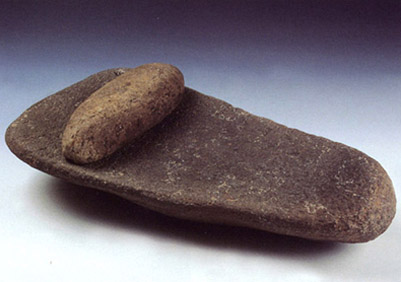
quern, suitable for crushing grain and malt here
Malting is the process of deliberate and careful partial germination transforms the properties of the grain. Within the grain, at the beginning of germination, enzymes are activated that can convert starches into sugars. Malted grain is friable, easier to crush and is very different to unmalted grain.

It seems probable that grain, because of its' special qualities when malted, was a status crop rather than a staple crop in the neolithic.  

Every all-grain beer brewer knows the importance of malt. It's the fundamental ingredient. When malt is crushed a little, mixed with water and heated in a mash tun to the correct temperature, it becomes sweet. The brewer then separates the liquid from the grain by lautering and sparging, and collects the liquid run off which is known today as wort. This is boiled with herbs or hops, then fermented into ale or beer.

the first farmers
The transition from fishing, hunting and gathering to a settled life of farming began around ten to twelve thousand years ago in the Near East and Levant. Wild grain grew abundantly, in natural fields, in the area now known as the Fertile Crescent (Harlan, 1967). Grain, lentils and chickpeas were gathered and processed by the nomadic population. As time went on, people began to plant and cultivate these crops deliberately. They processed them in different ways. Villages became established, such as Beidha, and plant domestication began as well as the domestication of goats. Hunter-gatherers became farmers. This was the neolithic revolution, or so it was named by Vere Gordon Childe in the 1930s.

The Spread of Agriculture in the Middle East
fertile crescent, image copyright:Oriental Institute of the University of Chicago

The new lifestyle spread rapidly across Europe, reaching the British Isles around five or six thousand years ago. This ‘wave of agriculture’ and the debate surrounding it have been discussed at great length in the literature (eg Maisels 1993, Harris 1996, Smith 1998, Zohary & Hopf 2001, Bellwood 2005). A great deal has been written and it is a complex issue. In 1952 Gordon Childe proposed that climate change was a major factor. Other explanations for the origins of agriculture include population pressure (Binford 1968, Flannery 1973), changes in socio-economic complexity, inequalities and drought. Theories abound, too many to discuss here. In 1990 Brian Hayden noted that

“few topics have engendered as much discussion and resulted in so few satisfying answers as the attempt to explain why hunter-gatherers began to cultivate plants and raise animals.” (Hayden 1990, 31) 

Archaeobotanical analysis of pollen, seeds, flora and fauna within the archaeological record seems to reveal that, ten to twelve thousand years ago, there were oak woods, pistachio trees and there was an abundance of wild life and game (Maisels 1993). Streams and rivers would have provided good fishing. It seems unlikely that the Natufian cultures of the epi-palaeolithic gathered wild grains to tide them over food shortages. They collected and processed them, and later domesticated them, because they wanted to make something. But what did they want to make?

the bread or beer debate
In 1953, Robert Braidwood from Oriental Institute of the University of Chicago initiated the ‘bread or beer’ debate, by organising a symposium "Did man once live by beer alone?". He was curious about the reason for the neolithic revolution, having been excavating at Jarmo, an early Neolithic village in the foothills of the Zagros Mountains of Iran, since the 1940s. He had organised a specialised multi disciplinary team with natural scientists, archaeobotanists, anthropologists and archaeologists (Braidwood et al, 1983). The excavation report Prehistoric Archaeology along the Zagros Flanks is a classic, if you like to read excavation reports, that is.

The symposium was published in the Journal of American Anthropology, number 55, in 1953 and it is now available to read online if you follow the next link. The specific question proposed by Professor Jonathan Sauer in Braidwood's Symposium was this:

… could the discovery that a mash of fermented grain yielded a palatable and nutritious beverage have acted as a greater stimulant toward the experimental selection and breeding of the cereals than the discovery of flour and bread making? One would assume that the utilisation of wild cereals (along with edible roots and berries) as a source of collected food would have been in existence for millennia before their domestication took place. Was the subsequent impetus to this domestication bread or beer?” (Braidwood 1953, 515)

Hans Helbaek considered that malting could perhaps have been the key to understanding early agriculture, even though he was aware that it was "a sore point in archaeological interpretation." It seems that it still is today. He discusses several aspects of malting on pages 517 & 518, for example, that a large vat may have been useful for part of the process. Germination may have been deliberate or accidental, he says, and context would be vital if germinated grain was to be found. Later on, he points out that germinated grain would have not survived in the ground. Carbonised grain might perhaps indicate a failed malting. It is clear from his argument that in the 1950s, there was some scientific understanding of the malting process. There were established techniques and processes that scientists had begun to understand.

Paul Manglesdorf pointed out that barley is “virtually useless” for bread making. He found it difficult to believe that “the foundations of Western Civilisation were laid by an ill fed people living in a perpetual state of partial intoxication” (page 520). He did not recognise germinated grain among the samples that he analysed from Jarmo, concluding that the earliest cereals were not used for brewing or baking but that they were used as ‘popped’ or ‘parched’ grains.

Linton noted the difficulty of making finely ground flour suitable for bread using a pestle and mortar or rubbing stones (page 524) and Oppenheim (page 525) suggested that gruel made from coarsely ground grits was the most likely product being made by the first farmers.

There was no consensus of opinion. After this auspicious start, the question of ‘bread or beer’ rested, debate appears to have died down and there was little further discussion. Presumably, it remained a controversial idea. The debate was resurrected in the late 1980s. In 1986, Solomon Katz and Mary Voigt published a paper in Expedition, volume 25/2 "Bread and Beer: the early use of cereals in the human diet" in which they presented a new paradigm: the biocultural development of cuisine. Their hypothesis included the idea that epi-palaeolithic hunter-gatherers had discovered that slightly sprouted grain tasted sweeter. I'd agree with their hypothesis. It would not be too difficult to discover this. The debate is not just about beer or bread, flour, porridge or gruel. It is also about making malt, malt sugars, the wort. I wrote my thesis, "Barley Malt and Ale in the Neolithic" about this, but I am not the first person to suggest the idea of maltsters in the epi-palaeolithic. Without malt there would be no wort and no ale or beer.

Grain processing was not necessarily a backbreaking, dreary chore of grinding the grain into a rough kind of flour to make unleavened bread.

The processes of malting and mashing magically transform inedible grain starch into delicious, sweet malt sugars. It could even be considered the first alchemy. The biblical phrase ‘land of milk and honey’ might refer to domesticated animals and the milk that they produced, as well as the production of liquid sugars from cereals, what brewers today call wort.

Malt and sweet barley mash are likely candidates for the things that the first farmers were interested in making. The accidental discovery of fermentation, whereby sugars are transformed into alcohol, followed closely behind. The spent grain that is left after sparging makes excellent animal fodder (Dineley, 2006). Spent grain is not alcoholic, it's just the slightly sweet barley husks and mash that is left after the malt sugars have been washed through.

Maltsters have known, for millennia, what they need to do with harvested grain in order to make sugars. Malting is an ancient skill, based upon techniques that, even today, have an element of magic, ritual and mystery. Making malt and malt sugars from the grain was one of the new technologies of the epi-palaeolithic. These grain processing techniques were discovered in the fertile crescent, these new skills crossed Europe, eventually arriving in the British Isles around five or six thousand years ago.  

neolithic farmers of the British Isles
What were the early neolithic farmers of the British Isles making with the grain that they grew? The transformation of grain into ale can be accurately described as both a ritual and a domestic activity and it seems to have been an important aspect of the neolithic cultural package. In the British Isles, harvested grain was being made into ale, an intoxicating beverage to be consumed, perhaps, at ceremonial sites. The making of the ale was as much of a ritual as its' consumption. 

further reading
My paper on the craft of the maltster was finally published, I put it on my Academia.edu page here

I wrote an article, based on the paper, for Brewer and Distiller International about the archaeological evidence for floor malting. It was published in the February issue, 2016: Who were the first maltsters? 

references

Bellwood P. 2005 First Farmers: The Origins of Agricultural Societies. Blackwell.

Binford L. 1968 Post Pleistocene Adaptations. In S. Binford and L. Binford (eds) New perspectives in Archaeology. Chicago.

Braidwood R. (1953) Did Man once live by bread alone? American Anthropologist 55, 515-526.

Braidwood R., Braidwood L., Howe B., Reed C. & Watson P. eds 1983 Prehistoric Archaeology across the Zagros Flanks. University of Chicago Oriental Institute Publications Vol 105, Chicago. here

Dineley M & Dineley G 2000 Neolithic ale: Barley as a source of malt sugars for fermentation. In Fairbairn A (ed) Plants in Neolithic Britain and beyond. Neolithic Studies Group Seminar Papers 5, 137-155, Oxbow Books. Paper presented at the Spring Meeting of the Neolithic Studies Group, Royal Academy, London, March, 1998.

Dineley M. 2006 The Use of Spent Grain as Cattle Feed in the Neolithic. In D. Serjeantson and D. Field (eds) Animals in the Neolithic of Britain and Europe, Neolithic Studies Group Seminar papers 7, Oxbow Books. Paper presented to the Spring Meeting of the Neolithic Studies Group, British Museum, 2004


Flannery K. 1974 The Origins of Agriculture. Annual Review of Anthropology, 2, 271-310.

Harlan J. R. 1967 A Wild Wheat Harvest in Turkey. Archaeology 20, 197-201.

Hayden B. 1990 Nimrods, Piscators, Pluckers and Planters: the emergence of food production. Journal of Anthropological Archaeology Vol 9, No 1, 31-69.

Harris D. R. 1996 The Origins and Spread of Agriculture and Pastoralism in Eurasia Routledge.

Katz S. & Voigt M. 1986 Bread and Beer: the early use of cereals in the human diet. Expedition Vol 25/2, 23-34 here

Maisels C. 1993 The Emergence of Civilisation. Routledge.


Smith B. 1998 The Emergence of Agriculture Scientific American Library, New York.

Zohary D. and Hopf M. 2001 Domestication of Plants in the Old World: the origin and spread of cultivated plants in West Asia, Europe and the Nile Valley. Clarendon Press, Oxford Science Publications.

Tuesday, 20 January 2015

thousands of grain impressions in a burnt plaster floor

Sometimes, a single sentence in an excavation report can be the beginning of research that sparks your curiosity and makes you ask questions. For me, it was a few words and a brief, enigmatic description that I read in an excavation report several years ago, in the late 1990s, when I began my research into ancient grain processing techniques and the neolithic revolution.

The site was Beidha, a small neolithic village in the Jordan Valley. Here, in the 7th Millennium BC, people began to settle down, grow grain and keep domestic animals - cows, pigs, sheep and goats. Although they were still hunting and gathering, they were beginning to process the crops they grew, which included cereals and lentils. The earliest agriculturalists. Today, when you search for the neolithic village of Beidha on the internet you will find lots of information about it. This is, to some extent, thanks to a project established in 2010, to protect and promote the site. Beidha is an ancient place, now open to the public. It is not far from Petra, in Jordan, and is part of the World Heritage Site. Definitely on my list of places to go.

The village appeared to have burned down, nobody knows how or why. Diana Kirkbride excavated the site in the 1950s and 1960s as part of a larger project to investigate the early agriculturalists of the Ancient Near East, organised by Robert Braidwood of the Oriental Institute of Chicago. In her report, she described the remains and the contents of one of the rectangular mud brick buildings in the village of Beidha. As well as a lime plaster floor, facilities and equipment suitable for grain agriculture and processing were found, specifically, hoes, sickles and quern stones. There were also large stone bowls and the remains of baskets that appear to have been waterproofed. The baskets had been lined with either bitumen or lime plaster.

She thought that the building may have burnt down, somehow leaving behind the evidence of the presence of grain on the floor, which she described as

 “... tens of thousands of grain impressions in the burnt plaster floor ...
Kirkbride, D. 1968 ‘Beidha: early neolithic village life south of the Dead Sea’ Antiquity XLII, 263

This is an intriguing description.

At the time that I was studying the Beidha excavation report, Graham and I had recently returned from Orkney where, at the Corrigall Farm Museum, we had our first lesson in the techniques and traditions of floor malting. The curator, Mr Harry Flett, had explained to us how the grain must be steeped in water, then turned out onto a smooth floor in a barn to begin germination. Malt is partially germinated grain. When growth is obvious, that is, when the root and shoot begin to show, the malt is carefully dried. Then it can be used for making wort and brewing ale.

I had been reading excavation reports from neolithic sites in the British Isles and northern Europe, where floor surfaces of buildings are rarely preserved. The floors of the long houses and other buildings of the Linearbandkeramik Culture were destroyed by modern deep ploughing. In the British Isles, I had only come across one description of a deliberately made beaten earth floor in a neolithic building. This was in one of the rectangular timber buildings at Lough Gur, in Ireland, a site excavated in the early 1950s by Sean O'Riordain and published in the Proceedings of the Royal Irish Academy.

It was great news to me that some floor surfaces of buildings from early neolithic cultures in the ancient Near East had been so well preserved. I began to read more excavation reports, to see what else had been discovered. Although I have yet to find another description of grain impressions in association with an early neolithic lime plaster floor from that part of the world, I did find plenty of detailed descriptions of floors made of beaten earth, stamped clay and lime plaster. Some of them were painted, and there was very little discussion of their function or purpose.

The function of floors is a subject not often discussed in excavation reports. Floors are important. They are a crucial facility for making malt. And, as many people know, it's the malting that interests me most. When was it discovered? How? Who were the first maltsters? How has malting technology changed and developed over the millennia? What is the archaeological evidence for malt? What role did malting play in the development of grain agriculture and the neolithic revolution? 

the neolithic revolution in the Fertile Crescent

The practice of grain cultivation, agriculture and grain processing as well as animal husbandry and the domestication of cattle, sheep, goats and pigs are defining features of the neolithic way of life.

Archaeologists agree on this definition, although there is much disagreement among the academics about why people "became farmers". It is one of the biggest questions in academic archaeology - why did people begin to cultivate and process wild grains in the Ancient Near East and Levant? What were they making with the grain? These were some of the questions that Braidwood's team of archaeologists, anthropologists and archaeobotanists and had set out to answer in the 1950s. Was it bread or beer?

The debate was reawakened in the 1980s by Solomon Katz and Mary Voigt, when they published their paper "Bread or Beer: the early use of cereals in the human diet". They suggested that making malt was an important part of the story. Hunting and gathering were, of course, still important ways of food acquisition. Wheat and barley grew as wild plants in this region. People began to gather and process them long before they started to cultivate them deliberately and settle down in villages to tend their crops and look after their sheep, goats, pigs and cattle.

Grain cultivation and processing began in the Near East and Levant around ten to twelve thousand years ago. This new way of life spread across Europe and reached the British Isles around six thousand years ago.

mud, clay & lime plaster floors in the neolithic of the Fertile Crescent

A common feature of many early neolithic sites in the Fertile Crescent are the deliberately made, smooth, level floors made of mud, clay or lime plaster. Mud or clay floors may have been relatively easy to make. The lime plaster floors, some of them apparently polished, would have involved a particularly complex technology in their manufacture, as well as considerable human effort and co-operation in their construction. The Natufians, these first agriculturalists of the Fertile Crescent, were using lime plaster for a wide range of uses - to make walls, floors, statues, as well as so called 'white ware' vessels, the precursor to pottery made from clay. The use of lime plaster in the early neolithic of the Fertile Crescent is a huge area for research and investigation.

To make lime plaster, large quantities of chalk had to be collected, then burnt at 850 degrees Centigrade to make the quicklime. Water would have been added to make the slaked lime which can then be used to make the floor. They must be laid and levelled very quickly and would have been similar in appearance to a modern concrete floor.

Polished lime plaster floors were found in a rectangular building at Gobekli Tepe, in the layers of this enigmatic settlement or temple dated to the seventh and eighth millennia BC, the era of the pre pottery neolithic. Gobekli Tepe was excavated by Professor Klaus Schmidt of the German Archaeological Institute over many seasons. The earliest levels have been dated to the epi-palaeolithic, around the tenth millennium BC. The team excavating this site interpreted it as having been a place of feasting and cult activity.

Another interesting and large rectangular building of the seventh millennium BC was excavated at the early neolithic village of Yiftahel, lower Galilee. Inside one of the buildings there was a lime plaster floor measuring 110 square metres and 3-6 cm thick. It would have required some seven tons of lime plaster. At the time of excavation, it was the largest rectangular mud brick building of the period in the Levant. Details of the lime plaster, what it was and how it was made can be found here in a paper published in the Journal Palaeorient in 1991.

File:Yiftahel structure with plastered floor1.jpg
remains of a lime plaster floor at Yiftahel: the production of lime plaster was on an industrial scale. see here


bins, pestles, mortars & earth floors at Ain Mallaha see here
At Ain Mallaha there are the remains of an early neolithic settlement. It is situated by Lake Huleh in the upper Jordan valley and was inhabited between 10,000 and 8200 BC. The floors within the buildings apparently gave the impression of having been deliberately made by accumulation and they appear to have been cleaned and repaired on a regular basis.

Stamped mud floors, some  surfaced with a smooth layer of clean clay, together with domed ovens and brick-lined roasting pits were features discovered during excavations at Ali Kosh, a neolithic settlement dated to c7200 BC and located on the southern plains of Khuzistan.

At Tell Ramad, a neolithic village in Syria, c7000–6000 BC, the remains of lime kilns were excavated and some of the floors were made of lime plaster. Again, lime plaster was being made on an almost industrial scale. During excavations, it was noted that some of the floors had upturned edges. What purpose was this innovation for? We may never know, but perhaps this refinement had the function of containing the malt. It would work to keep the germinating grain on the specially made lime plaster floor surface.

Floors of compacted clay were found in the buildings of the earliest and lowest occupation levels at Mureybit a settlement dated to between c8500 and c6900 BC and located beside the Euphrates river in northern Syria. Excavations also revealed a variety of grain agriculture and processing equipment including sickles, pestles, mortars, quern stones, fire pits and hearths.

A floor at the site of Ain Ghazal, an early neolithic settlement near Amman in Jordan, showed evidence of at least five different layers. It had been repeatedly repaired and well maintained. Re plastering and regular maintenance of these lime plaster floors was undertaken at a number of these early neolithic sites.

This is a feature of more recent malting floors. It is desirable to have a smooth and level surface for the efficient raking and turning of the grain as it germinates. Access to a reliable water source is another necessity for the malting and mashing of grain and at all of these sites that I have mentioned, there were nearby springs, streams or rivers.

Robert Braidwood of the Oriental Institute of Chicago initiated the "Bread or Beer" debate in 1953. Anthropologists and archaeologists discussed the roles of bread and beer in the Origin of Grain Agriculture debate. Only Hans Helbaek considered the role of malt, without which there would be no fermentable sugars and no beer.

The archaeological evidence, some of which is outlined above, indicates that it was neither bread nor beer, rather it seems that those first agriculturalists may have been making malt.

-------------------------------------------------------------

further reading:

I have a peer reviewed paper "The Craft of the Maltster" which is hopefully, due to be published soon. It was presented to the Food in Archaeology Conference in April 2010 at Exeter University. The book of the conference is, I am assured, on its' way into print. I have been given permission by the publishers to put the paper on my academia page. It can be downloaded here.


Sunday, 28 December 2014

What is Wort - a brewer's perspective

Hope you had a grand Yule and that you enjoyed the midwinter celebrations. We wish you all the best and A Happy New Year for 2015. There has been a bit of a lull on ancient ale blogging in the last couple of months, however we aim to correct this in the New Year and get back to writing again.

This one is about the Wort. Graham wrote it several months ago. It would make a good response to a short article "Beverage with heritage" that we read over the holidays. It was published in the Christmas and New Year Edition of New Scientist magazine, the 'one minute interview' with Patrick McGovern, director of the Biomolecular Archaeology Project for Cuisine, Fermented Beverages and Health at the University of Pennsylvania Museum. The question is asked: how does ancient booze compare with the modern stuff? The answer includes that "they wanted to be sure they had enough sugar to get the fermentation going, so they took whatever they had that contained sugar and mixed them together."
.
This idea of 'mushing loads of random sweet stuff together to make alcohol in prehistory' seems to be a commonly held view amongst non brewers. Merryn wrote a blog about desperately seeking sugars a few months ago, which tried to address the issue and dispel this myth.

Here is Graham's perspective, a beer brewer's explanation of what wort is:


Wort (pronounced wirt, not wart ) is the Juice of the Barley, well not quite, but almost very nearly so. It is a thin, runny, very sweet but very sticky liquid, straw coloured through to brown. It is effectively a thin synthetic honey substitute. Ale made from wort without preservatives or flavouring actually tastes a lot like mead made from honey.

Wort is the liquid sugars extracted from malt, that is to say, partially germinated cereal grains - barley, wheat of all varieties, oats and even millet, but not rice or maize. It is the primary source of fermentable sugars in making ale or beer and always has been. It is relatively easy to make a sugar solution of at least 10% from malt, and then to wash further sugars from the grain down to a realistic level of 1-2%,  "small beer" level and, of course, anywhere in-between. This compares very favourably with other natural sources of sugar like birch sap, which is between 0.5 and 2% sugar, which would only make a small beer. So adding birch sap to a brew would only dilute it, not strengthen it as some scholars claim.

Wort is made by "hijacking" some of the natural processes of the grain's life cycle.

As part of the growing process the germinating grain must convert it's energy store, starch, into sugars so that these can then be built into cellulose, the structural skeleton of the roots and shoots. This requires the liberation of the two amylitic enzymes, alpha and beta, which are little like ptyalase, the enzyme in saliva that converts starches into sugars.

If this growing (germination) process is halted when the most enzymes are present and little of the growing structure has started, it will be good malt.

So, to make wort you lightly crush the malt and mix it with hot water at about 65 degrees Centigrade. Keep it at this temperature for anywhere between half hour to about 2 hours, depending on your style. This is called mashing. Then you drain the clear liquid sugars from this mash by lautering, which is yet another story. This gives you a strong wort. Then you can wash further sugars from this mash, sparging, to get a weaker wort.

Brewers measure the potential sugar and therefore alcohol of a wort using "specific gravity". Water is 1000. David Line in his book "The Big Book of Brewing" explains this in great detail in chapter 18.

This was my "Bible" when when I first began brewing beer 32 years ago. David Line was a pioneer in his time, explaining what the processes were, how they were done and why. He also explains different methods of mashing using simple equipment and this has been very valuable to me in re-creating the ancient and traditional crafts of brewing ale.

So to recap: wort is a golden brown, very sweet, very sticky, runny liquid that contains most of the potential sugars from the malt. It can be made to a variety of strengths e.g. Arctic Ale.

To illustrate this I will give you the results of one of my recent brews.

The recipe is loosely based on David Line's "Brewing Beers Like Those You Buy" page 88, Gales HSB. One of my favourite beers, sadly no longer made. I found his book to be an excellent collection of recipes for good Ales and Beers that could be bought in the late 1970s and 80s. Large brewery's methods have changed since then and sadly many of the modern renditions taste nothing like they used to.

15lb 8oz of crushed pale malt, Munton's Perl Blend, were mashed with 5 gallons of water, inside a grain bag, in a Peco Electrim mash-tun. The strike temperature was 70 degrees Centigrade and as the grain was added slowly, the temperature fell to about 60 degrees Centigrade, and was then raised back to 65 degrees Centigrade.

The mash tun was unplugged and covered with a sleeping bag to maintain the mash temperature. It was left like this for 2 hours.

From this I lautered 3.5 gals of wort which was nearly 1080OG.

wort: the first running
measuring the first running


This was followed by sparging. The first gallon of wort was 1062OG, the second 1048OG, and these, together with the 3.5 gallons, were boiled in an Buffalo 40 litre boiler with 1lb of dark soft brown sugar, and 4oz of molasses (these are the in the recipe and I think the molasses adds a certain something to the flavour) for one and a half hours. This produced 5 gallons of 1084OG. This was fermented in two fermenters.


A further 5 gallons of wort were sparged of 1036OG, 1020OG, 1012OG, 1006OG (this was very pale and weak) and finally 1014OG left to drain overnight. This was again boiled on the old hops, because there is an awful lot of sugars left on the hops. This gave 5 gallons of 1024OG, which was added to the two fermenters. At the end of primary fermentation this gave 10 gallons of 1008 final gravity.

The average of 1084 and 1024 gives an OG of 1054 for the 10 gallons. According to David Line's graph (on page 147 Big Book of Brewing) gives a strength of 7.5-1.1= 6.4% alcohol.

This was quite a surprise to me, for I haven't been measuring the gravities for some time, and I never expected to get this much beer from 15.5lbs of malt.

A recent comparison with a commercial beer, Scapa Special 4.6%, suggests that my beer was no stronger, so maybe there is something wrong with my figures.

But it did make me think that I may be over-sparging my wort and that this could be contributing to the haze, and tannin like bitterness. So I have increased the malt to 17lb 8oz, and now I am getting a much nicer beer.

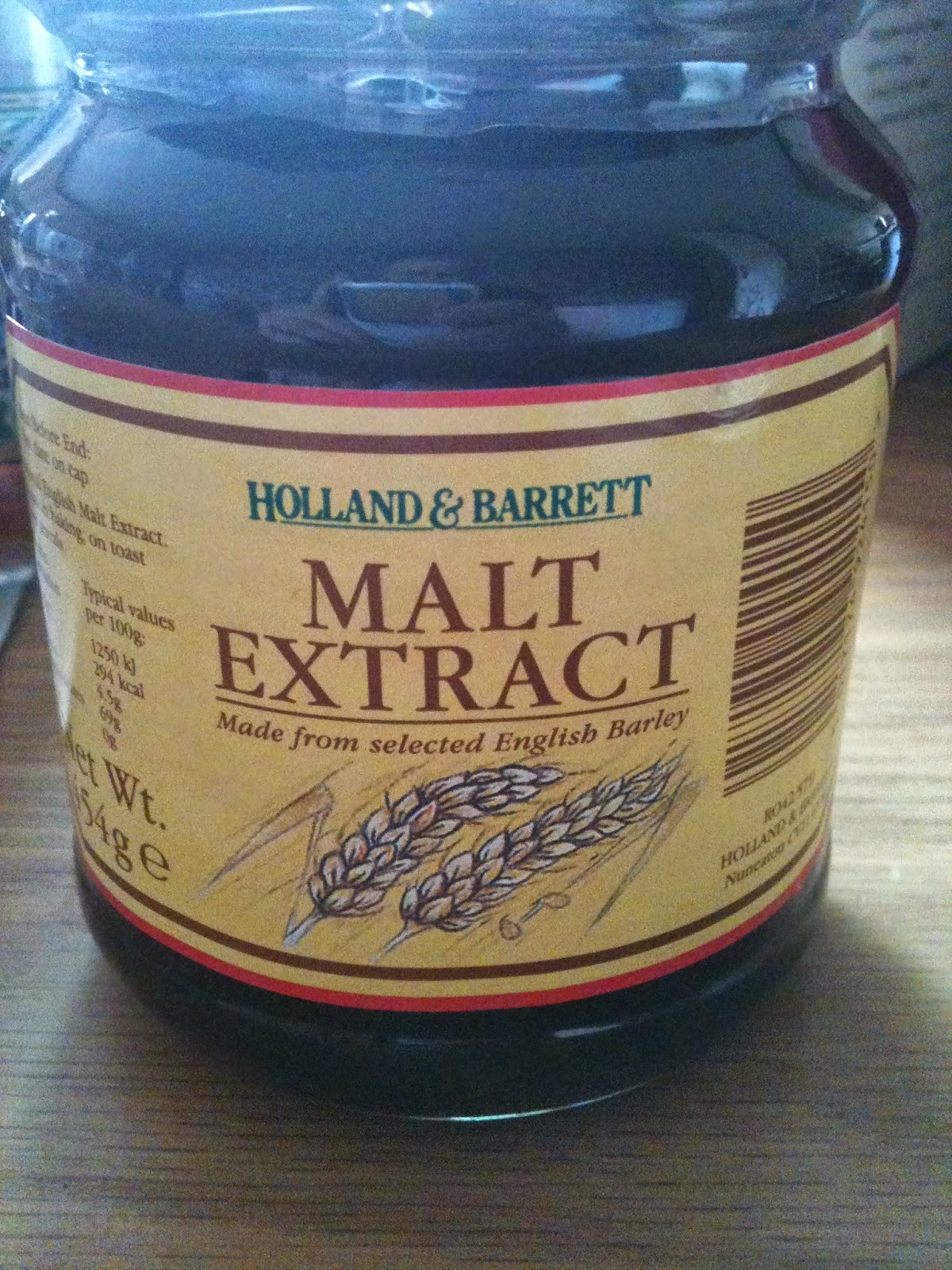
For those of you who will never meet malt, or a mash tun there is an alternative. Go to a whole food shop and buy one of these.


As best as I can estimate, this jar contains 11 fl oz of malt extract weighing 16oz, so this makes a density, specific gravity, or OG of 1450 or so. Dilute this with 4 imperial pints of water and you will have a re-hydrated wort of about OG1054.

Wort is a brown, runny, very sweet liquid that is extremely sticky when it dries. It could be described as a kind of dilute synthetic honey, that is very ancient in origin and is possibly the first process that was ever made with cereals. It could be that cereals were first cultivated, not for their staple qualities e.g. flour, gruel or bread, but instead for their status potential, sugars.

Many of the early settlements in the Fertile Crescent had special buildings with smooth floors, made of beaten earth, clay or lime plaster which are ideal as malting floors. All that is then required are containers within which to heat the crushed malt and water (the mash) to make a sweet wort. Merryn's M. Phil, entitled Barley Malt & Ale in the Neolithic (1999), looks at this, and the archaeological evidence for it, in some detail. One particular site, Beidha, was excavated in the late 1950s by Diana Kirkbride, a member of Robert Braidwood's team. She describes a smooth plaster floor with 'thousands of grain impressions'. This is probably a malting floor. The site is dated to the 8th millennium BC.

There is a Biblical expression: "The land flowing with milk and honey". Some Biblical scholars have made tortuous explanations to explain this phrase - they write about how wild bees' nests in cracks in the rocks would ooze honey in the hot sun. More informed scholars explain that this phrase refers not to bee honey, but rather to some kind of artificial sweetness, perhaps made from figs or dates, or maybe even made from grapes.

This must be because these scholars do not recognise nor do they understand that cereals can be a source of sweetness, if processed correctly.

I think that this phrase 'land of milk and honey' refers to milk and wort. It is a metaphor, or a description of a land that is good for both cows and for growing grain.

It seems that Biblical scholars have overlooked the fact that wort (liquid sugars made from the grain) was once commonplace in Egypt and Sumeria, otherwise they would not have been able to make beer. This was probably common throughout the whole Fertile Crescent and the Biblical Israel.

With the rise of Islam in this area, alcohol has been proscribed. There is no further use for malt or wort, so the practices and knowledge of malting and mashing have died out completely there. Archaeobotanists and archaeologists who have done field work on cereals in Turkey and the Ancient Near East seem to be unaware of the malting, the mashing and the wort. It is outside their experience and so it is understandable that wort has been overlooked in archaeological interpretation.

Today Bouza is made, it can be described as a type of beer, however it is a wheat based beverage made by lactic fermention. It is no longer alcoholic.

So, why do I bother to go to all the trouble of mashing, lautering, sparging, boiling and all that washing of brewing equipment? After all, it takes a whole day, a huge amount of effort. The answer is that all of the Beer Kits that I have ever used produce a beer with a kind of metallic flavour. The Kit contains a large can of Malt Extract. No amount of boiling with extra hops, or anything else will make it taste any better.

I make my beer with the simple, basic ingredients. I use traditional techniques to make the wort because I think it makes a better tasting beer. At least, when everything goes to plan, it tastes good. Even when it's bad it is often not much worse than some of the bad commercial beer available in supermarkets.

Beer is changing, with the way it is made. Some commercial beers, in cans, bottles and on draught have this unpleasant metallic flavour. They have been made from malt extract.

I was disturbed recently by looking carefully at the contents lists of commercial beers. Some like Scapa Special say that they are made from "maris otter pale ale malt", or others "a blend of pale and roasted malts". I know these are made "from the grain" and not with malt extract.

Some lagers and stouts are labeled as containing barley, wheat and oats, with no mention at all of the malt.  I can't help but wonder if they have been made from syrups, much like the high fructose corn syrup so popular in the processed food industry. This could explain the uniform blandness of some of these cheaper beers.


Saturday, 13 September 2014

grain dryers, malt kilns & "malting ovens"

Kilns and ovens are usually considered to be very hot places, for example, where pottery is fired at a high temperature or bread is baked in a hot oven. Grain drying kilns are not like this. In most of the academic archaeological literature, grain is 'parched' in a kiln or maybe the malt is 'roasted' prior to brewing an ale or a beer. The idea of "parching the grain" and "roasting the malt" are archaeological myths and have no place in the reality of drying a harvested grain or making a base malt. 

When grain is 'parched' at a high temperature the seed corn for the next year is killed. When malted grain is 'roasted' the enzymes are destroyed and it will be useless in the mash tun.

In this post I'm taking a look at "malting ovens" and malt kilns. What are they, how do they work and do "malting ovens" even exist? There's been some news coverage recently about a rare and unusual archaeological discovery. It's a stone built structure, it's large and very few have been discovered in Britain. The feature that has been interpreted as a "medieval malting oven" in the centre of Northampton, dated to the 13th Century has even made it onto the local TV News. The local brewery is very keen to rescue it, rebuild it and install it at their brewery. So, it is rather important to understand exactly how it worked. 

Here's one of the most frequently used images of it, from the BBC news page report.

 Northampton malting oven

I'm impressed by the quality of the stonework. Whatever the function of this feature, it was very well built. It was heated by a fire on a regular basis, as can be seen from the blackened earth, in the entrance of the kiln.

So what was it? What kind of medieval industry would have used something like this? Was it a part of the malting and beer brewing process? Or was it something else?

For me, it's a frustrating picture. I want to see more of the context and the surrounding archaeology. I have lots of questions. Was any grain found nearby? If so, was it examined to identify partial germination, otherwise known as malting? If this was a malt kiln, which is of course a possibility, then where was the malting floor? And were there any steep tanks? Steeping facilities and malting floors - these are essential installations for the manufacture of malt. Without them, you cannot make malt.

To describe this stone built feature as 'a malting oven' is, however, not the correct technical name.

Within the traditional trade, craft and industry of malting, they are called malt kilns. Another description could be a grain dryer or corn dryer, used to dry the harvested oats and grain as well as to dry the green malt from the floor. It's an important point. If you don't use the correct terminology for a craft, then perhaps you are not familiar with the technical details and everyone gets confused. This applies to any craft, technology or skill based activity - when discussing or interpreting the archaeological discoveries that relate to it, the correct jargon should be used.

The only place I find "malting ovens" referred to is in the scholarly literature of archaeology, anthropology and history. An installation that has been interpreted and described as a 'malting oven' infers that the malt is actually made in the oven, that you can just put a heap of barley into an oven, heat it up and then, hey presto, you have malt. In many of the news reports about this particular medieval discovery in Northampton, there is someone saying that malt is made by 'roasting the barley in an oven.' It's a common misconception.

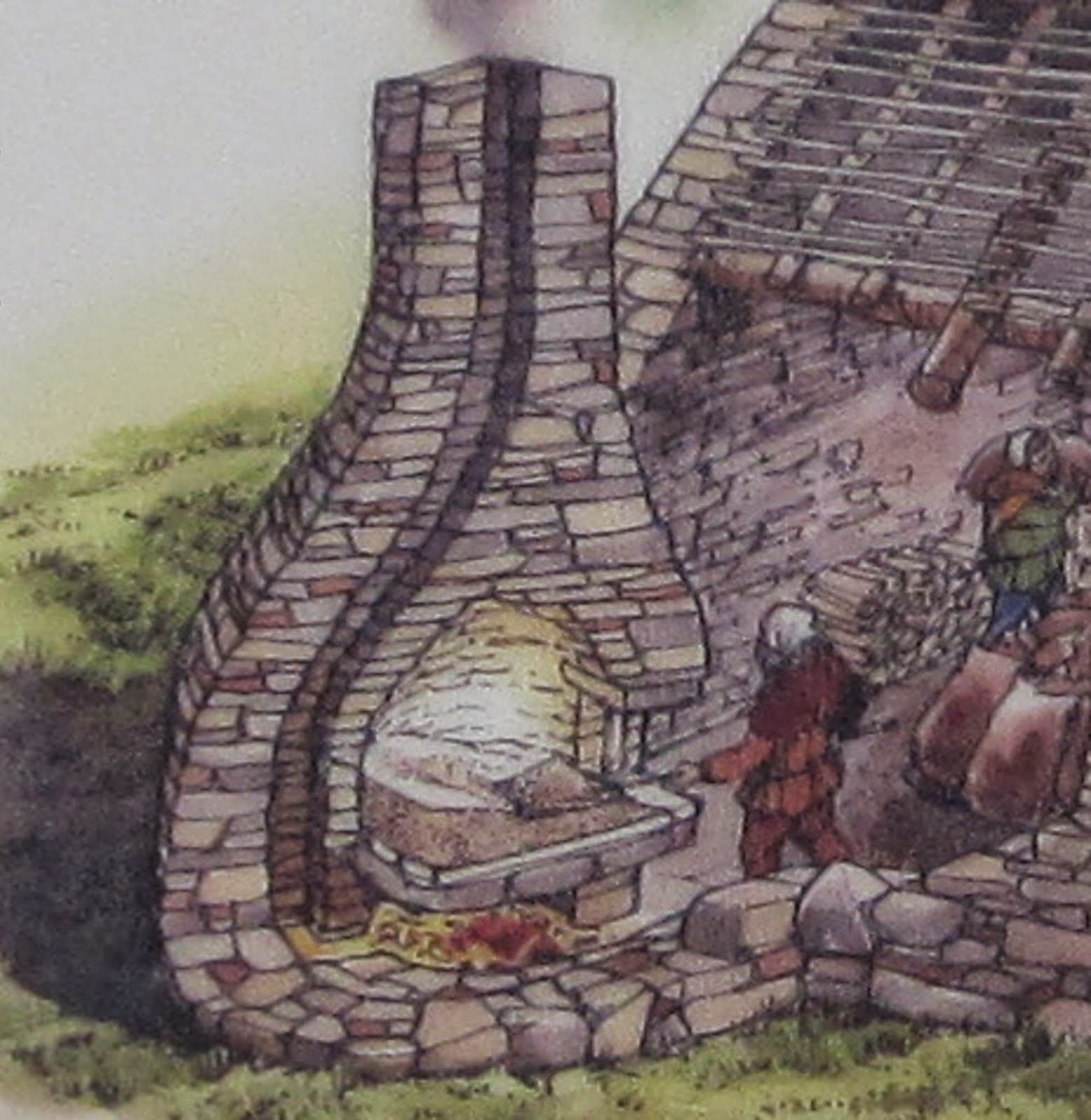
Here's a photo of an artist's impression of grain drying, from one of the information boards at Jarlshof, Shetland. This an archaeological site with evidence of stone buildings that span over 4000 years, from the Neolithic to the late medieval. The picture is supposed to illustrate 'how grain is dried in a corn drying kiln'. Every detail is wrong.

Not how a malt kiln or grain dryer works.
This is not how a grain dryer/malt kiln is constructed. It would not work. Why not?

- you can't dry damp grain or malt by heating it on a solid floor with a fire beneath. You will end up with hot wet grain.

- there needs to be a permeable floor for the wet grain or malt to lie on, so the warm air passes through the grain bed.

- the fire is not lit directly beneath, but at a distance. A long flue conveys warm air from the fire to the bowl of the kiln. The warm air rises through the bed of grain or malt, drying it gently and slowly.

- the reason for a long flue is to prevent sparks from the fire from setting the almost dry grain or malt alight. Malt kilns do not have a chimney, as this illustration shows. There is a wide opening at the top.

- it is essential to dry the malt slowly and gently over several days. The direct heat of a fire is too hot and would 'kill' the malt. Instead, you need warm air to dry the malt. 

Malt is not the same thing as roasted barley.
In the academic archaeological and anthropological literature, I have come across the idea that ale and beer can be made from roasted barley. Over the years, I have done lots of demonstrations about how the malt and ale are made and it seems that lots of people think this. Sorry to disillusion you, but it is not possible to make ale or beer from roasted barley. It can only be used as an adjunct, for flavour and colour. It is not a base malt and cannot provide any sugars in the mash tun because it has been roasted, thereby destroying the enzymes that convert starch into sugars.

In medieval terms, the germ of the grain has been killed by roasting.

Specialist malts, also known as coloured malts such as crystal, amber, roasted or chocolate malt, are a feature of modern, not medieval brewing. They have only been around since the early 19th Century. Specialist malts are dried or roasted at a much higher temperature than base malt and are used for the colour and flavour of the beer or ale. They do not provide any of the necessary fermentable sugars. That comes from the base malt.

Grain drying and malt kilns
There is another popular misconception. Because they are called kilns, it is often assumed that they have to be run at a high temperature, like a pottery kiln or a kiln for making bricks or roof tiles. This is not so. High temperatures kill the malt.

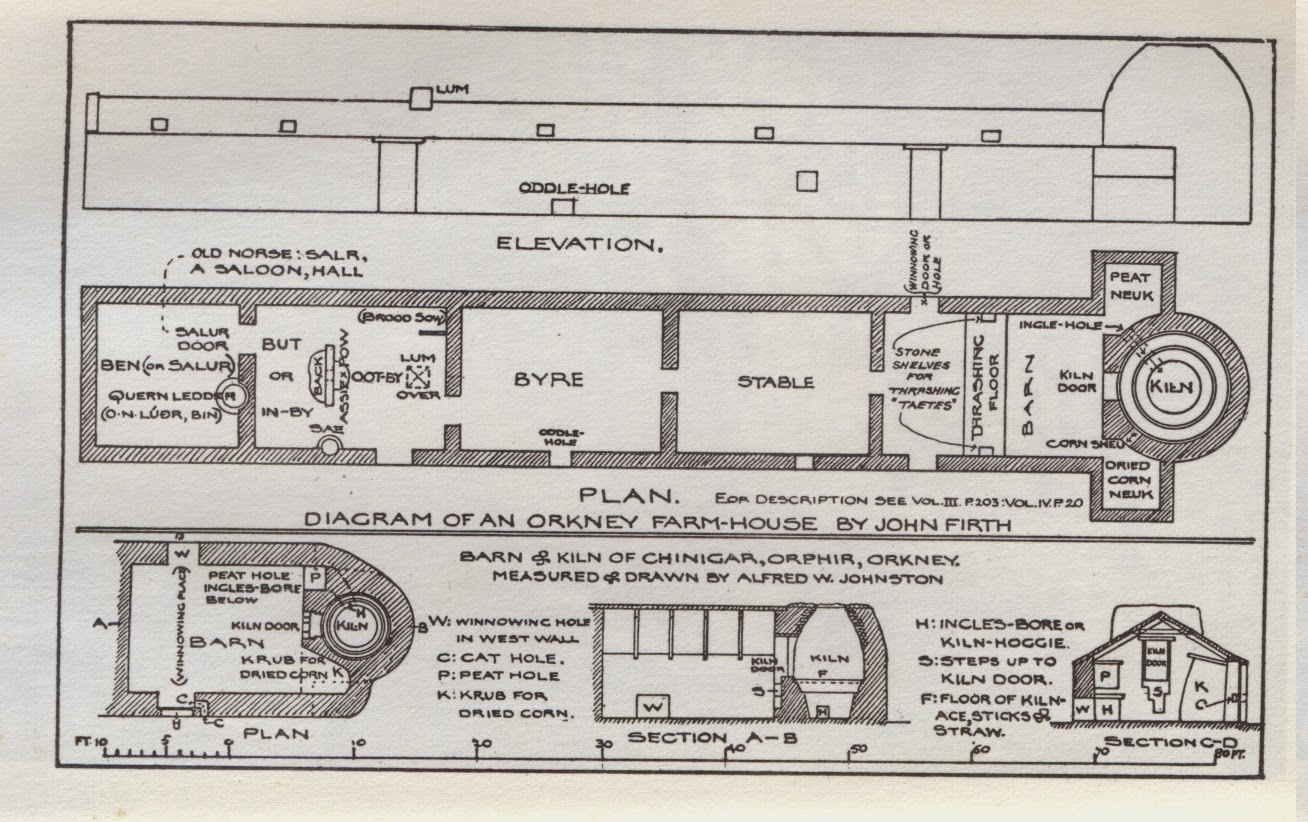
A typical grain barn is a long, rectangular stone building with a circular kiln at one end. The fire is lit in the fire hole and the warm air, and the smoke, travel through the flue and pass through the bed of grain which has been spread on a lattice of sticks in the bowl of the kiln. You would certainly not want to light any fire directly beneath that.
http://www.archhighland.org.uk/userfiles/image/sites/big/highland%20folk%20museum%20corn%20kiln%20grain%20platform.jpg
wet grain is spread out on a lattice of sticks, woven together.
see here for more details
It takes several days for the grain or malt to become completely dry. Here is a short video that explains how a grain drying kiln works, with "grain" including harvested grain or oats being dried for storage, and also malt, which is used for brewing. There is only one comment on the video, and that is by Martyn Cornell, the award winning beer writer, who makes the point that it is a maltings, not a corn dryer.

In an earlier post, I wrote about traditional grain barns and grain dryers and on how they worked, focusing mainly on the Corrigall Farm Museum, in Harray, Orkney. I'm really lucky where I live, because on Orkney there are quite a few surviving grain barns and grain dryers, some of which date might back to medieval times. Most are fairly ruined and none of them are used any more.

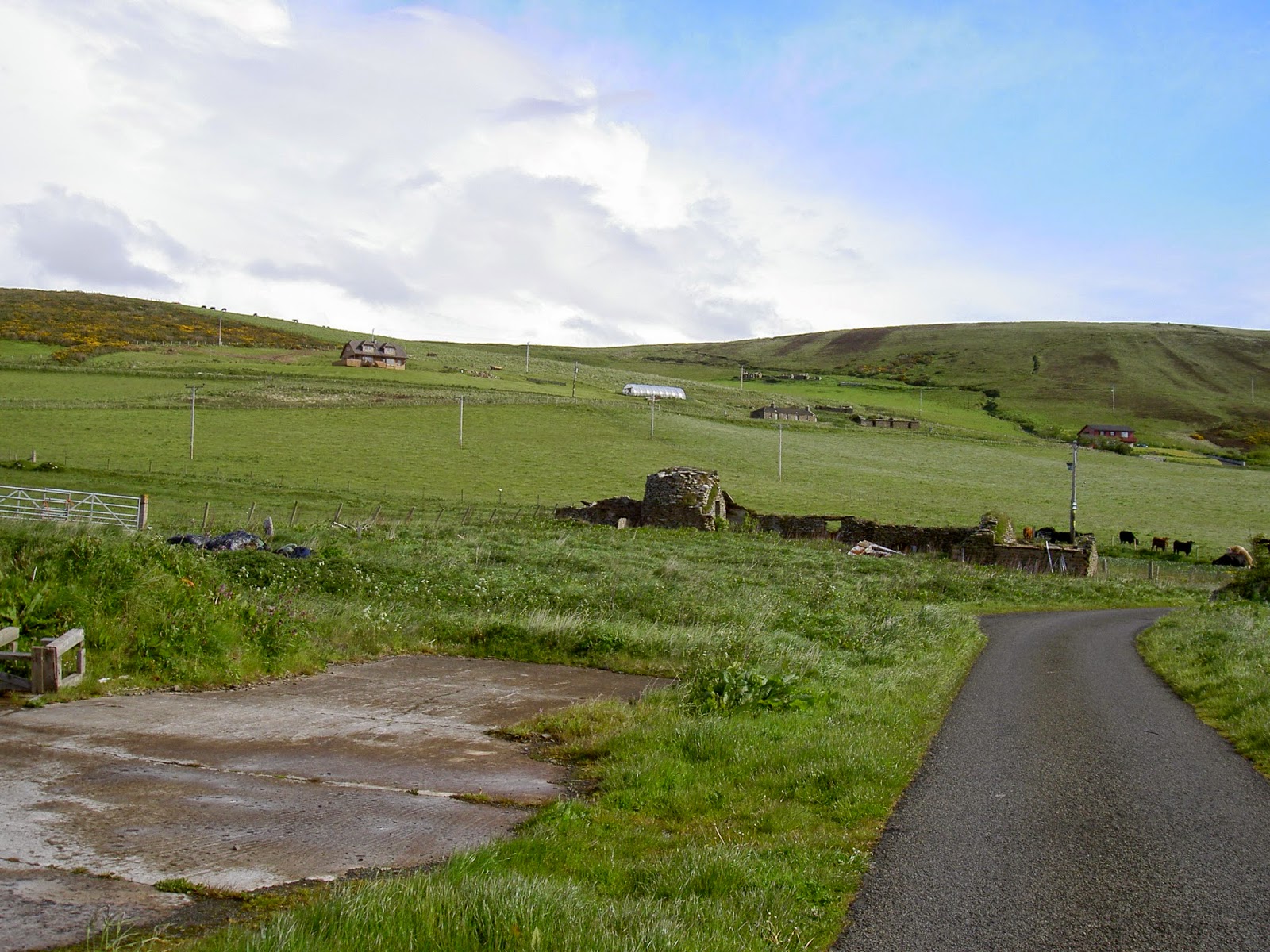
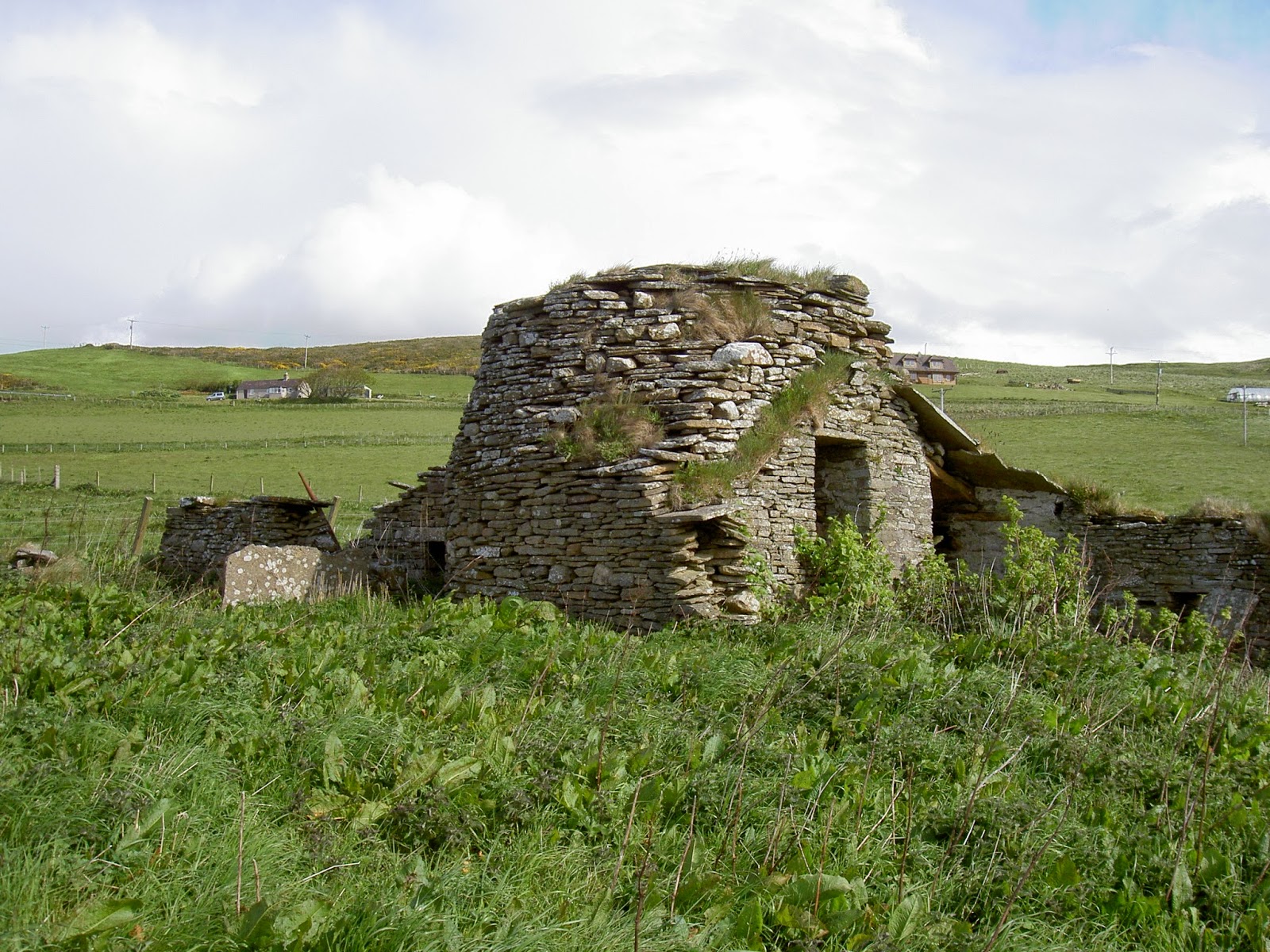
Graham took some photos of an old grain drying kiln at Houton, Orphir, Orkney a few years ago. We are not sure of its' precise age, but it is typical of many such buildings on Orkney and Shetland. We think they should be preserved and treasured as part of agricultural history.

the ruins of a grain barn, with kiln, at Houton, Orphir, Orkney. Photo by Graham Dineley

the barn is fairly ruined but the kiln is mostly intact - it's very well built

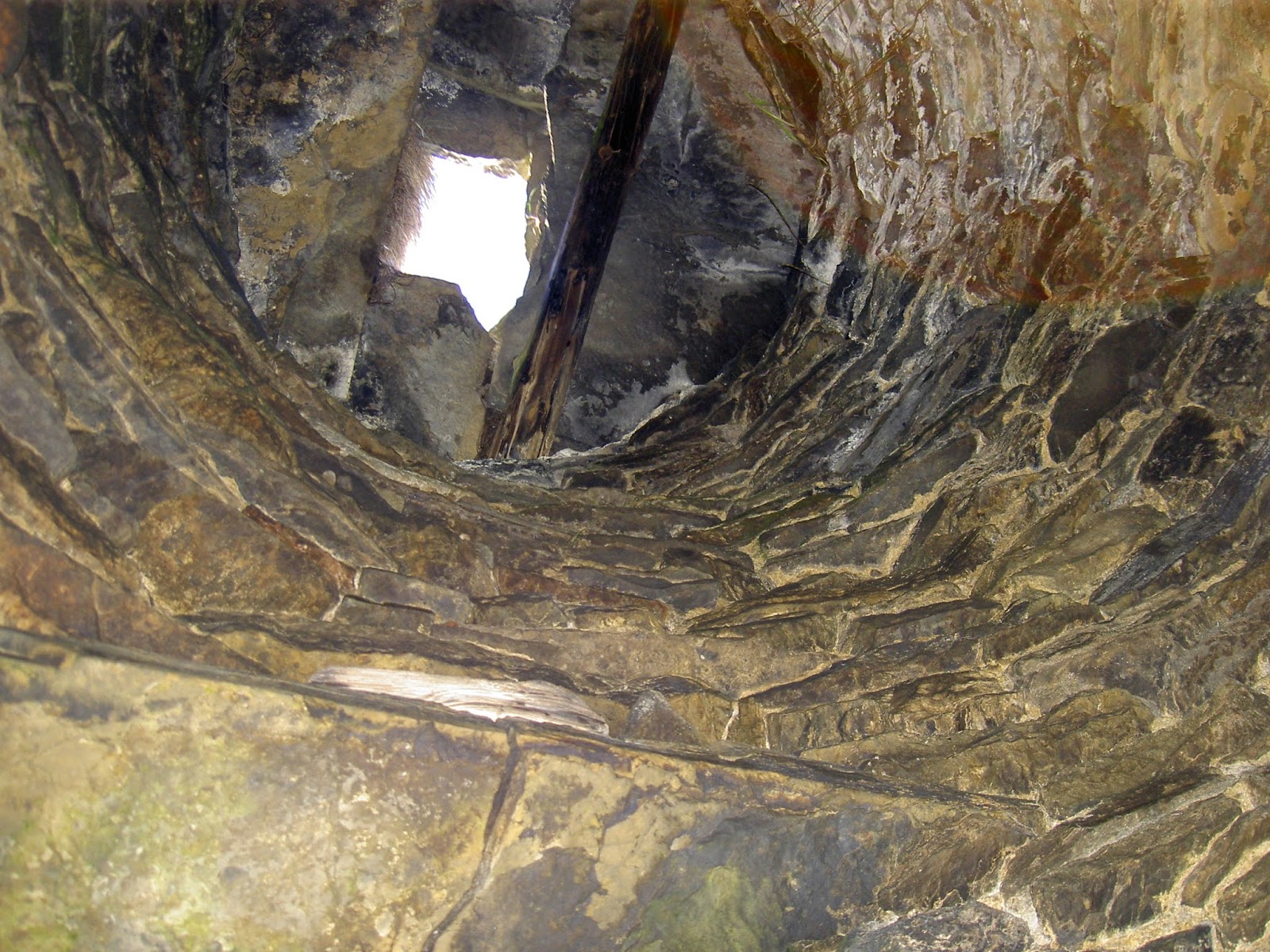
looking down into the bowl of the kiln, with the flue just visible on the left
looking up 

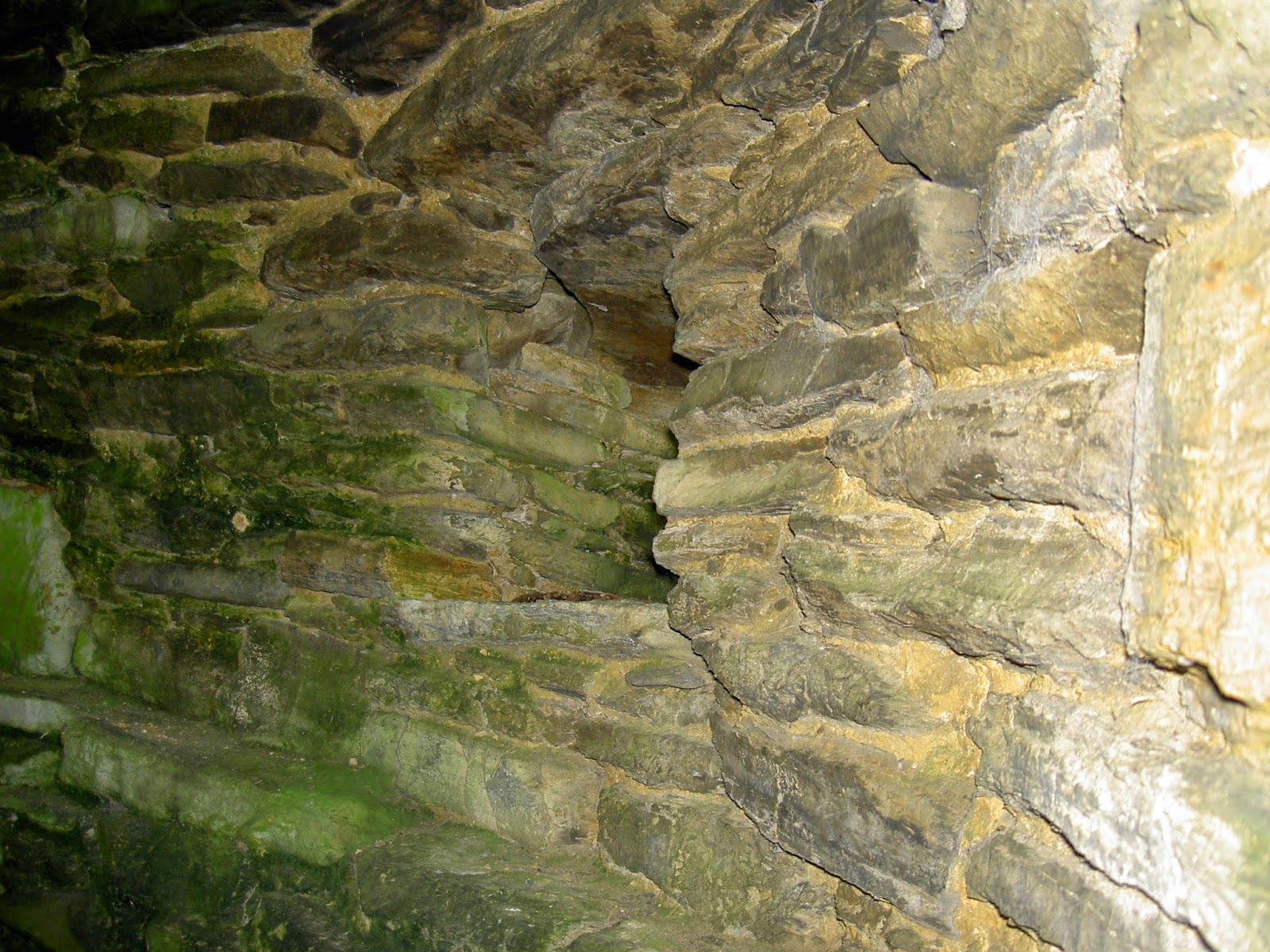
this is the stone 'shelf' upon which the lattice sits, the hole is where the dried malt is raked out
So, the more I think about that medieval "malting oven" recently discovered in Northampton, the more I wonder whether or not it was one. I leave it to the archaeologists who excavated it and to the brewers who aim to rebuild it in their brewery. Whatever they decide to do, some explanation of how it worked is needed.

I'll end this post with a ground plan, because all archaeologists like ground plans, of a traditional Orcadian farm house, byre, stable, grain barn and kiln, from John Firth's book "Reminiscences of an Orkney Parish". I hope it shows what I mean - that the kiln fire is not directly beneath the grain.