Showing posts with label germination. Show all posts

Saturday, 10 September 2016

a morning with maltsters, part one


The Orkney Science Festival is held annually. It's always a great week of varied and interesting events, talks, demonstrations and fun. This year there was a Malt and Malting seminar with a special tour of the Maltings at the Highland Park Distillery, Kirkwall. There were only a dozen places available and we were lucky to get tickets. We spent a fascinating morning with malting, brewing and distilling experts. It was all about the malt.

Making the malt for brewing and distilling is exactly the same process. The difference in processing techniques happens after the mash tun. A brewer takes the sweet liquid from the mash tun, calls it "wort" and adds hops or herbs, then ferments it into beer or ale. The distiller takes the sweet liquid, calls it "the wash" ferments it into alcohol and then distils it. The wort and the wash are two names for the same thing, the sweet liquid that is obtained from the mash tun. Every brewer who makes ale or beer from the grain knows what wort is because they work with it. People who have never made an ale or beer from the grain are perhaps a bit confused about what it is.
wort or wash?
Depends if you are a brewer or distiller.
source here
Dr Tim Dolan gave the first talk of the morning, explaining the fundamental aspects of what malt is, the biochemistry of malt, how it is made and a little of the history and development of the industry. His career in the malting and distilling industry goes back 40 years and he now teaches the subject. The other speakers were Marie Stanton, Distillery Manager of the Highland Park. She shared her knowledge of floor malting, then led us on a wonderful tour around the Maltings. The third speaker was Eric Walker, recently retired, a man with a distinguished background in all aspects of the malting, brewing and distilling industries. He talked to us about the prehistory and history of making malt and explained some technical details. They were quite a team and between them they had a huge amount of knowledge and experience of making malt.

"Malting is a process utilised by the Ancients to produce palatable alcoholic beverages: ale and beer"  (Eric Walker)

In previous years there have been talks about brewing and distillation, usually organised by the Institute of Brewing and Distilling. Tim told us that he thought it was about time there was a Science Festival event about malt, the Cinderella subject, because malt is the crucial ingredient for ale, beer and whisky. What is malt? It is grain that has been germinated under controlled conditions, then dried carefully in a kiln. Making malt has been a skill, an art and a craft for a very long time. Over the years I have given a few talks at the Science Festival. I was pleased that Tim remembered me and had been to my presentations on malting in prehistory, neolithic ale, grain barns and my most recent "Where were the Viking Brew Houses?" a couple of years ago.

The advent of the combine harvester in the 1940s transformed the grain harvest. The ancient and traditional way of harvesting grain by hand was extremely hard work, it was a time when the whole community worked together to bring the harvest home. On Orkney, where I live, grain was harvested by hand and stacked in stooks in the field until as recently as the 1950s. In case you don't know what a stook is, I looked online and found this painting by British artist Heywood Hardy (1843-1933). Painted in 1872, it depicts a typical scene of the time. I like the detail of the stook and you can see how they were made. The effort and hard work involved in making them can only be imagined.

 Corn Stooks by Bray Church by Heywood Hardy (1872) see here

This oil painting was done just a few years before Henry Stopes published his book about Malt and Malting, an Historical Scientific and Practical Treatise in 1885. It is now available to read online. Oxford University took the trouble to scan it in, many thanks to them for that. I first read it when I borrowed a copy from a brewing scientist when I began my research. It's such an important book and it is an excellent snapshot of the malting industry in the late 19th Century. Henry Stopes mentions the work of Louis Pasteur, who had recently published his work on Germ Theory which was to make such a huge impact on the brewing industry.

But I digress. Let's get back to the talk about malting.

Tim explained the biochemical processes of germination, with the embryo being the living part of the grain and the endosperm being the starchy food store. Malt, he said, is a living thing. It must be handled and processed carefully and correctly by the maltster. This was a point that was made several times throughout the morning. First, the harvested grain is steeped in water. It's crucial to allow air rests. The steep tank is drained of water at regular intervals. If the grain is left in water without air rests it will drown and this means that it will not begin to germinate.

Thanks to scientific research into grain germination physiology and biochemistry which began in the 1960s, we now know that when grain is  sufficiently wet and aerated, gibberellic acid is released from the embryo and the aleurone cells. This stimulates enzymes which convert the grain starch into sugars, the food source for the plant.

All grains can be malted. Barley is considered to be the best grain for malting but wheat, rye and oats can also be malted. Here's a useful diagram of the internal structure of a barley grain in the early stages of germination.

ancient malt and ale : malting and mashing

The craft and skill of the maltster lies in getting the grain to start growing, but not too much. This is known as modification and there is some excellent and detailed information about what malt is and how malt is made on the Maltster's Association of Great Britain web site.

The Highland Park has three traditional malting floors where the grain is spread out after steeping. Raking and turning the malt is a crucial part of the process. We were told that this helps to maintain an even temperature and it also prevents rootlets from tangling. On the malting floor the barleya malted barley grain more details here begins to germinate. When the maltster sees the root and shoot being about four fifths the length of the grain, it is sufficiently modified and ready to be carefully and gently dried in the kiln.  a malted barley grain more details here

Modern techniques of making malt involve the use of Saladin boxes and drums. There are also huge germinating kilning vessels which can make three to five hundred tons of malt at a time. All year round. The quality of the malt can be controlled because it is easy to maintain precise temperatures and levels of moisture. The third speaker of the day, Eric Walker, gave an interesting talk about the industrialisation of malting and I'll write that up later. In the meantime, here's something I wrote about where the malting floors have gone.

Barley is self pollinating. Dr Tim Dolan emphasised this several times, but I wondered why was he making this point so many times? It was because it's so significant in understanding barley breeding. There were not so many varieties of barley in the past as there are today. The science and practice of cross breeding barley began at Warminster Maltings in 1904. This was news to me. Rather than tell you the story myself, here is the account from the Wiltshire Community History web page:

"The most famous name in local malting was that of Dr. Ernest Sloper Beaven, and his reputation is international. He was born in 1857 to a Heytesbury farming family, who moved to Boreham Farm at Warminster in 1868. Beaven said that he began to observe barley closely from 1878 and he became associated with Frank Morgan, Warminster’s leading Maltster. Beaven’s first experiments had been with onions and potatoes but from 1900 he was growing, selecting and crossing barley from seven initial different ‘races’. In 1904 he acquired fields on the Boreham Road for a nursery and in 1914 he launched ‘Beaven’s Plumage Archer’ strain of barley and continued with seed trials for the next 27 years. Beaven could claim that 85% of the total U.K. acreage of barley was grown from the progeny of just four plants, three of which had been selected in the nursery at Warminster between 1900 and 1904."

In the last one hundred years or so, much has been learned about barley and the biochemistry of germination, however, there is still much to be learned. Although some of the mystery and magic of malting has been studied and explained by scientists, some things about barley are little understood.

One of these is latent dormancy. Someone in the group asked about this and the answer was that it is still a bit of a mystery. There is a practical tradition of leaving the grain for a while between harvest and steep, because it will not germinate. This could be about variety, or it could be seasonal. The best thing I can suggest, if you are interested in finding out more about latent dormancy, is to search for the academic and scholarly papers on it. There are quite a few of them out there.

The next talk was about the skills, techniques and practicalities of floor malting and the turn of Marie Stanton, Distillery Manager, an experienced maltster at a number of distilleries. And then there was the tour of the Maltings.

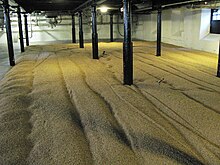
There is only so much detail that one blog post can take, so I shall leave you with a picture of the malting floor at the Highland Park Distillery, Kirkwall, Orkney. It is taken from Wikimedia Commons. I forgot to take my camera to the seminar, but I did take plenty of notes, so I hope this will suffice while I get down to writing part two, while it is fresh in my memory.

File:Highland park malting floor.jpg

https://commons.wikimedia.org/wiki/File:Highland_park_malting_floor.jpg


Monday, 18 August 2014

what's the archaeological evidence for malt?

This is something that I became more and more interested in, once I had completed and submitted my thesis. How does an archaeologist or an archaeobotanist recognise whether or not a grain is malted? What happens inside the grain on the malting floor? I had access to the University Library for a few years after my degree - by teaching archaeology classes in the Continuing Education Department. I explored sections of the Library that, perhaps, no archaeologist had visited before. I studied grain germination physiology, biochemistry and discovered that Bewley and Black's classic study of seed germination was the best.

Malting is an important craft and technology. The main reason for making malt is to brew with it, or more specifically, to make an ale or beer from the wort. Malt is also the main ingredient for whiskey, of course, but I am most interested in malt and ale in prehistory and its' role in the origin of grain agriculture. Apart from grain barns and malting floors, it seems that the best archaeological evidence for malt lies within the grain itself. There are clear physiological indications, depending upon whether the grain is desiccated (dried) or carbonised (charred).

Carbonised or charred grains are frequently found in archaeological excavations from the neolithic, when people first began to cultivate and process grain, right through to the medieval era and beyond. Carbonised grains are found all over northern Europe.

What do they signify?

Is it evidence of a grain store or granary that has been destroyed by fire? This was suggested in interpretations of excavations of an huge rectangular timber building at Balbridie, Fife, Scotland where thousands of carbonised grains were found?

Perhaps the grain dryer in a barn caught fire, while they were drying the harvested grain or oats. Or was it a kilning of the malt, which has gone disastrously wrong?

Lots of grain barns have burned down over the years, as well as traditional malthouses. It's not an unusual event. Even in recent times, as late as the 1960s, malthouses have been known to catch fire.

Carbonised grains were found at Eberdingen-Hochdorf, where there were the remains of Iron Age malting and brewing. This Iron Age site was excavated by Professor Hans Peter Stika between 1989 and 1993. According to the excavation report, it was a high status site, probably the rural residence of a prince. The carbonised grains, a huge number of them, were found in a sort of U shaped ditch, together with bits of charred wood. The interpretation was that as the malt was being dried, the fire had got out of control and set fire to both the wooden platform upon which the malt had been laid, as well as carbonising all the malt. The charred grains were mostly barley. Many of them had missing embryos and the grain was in poor condition.

They were identified as having been deliberately malted using these criteria:
... groove like channels on the dorsal sides
... the dorsal side becomes concave
... the coleoptile and coleorhizae become more prominent
... germination roots develop
... separated or fragmented embryos
... germination was even, meaning that it was deliberate and intentional

A recent excavation at another Iron Age site has also identified the activities of making malt and brewing by examining the charred grain. Another accidental fire had preserved the malt as it was being dried in the 5th Century BC at Roquepertuse in south eastern France. The sample of grain was taken from the floor of a building, close to a hearth and an oven. The excavators describe it like this:

"In spite of favourable conditions for the preservation of seeds in the sediment, which was rich in ash, charcoal and generally carbonised plant material, the grains are corroded and highly fragmented. This fairly poor preservation seems rather specific to the barley grains from this sample. Conditions are therefore not suitable for a satisfactory observation of all the morphological features of most of the grains. However, the best preserved specimens allow the assessment that slightly more than 90% of the grains were sprouted when carbonised. This is easily visible from the groove like channel on the dorsal side of the grains. As far as we can see, the sprout length is not perfectly uniform, but it generally reaches about two thirds the length of the grain. 

The poor preservation of barley grains is probably caused by germination, which tended to render them brittle. Fragmentation occurred mostly after carbonisation and is therefore not due to Iron Age human practices." Bouby et al, 2011, Never mind the bottle. Archaeobotanical evidence for beer brewing in Mediterranean France and the consumption of alcoholic beverages during the 5th Century BC

It's beginning to get a little bit technical here and, perhaps, a good time to explain some of the grain germination jargon. There is a lot of it, so I shall stick to the basics. The fundamental biochemical processes and the physiological changes of grain germination occurred in ancient grains just as they do today, in modern grains. It doesn't matter whether you make malt 10,000 years ago or 5000 years ago or 10 minutes ago, the biochemistry of grain germination remains the same.

Grains are a lot plumper than they used to be, because of selection and development by farmers over the millennia. The aleurone layer, a special layer of cells just beneath the husk, is three or four cells in depth in modern grains, rather than the one or two cells in ancient grains. The structure of ancient cereal grains was studied by Professor Geoffrey Palmer, who looked at 3000 year old grain from Amarna, Egypt. Using a scanning electron microscope to investigate ancient desiccated grains, he found that the internal structure remained intact. Individual starch granules within the endosperm could be seen with little holes or pits, where the enzymes had begun to convert grain starch into sugars. There are lots of wonderful scanning electron microscope images in his paper.

Carbonised, or charred grain is found on many archaeological sites in Northern Europe and the British Isles. The matrix of charred or carbonised grain has been destroyed by heat of the fire, so it is not possible to look at individual starch granules. Although carbonised grain is often used just to provide a radiocarbon date for the site, there might be other clues for the archaeologist and archaeobotanist that reveal what kind of grain processing techniques were taking place. Such as separated embryos, fragmentation and friability.

what happens on the malting floor?
Barley, wheat, oats, sorghum and rye can all be malted. I hope these diagrams of grain and malt will help to explain how the grain germinates. This is how it works at a basic level.

When the grain has been sufficiently steeped and aerated in water, growth hormones (gibberellin) are activated in the scutellum and embryo. These growth hormones stimulate the production of enzymes in the aleurone layer, which is a thin layer of special cells, just beneath the husk.


The maltster knows, through skill and experience, when the grain is sufficiently steeped. The wet grain is transferred to the malting floor, where it is piled up, then gradually raked out into a bed, a few inches deep. Here it begins to germinate. When rootlet and shoot are about one third the length of the grain, it is called green malt, and the next stage is to carefully dry it. 

Biochemical changes occur within the grain as it germinates on the floor. The enzymes that were activated within the aleurone layer begin to convert grain starch into sugars, the initial food source for the growing grain. These are the same enzymes that re activate in the mash tun and make a sweet mash. Other enzymes break down the husk, making the grain friable and, therefore, easier to crush than unmalted grain.

Malt, therefore, is made up of mostly starch, with a few sugars and, most importantly, those dormant starch converting enzymes that re activate in the mash tun at the right temperature.

Grain germination has a complex biochemistry. Scientists still don't fully understand how the aleurone layer works. If you want to know more detail, have a look here. If you want to read even more detail, have a look here, at chapter 14 of 'Barley: production, improvement and uses' by Steven Ullrich. Or get hold of a copy of Bewley and Black.

The products of brewing are ephemeral. Malt goes into the mash tun. Wort is fermented into ale which people drink and spent grain is fed to animals and waste liquid is washed down the drains. For the maltster and the brewer, it is a tragedy if the grain barn is destroyed by fire while the malt is being dried. For the archaeologist and archaeobotanist, it is a wonderful thing because the grain is carbonised and it is therefore preserved for analysis.

drying the green malt
Straight off the malting floor, it is called green malt. The maltster stops the growing process by gently drying the malt in a kiln. Gentle heat does not destroy the enzymes. Warm air passes through the malt, usually over several days. Traditional grain drying kilns do not have a solid floor. The malt is put upon a permeable floor to dry, so that warm air passes through the grain bed. Making good malt is a skilful task.

Today, maltsters produce a variety of types of malt by kilning at different temperatures. Base malts are kilned at lower temperatures. The enzymes are not destroyed and will remain active in the mash tun. Specialty malts are kilned at higher temperatures, destroying the enzymes. These provide only colour and flavour to the beer, making up no more than 10% of the grain bill in the mash tun. Specialty malts have been developed over the last two hundred years, making a wide range of beers possible from pale ale to dark stout.

SEMs of carbonised grain from Balbridie 'timber hall', Fife, Scotland
I spent a few years making funding applications, hoping to continue my research into the archaeological evidence for malt. That never happened but, working with the Satake Centre for Grain Process Engineering at UMIST, Manchester, I was able to get some scanning electron images of ancient carbonised grain from a neolithic site in Scotland.

The SEM images below were taken to accompany our funding applications and they were not originally intended for publication, but I think enough time has passed for me to now put them up on my blog and share them. The SEM work was done by a brewing research student. I am sorry to say I don't know her name and I did not get to meet her.

I was given six tiny carbonised grains from the thousands that had littered the floor of a 6000 year old, early neolithic rectangular timber building in Scotland. The building was destroyed by fire. Professor Ian Ralston, one of the original excavators, was kind enough to send me them. Three of the grains had missing embryos, visible with the naked aye and very clear under a normal microscope. One of the grains was examined using a scanning electron microscope and it shows the missing embryo, on the right, indicating that it has begun to germinate.

More of the grains from the site would need to be examined, to identify how many had begun to germinate. If it turns out to be a high percentage, and if the grains are friable and poorly preserved, then this is a deliberate malting for the production of ale in neolithic Scotland. Several SEM images of the same grain were made. The image below shows that the endosperm of the grain has been badly damaged by the fire. But it is possible to just about see the aleurone layer, beneath the husk.

Moving in closer to see the detail of the husk, we were very surprised indeed to see that the aleurone layer, that special layer of cells that kick starts the germination process, is visible, intact and well preserved. The husk has begun to be broken down by other enzymes, as can be seen in the bottom left of the image, and the grain was friable and fragile. All these are good indications of being malted.

This final image of that little carbonised grain show how well the individual cells of the aleurone layer have been preserved. They look rather like sponges, and some appear to have been activated. The more you look at this image, the more detail you can see. It is possible to make out erosion pits, beneath the individual aleurone layer cells, that indicate that the enzymes have begun to hydrolyse starch into sugars.
This is my favourite SEM image of an ancient grain. I think it would be a very good research project for someone to look at ancient carbonised grain from as many sites as possible. Changes in the aleurone layer cells and degradation of the husk might prove to be important criteria for the identification of malt. 


********************************************


Sunday, 13 July 2014

where have all the malting floors gone?

There are only a handful of malting companies in the British Isles who still use the ancient and traditional technique of floor malting. One of these is Tucker's Maltings, in Newton Abbott, near Exeter, Devon. They are the only Maltings in the UK who offer regular guided tours. Another is the Warminster Malt Company, established in 1855. Guinness owned and operated this Maltings between 1950 and 1994. It provided the malt for the famous brew. When they moved out, the new company provided quality floor malt for several small independent craft breweries.

The Crisp Malting Group is a large company, with malting plants operating in Scotland and England. They own Maltings in Alloa and Portgordon, Scotland, and also in Ditchingham, Great Ryburgh and Mistley in Suffolk, Norfolk and Essex, respectively. The site at Great Ryburgh is the largest and, as they say on their web page, it provides an insight into the technical developments and innovations that have taken place in the malting industry over the last 150 years. The Ryburgh Maltings was set up in the 1850s. It eventually became the largest floor malting plant in Europe. They still have and use some of the traditional floor malting facilities. Today, however, because of demand, most of the malt is produced using modern equipment. These are the Saladin Maltings, installed in the early 1960s. Circular germinating vats, also known as drum maltings, were added in 1973. In the early 1990s, modern computerised systems were introduced.

These modern systems can deal with large amounts of grain but the fundamental processes of steeping, malting and kilning remain unchanged. If you want to see just how huge the modern computerised GKV systems can be, here is a time lapse video of one being built between August 2011 and February 2012 for the Great Western Malting Company. It will replace the drum maltings. In the 21st century, making the equipment for malting has become a big industry in itself. 

raking the malt on the germination floor
There is also Thomas Fawcett & Sons Ltd, based in Castleford, West Yorkshire, where the original malting floors are still in use, alongside the Saladin Maltings and a state of the art germinating kilning vessel. The family has been making malt since the 1760s. Established in 1809, the family business and company has seven generations of experience of making malt.

We contacted them not long after visiting the Corrigall Farm Museum on Orkney where we had seen the traditional 18th century grain barn, complete with threshing and malting floor. Fawcett's were kind enough to take us on a guided tour round the Maltings and explain what they did. That was in 1997, just before I completed my thesis. It gave us an insight into the complexities of malting on an industrial scale. A more recent description of a tour around Fawcett's is here. It seems that not a lot has changed there over the last 17 years.

So, where have all the malting floors gone?
Replaced by modern technology, almost every one ...

It's crucial to turn the malt regularly. This aerates it and prevents the rootlets from becoming entangled and matted on the malting floor. This important job has traditionally been done by people, who pulled a specially designed malt rake through the germinating grain. It is a time consuming process. As the malting floors became larger and larger to cope with the demand for beer and whiskey in the Victorian era, so the task of turning the malt became increasingly labour intensive and expensive.

In the 1890s, a new mechanised system was invented by Charles Saladin, a French engineer (1878-1942). Named after him, the Saladin box was a large concrete or metal box in which revolving metal forks moved slowly from end to end, turning and aerating the grain as it germinated. The picture below is from a Belgian malting company's web pages, Dingemans, who began to use the new mechanical system in the early 20th century. The malt needs to be aerated and, as time went by, the basic design has been improved with perforated floors, and air being blown through the germinating grain to maintain an even temperature. Drum maltings are essentially the same system, but with circular grain beds, not rectangular boxes.

In the British Isles, the malting floors began to be replaced by Saladin box maltings slightly later than in Europe, with the first being installed in Edinburgh's North British Grain Distillery in 1948. They became increasingly popular during the 1950s and 1960s. Saladin boxes and pneumatic maltings, where the germinating grain is aerated, have been improved upon by larger capacity drum maltings and more recently by enormous computer controlled state of the art Germinating Kilning Vessels.

Malting equipment in the modern food processing industry has become huge and complex, yet it is still based upon the fundamental processes of steeping, germination and kilning. There is a very good analysis of modern malting techniques and equipment here, Chapter 3 of ' Engineering Aspects of Cereal and Cereal Based Products' edited by Raquel de Pinho Ferreira Guine, Paula Maria dos Reis Correia.

malthouses
Apart from the Nottingham cave maltings, dated to the 13th and 14th centuries, there are very few recorded malthouses or facilities for making the malt in the medieval era. Mostly, malt was made in the grain barn. The cave maltings are unique. Because of the ambient temperature being the same all year round, they could make malt all the time. In a traditional grain barn or malthouse, it was only made in the cooler months of the year, those months with an 'r' in, that is, any month except May, June, July and August when it was too hot to make malt. Over the centuries, as the breweries gradually became larger and more centralised in towns, so the malthouses and malting floors had to become much larger to supply them.

Great Dunmow Maltings
Great Dunmow Maltings, now a museum
The details of the commercialisation, industrialisation and mechanisation of the malting process in England is very well told by Amber Patrick in her report for English Heritage. She explains that the basic 16th century malthouse had two floors, the top being for grain storage and the ground floor was the growing floor. The kiln for drying the malt would be at one end. A good example is the Boyes Croft, Great Dunmow, Essex, a Grade II listed building.

By the end of the 17th century, commercial malting was on such a scale that it warranted taxation. The Malt Tax was introduced in 1697 and was not repealed until 1880. The malting industry became highly regulated and the buildings became larger, sometimes with two malting floors, one above the other. Amber Patrick explains that the trend for the last three or four hundred years has been for the malthouses to become bigger and bigger.

The Industrial Revolution and the construction of the canals, then the railways, greatly accelerated this trend. It became easier to transport large quantities of malt to the breweries quickly and efficiently. More multi storey Maltings were constructed in the 18th and 19th centuries, usually right by the canal or the railway.


The Bass Maltings, above, were built between 1903 and 1906. There was an engine house, to provide the power for shifting around the huge amounts of malt that was made there. It was originally planned to build eight more malting buildings, mirroring the eight that did get constructed. It was a state of the art, hugely mechanised turn of the century floor Maltings, one of the last to be built in Britain. It closed down in the 1960s, with the introduction of box and pneumatic maltings, which could produce more malt at a cheaper cost.

While browsing about on the internet, I found some fascinating images of the inside of the Maltings, on a blog about decaying industrial buildings, www.adarkertrantor.co.uk. They were taken in 2012 and they show how this important industrial site was abandoned with much of the equipment still there.


Malthouses were huge, multi storeyed and functional, yet they could still be attractive buildings. As I was writing this blog, I looked on the internet for a suitable image of a disused Maltings that I could use. The difficulty in finding an image online of an industrial malthouse is that most of them have been closed down or demolished in the last few decades. Many have been converted into flats and housing developments. Some have become offices and others are Listed Buildings. I came across this recent story from the Newark Advertiser, about a Grecian style Maltings that is up for sale and future development. It is a good story, well worth reading, since it tells you who owned it and how it came to be built. The Maltings was built in 1864 and it was last used to make malt in 1966. It could be the story of any industrial maltings.

Making malt in the the ancient and traditional way is being revived in the USA. That's great news - I know about a few people who are doing this. If you are making malt on a small scale, using traditional techniques and I have missed you out, please let me know.

 Valley Malt, Hadley, Massachusetts

 Riverbend Malthouse, North Carolina

Rebel Malting Company - they use a Saladin system

Colorado Malting Company

further reading

Amber Patrick Maltings in England a report for English Heritage, 2004

Christine Clarke, The British Malting Industry since 1830 published in 1998
Summary: "Malt is the main ingredient in the national beverage, beer. For centuries the malting industry has provided a principal bridge between agriculture and the brewing industry, yet its history has been little studied. The British Malting Industry since 1830 is the first overall account of malting, dealing with the processes, products and sales, owners and employees, and with the evolution of what in 1830 were almost all small, local businesses. Christine Clark traces the influence of the growing demand for beer in Victorian England, and of the increasing power of the large breweries, on the malt industry ..."

Roger PutmanBeers and Breweries of Britain (pages 9-12),published 2004


Wednesday, 4 June 2014

malt is a confusing thing

It seems that malt is a very confusing thing. The word 'malt' means different things to different people. Some people immediately think of malt whisky - a single malt or maybe blended malts. Others might think of a malted milky bedtime drink, like Horlicks. Other brands are, of course, available.

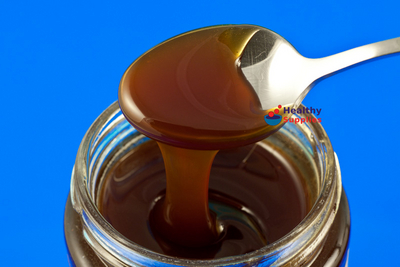
a sticky sweet spoonful of malt extract (photo: healthysupplies.co.uk)
a modern product
Or is it that sticky, viscous, sweet, dark brown syrup like stuff that you get in a tin in your beer kit? The stuff that you mix with water and boil? No, that is malt extract.

Malt extract is considered to be very good for you - it's an added ingredient in many breakfast cereals. When I do demonstrations, I always take a jar of malt extract for people to taste. They are reminded of their childhood, and of eating a spoonful every day, for the B Vitamins.

Malt extract is made by boiling wort in a vacuum and the technique was only discovered in the late 19th Century AD. Oh, and there is malt vinegar as well. And malt loaves. Many brewers use a liquid or a dry malt extract. Known as LME and DME, it's a main ingredient of beer kits in the 21st Century. Malt extract is also important to the modern food processing industry, particularly so in the USA it seems.

Prohibition forced maltsters to think of a different way to process and sell their malt, other than as alcoholic drinks, like beer and whisky. Prohibition was the death knell to many American breweries in the 1920s.

It's no wonder that so many people are confused about malt.

malt whisky. nice but not neolithic
I had a conversation about the archaeological evidence for malt with a fellow tour guide a few months ago. I thought we had a strange exchange of views, but it was only when they turned to go and mentioned that they were very surprised that the neolithic folk knew all about distillation. Did they use the pots for distilling? I realised that they thought I was talking about malt whisky manufacture in the neolithic. For this person, the word 'malt' meant whisky and nothing else.
malt on a traditional malting floor

For me, 'malt' means partly germinated grain which has been carefully dried for further processing by brewers and/or distillers. It is traditionally made on the malting floor. The grain has been steeped and aerated, then it is spread out on the floor in a cool, dark, well ventilated building to begin to grow. Once the rootlet and shoot begin to show, it is gently dried in a kiln. We had been talking about two very different things. As part of writing this blog, I checked the  Encyclopedia Britannica for its' descriptions of what malt is, how it is made and what it is used for.

Much of the detail is correct, but there are a few salient details omitted. For example, there is no mention of the air rests that are an essential part of the steeping process. If you just leave the grain to soak or steep without air rests, then the grain will be killed. It will, effectively, drown. Ancient and traditional techniques include leaving the grain in a bag in a shallow stream. This provides the essential oxygen and water for the germination process to begin. Modern methods use huge steep tanks. 

Grain needs both water and oxygen to begin germination. If the steep is not aerated, then it will not take long for the water and grain to smell horrible and for the grain to be bad. It will not begin to germinate, you will not have any enzymes to convert starch into sugars and you will not be able to make ale. Or beer. Or whisky.

In the first stages of germination of any grain - wheat, barley, oats or rye - the enzymes necessary for the conversion of starch into sugars are liberated, and then the growth begins. If this continues, starches are used up, so it is important to stop the growth as soon as the shoot and root appear amongst most of the grains. This is usually when the acrospire (rootlet and shoot) are one third the length of the grain.

Often, descriptions in the archaeological and anthropological scholarly literature of how to make malt are not accurate. Some describe malt as 'toasted barley sprouts'. Anyone who says that malt is like toasted, sprouted barley, suggesting that it is something like dried bean sprouts, have obviously never handled proper malt.

It is very important to talk to a maltster to understand how to make malt, to ask the practitioners, the skilled people who make it. Craftsmanship not scholarship.

Graham brings a 25 kilo sack of crushed malt from the brewing suppliers into the house. Then he makes beer with it, using basic equipment - a mash tun, a boiler and fermenters. Lots of people have tried Graham's home brewed beer and it is considered to be top quality, good and tasty.

What is this crushed malt in the sack?

Where does it come from, who makes it and how?

As I was doing the mashing experiments in the garden, using beeswax sealed earthenware bowls as mini mash tuns, I became more and more interested in the malt and how it was made. I studied the science of grain germination physiology, learning about what happens inside the grain as it begins to grow. It is fascinating and complex, worthy of a blog post of its' own.


this post was co written by Graham and Merryn