Showing posts with label fermentation. Show all posts

Thursday, 7 July 2016

trough, mash and wort

How do you collect the wort when you have mashed in a trough in the ground?

The main problem, obviously, is that you can't lauter and sparge in the same way that you would if you had used a wooden tub as a mash tun with a spigot, or if you had a bespoke lautering and sparging vessel. When the trough is in the ground, it's a different story.

There are thousands of sites throughout the British Isles that archaeologists know as Burnt Mounds. All that remains is a large pile of fire cracked stones and the remains of a trough lined with either stone or wood. If you have never heard of burnt mounds before, I suggest you have a look at an earlier blog which explains what they are and some of the interpretations. Archaeologists agree that they were used to make water hot. This was achieved by heating rocks in a fire then putting them into the trough of water. What you do with that hot water is up to you. There are many possibilities. Some interpretations include bathing, others suggest cooking meat and some archaeologists think that they were used as a sauna. Another function is as a mash tun. With the discovery of chaff and grain in an oak trough excavated in Wales in 2008, a mash tun is a strong possibility.

Trough mashing at Bressay, Shetland

Replica trough at Bressay, Shetland, surrounded by fire cracked stones.


A few years ago, we mashed in a full sized replica stone trough, based on the one from the Bronze Age burnt mound site on the island of Bressay, Shetland.

The original trough and buildings were moved stone by stone, since it was in danger from coastal erosion.

A replica trough and hearth was built beside the Bressay Heritage Centre, for experimental archaeological work. It's been used to dye wool, it has been used as a bath and also as a mash tun by archaeologist Dr Lauren Doughton in her experimental work.

We were there in the summer of 2011 to mash some malt with her when she was working on her PhD about burnt mounds and troughs. 

The weather was rough, even though it was mid July. Buffeted by the wind and rain, we managed to run a mash and collect some of the wort. Our time was strictly limited because we had to catch the last ferry off the island and get back to our tent. A full set of pictures of the day's mashing, collection of wort and the final brew can be seen here on my Facebook page.

Brewers usually want to obtain as much wort as they can from the mash. There is potential for lots of waste from a trough mash unless you can find a way of maximising the wort extraction. The most obvious technique might be to let the grain settle to the bottom of the trough, then scoop the wort out using a jug or a bucket or something like that. It's tricky, as we discovered. Nevertheless, it works. Inevitably there will be bits of husk in the wort. This is not a problem. They will sink to the bottom again and it is easily possible to obtain a clear wort for fermentation from a trough mash.

Locally sourced clay was used to seal the corners of the replica trough before we began the mash.

Water was put into the trough. It became slightly murky, a grey colour from the clay luting that we had used to seal the trough. We were a bit worried, however, we did not need to be concerned because the resulting ale from this experiment was delicious, sparklingly clear and bright, perhaps the result of our accidental addition of clay to the water.

The hot rock rolling team, from the fire into the water.

The technique of rolling hot stones from the fire into the trough of water had been perfected by Lauren and her team in previous runs. Using garden forks and spades, the hot rocks were expertly rolled down the slope and into the water.

When the water reached strike temperature, 50 kilos of crushed pale malt was added to the 200 litres of water and stirred with a garden fork. You know when the water is the correct temperature for the strike, around 74 degrees Centigrade or thereabouts, because this is when you can clearly see your reflection in the water, no ripples, no steam. We double checked with a thermometer.

The strike:adding the crushed malt to hot water.

The saccharification takes about an hour and it's crucial to keep the mash temperature right for that time, adding hot rocks and stirring as necessary. We put a wooden board over the trough, to help keep the steam and the heat in. It was a good conversion of starches into sugars, a successful mash. The finished mash, when settled, was a deep dark brown and it tasted very sweet.

The finished and settled mash - the next job is to collect the wort and ferment it.
For non brewers, I should emphasise that wort is not alcoholic. Sugar ferments into alcohol, starch does not. The saccharification that happens during the mash is a crucial part of the beer brewing process. Fresh wort is very sweet and prone to all kinds of bacterial and fungal infections. On the three occasions when we have been too tired to process the mash after a demonstration, the next morning the mash was fizzy and sour. Wild yeasts and lactic bacteria infections had ruined it. It was useless. Wort must be collected as soon as it is cool enough to take the yeast. The yeast ferments sugars into alcohol. Herbs or hops preserve and flavour the ale or beer.

We were short of time and collected as much wort as was possible. The brewer used jugs, buckets and plastic containers to scoop from the trough. We had, of course, taken the stones out first, when they were cool enough to handle. The process of collecting the wort was hard work and we only managed to get about 6 gallons out of the trough before we had to pack up, load the van and catch the last ferry back to the Shetland mainland.

The brewer collects wort from the trough. The stones have been removed and are on the heap.

The wort was put into a fermentation vessel, yeast was added and the fermentation vessel was kept warm using sleeping bags as insulation. After about four or five days it had fermented into a fine, clear and strong ale. We used a handful of dried meadowsweet flowers as a preservative.

This is how we should have collected the wort
On the ferry back to mainland Shetland we realised that we had made a mistake. We should have piled the stones up in the trough to make a sort of dam, then we could have put the mash to one side and the wort would have been so much easier to collect. This is how the Moore Group archaeologists collected the wort at their trough mash demonstration at the Sixth World Archaeology Conference in Dublin, 2008.

They made a wooden trough and painted the bottom part with bitumen to ensure that it did not leak. They correctly assumed that the University authorities would not allow them to dig a big hole and set their trough in the ground.

Moore Group archaeologists filling the trough with water at WAC 6, Dublin
They heated the stones on a fire, dropped them into the water and added the crushed malt when the strike temperature was right. It was this hot rock mashing demonstration that inspired us to stop mashing in pottery vessels and start using troughs, wooden tubs and hot stones.

Here are some of my photos of the Moore Group's event:

1 heating the rocks
2 heating the water
3 saccharification: the mash


4 the stone dam, mash and wort separated

5 settled wort and mash

6 collecting the wort, it's cloudy because it has been stirred up.


Hot rock mashing is a spectacular process, the stones sizzle as they hit the water, the mash saccharification happens right before your eyes and the aroma from the mash smells delicious. This is a mysterious, magical transformation from grain starchiness into fermentable sweetness. Surely this would have been an event that would have amazed and impressed people in prehistory, just as much as it does in modern times.

Collecting the wort like this, by creating a dam of stones, is an extremely efficient way of doing it, perhaps even allowing for sparging. Once the first runnings have been collected from the trough, more hot water can be poured gently through the mash, thus releasing more wort for the brewer. There would be very little waste and a good quantity of wort could be collected.


Is there any archaeological evidence for the collection of wort like this?

It is rare that prehistoric troughs are excavated with the stones still within them. If you have excavated one like this, I would love to hear about it. Excavations in 2013 by Wessex Archaeology at Kingsmead Quarry, Horton, in Berkshire, England revealed the remains of four neolithic buildings. They were interpreted as having been 'houses', which is often the case with these discoveries. I do wonder how many of these neolithic 'houses' might have been used as barns or as buildings where the grain was stored and processed. But that's a story for another blog.

One of these four neolithic rectangular timber buildings at Horton caught our attention when we were looking at the pictures online. There appear to be some fire reddened rocks close by one of the buildings, in a heap. The buildings are, as always, interpreted as "houses". But were they dwellings? Or some other kind of building, like a barn or grain processing building? See Wessex Archaeology's page about them here. 


The red rocks look rather like modern bricks. There seems to be no mention or discussion of them on the web page. Maybe I missed it. However the stratigraphy indicates that they are contemporary with the building. So, are these stones an indication of hot rock water heating technology at neolithic Horton? Were they piled up in a wooden trough that has long rotted away? What were the people doing in and around this rectangular wooden building, over 5000 years ago?

I cannot answer these questions. I am nevertheless intrigued by this discovery. And so I finish this blog with a close up (thanks to Graham) of those mysterious fire reddened stones and welcome interpretations, comments and discussion.
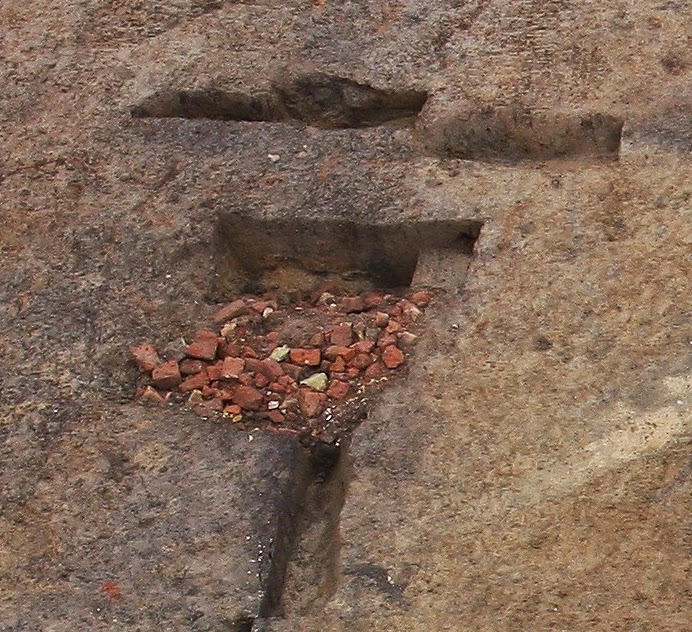
a close up of those mysterious fire reddened stones beside the neolithic building at Horton

 ------------------------------------------------------------------------------------

If you want to know what our Bronze Age Trough Ale, with meadowsweet, tasted like, we sent some to David Connolly of BAJR (British Archaeological Jobs & Resources). Although he struggled to open the parcel, he gave his opinion on the ale's flavour and strength.

It is sometimes said that prehistoric ale was weak, cloudy and sour and that it tasted disgusting. We disagree.

Here is the link: https://www.youtube.com/watch?v=wpvPi25TTOI

Quinn, B., & Moore, D. 2009 ‘Fulacht fiadh’ and the beer experiment’ in Stanley et al (eds) Dining & Dwelling. NRA Monograph Series No. 6, 43-53, NRA, Dublin.

Wednesday, 25 February 2015

Barm and the magic spoon. Godisgoode. (part one)

"Our prehistoric fathers may have been savages, but they were clever and observant ones ... the art and practice of the brewer are founded on empirical observation ... the brewer learnt from long experience the conditions not the reasons for success" 
John Tyndall FRS, extract from his speech on Fermentation, Glasgow Science Lectures Association, October 19th 1876.

Before Louis Pasteur's investigation into fermentation the whole process was a complete mystery. It was considered to be part of the "Spontaneous Generation of Life", a supernatural, magical, mystical or even divine creation. This is why one mediaeval name for it was "Godisgoode", a demonstration of God's bounty and munificence.

John Tyndall continued Pasteur's work into fermentation and helped to demolish the myth of spontaneous generation by demonstrating that micro-organisms can be carried by air-borne dust, and cause all kinds of fermentations and cultures.

We now know that beer yeast is the microorganism, saccharomyces cerevisiae, a one celled fungus that feeds on simple sugars.

http://www.microbiologyonline.org.uk/about-microbiology/introducing-microbes/fungi

In the presence of oxygen yeast can replicate rapidly through budding, turning the sugars into water and carbon dioxide, through respiration. It can double in 2 hours at 30 degrees Centigrade.

In the absence of oxygen it cannot replicate, but it can metabolise the sugars into alcohol and carbon dioxide. It isn't really happy with high alcohol concentrations and this limits production to about 10-12% alcohol.

Brewer's top fermenting yeast seems to work best, both aerobic and anaerobic, at between 15C to 25C, but it doesn't like varying temperatures and will lose condition quickly if subject to heating cycles. It generates quite a lot of heat whilst working.

I can sustain a good ferment of 10 gallons at ambient temperatures as low as 5C by insulating it with a couple of sleeping bags.

Under stress such as drying it can sporulate, and the spores can become wind-born by dust and insects.

Barm is the word used to describe brewing yeast in it's active replicating state.
The cells stick to the CO2 bubbles in the ferment and rise to the surface (top fermenting brewers yeasts) and form a foam. This is the Barm. Bread makers use this to leaven their doughs. Nowadays brewing yeasts and bread making yeasts differ, though in the past they were the same.

Barm in the brewing buckets.
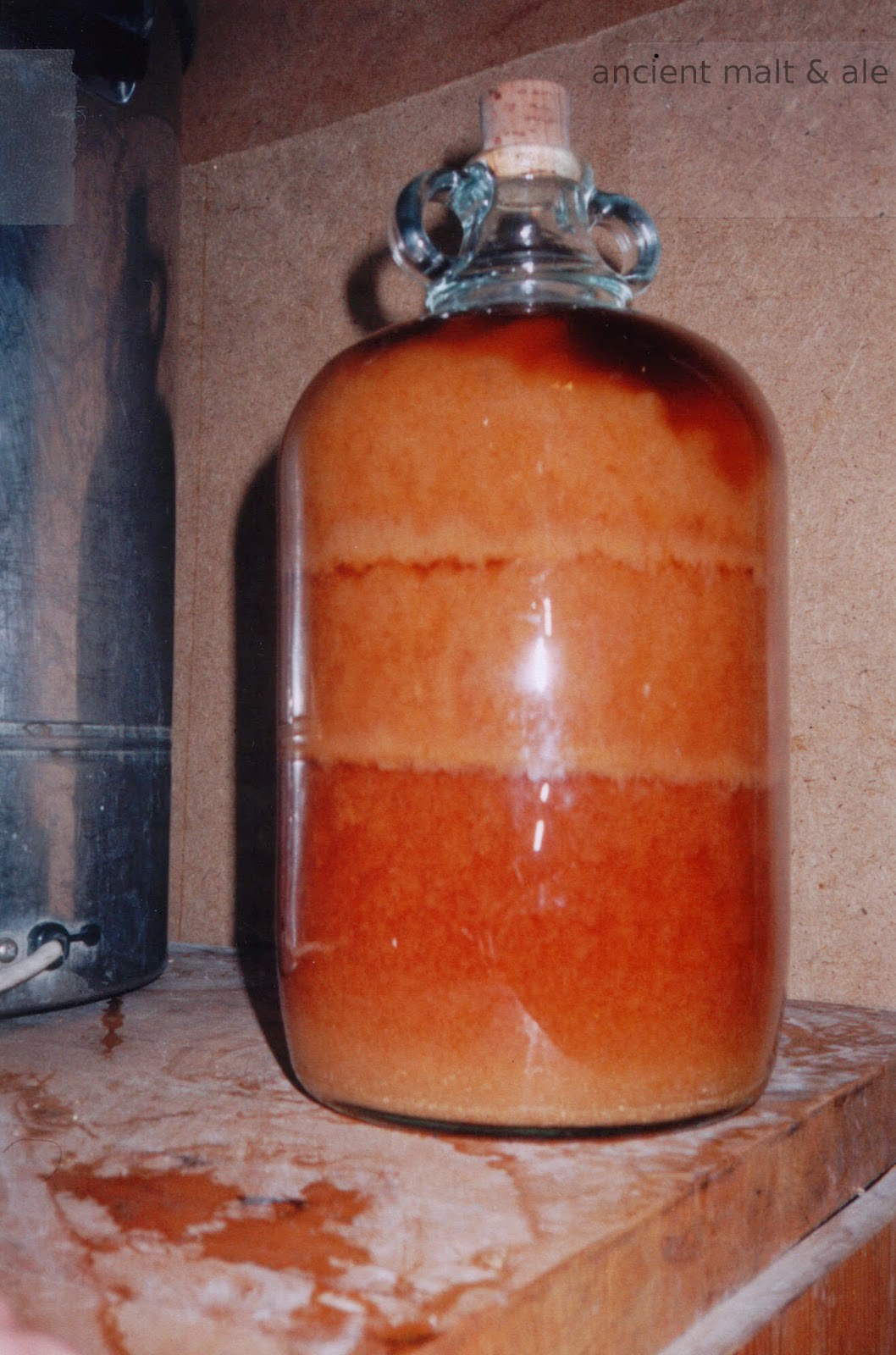
This foam of yeast cells, Barm, can grow into impressive towers of rafts, and a vigorous ferment will need significant head space, or spillage will occur.

Close view of Barm.

This is how a beer brew looks after a day or two. It is at this point that the Barm can be harvested, by skimming the foam off and storing the liquid in a container. Harvested barm can remain viable for up to two weeks if it is kept cool and free from dust. Before the invention of refrigeration, a well could be used to store the barm in a warm climate. 

Brewers are paranoid about infection by a wild yeast strain or other micro-organisms, so they prefer to start a brew by inoculating the warm wort with a proven viable yeast culture, the starter. 

The starter is made by adding stored barm, or a dried yeast to a small amount of warm wort. Nowadays dried yeast can be bought, but there are traditional methods.

A good starter for pitching on the wort.

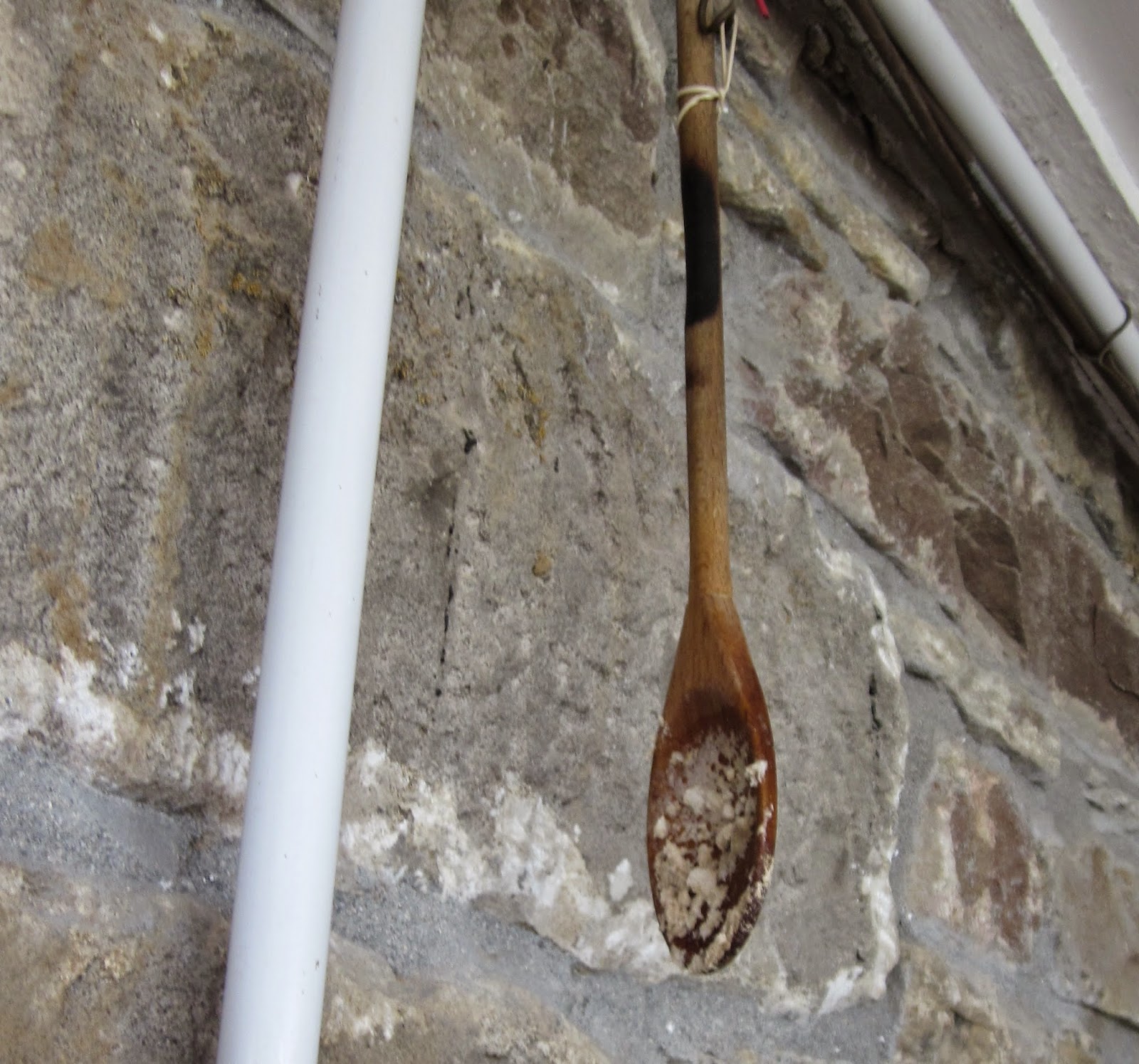
A Nordic and Hebridean tradition is to stir the barmy brew with a stick or wand, and to leave this to dry, hanging in a dry place. I've tried this and it works well. Could this be the origin of the magic witches wand?

Harvesting Barm on a spoon.

Drying spoon.


Dried yeast - barm - on the spoon

Inoculation of wort
After 32 hours at 20C.


After 48 hours at 20C.
After 48 hours from the side.
After 24 hours from the inoculation I was disappointed. Nothing seemed to be happening at all, but by 48 hours a healthy culture was established, fit for pitching.
After 96 hours.
After 96 hours.
After four days, primary fermentation is complete. It is this rapid initial doubling under favourable conditions that can make even a small amount of the right yeast into a viable starter for a pitching a good ferment.

From the moment I first started grain beer brewing I used commercial packets of dried brewers yeast. I was often disappointed by the slow or even non-existent activation for the starter. Maybe I should have been more patient, like with the spoon, but then I would have to make the starter a day or two before the wort.

Eventually I found brewing supplier who packed their own yeast which set off vigorously in the starter, giving a viable pitch in half to one hour. I quite liked the fruity and sometimes even buttery flavours.

When we moved from Manchester to Orkney I had the same problem with packet yeasts, so I had the supplier post yeast up to me. One day when I was struggling to learn how to make bread with a machine, I realised that the yeast I had become so fond of looked indistinguishable from the bakers yeast.

I now use baker's bread making yeast.

"Real Ale" brewer's yeast from a packet, left, and Baker's yeast from a tin, right.

Many breweries are very particular about their own yeasts and indeed a lot of the flavour of the beer does indeed come from the yeasts action. Some traditional recipes actually call for bakers yeast to be used. There is a very interesting article on Sahti here, and in it there is a link to a comparison of brewers and bakers yeasts.

I am beginning to suspect that the distinction between brewer's and baker's yeast only came about with the industrialisation of brewing in the Georgian era. I am certain brewing came before the leavening of bread, if not even before the invention of bread itself.

I have much more to say about yeast, microbes and infections but this post is already getting long, so there will be a part 2 to follow.


Sunday, 28 December 2014

What is Wort - a brewer's perspective

Hope you had a grand Yule and that you enjoyed the midwinter celebrations. We wish you all the best and A Happy New Year for 2015. There has been a bit of a lull on ancient ale blogging in the last couple of months, however we aim to correct this in the New Year and get back to writing again.

This one is about the Wort. Graham wrote it several months ago. It would make a good response to a short article "Beverage with heritage" that we read over the holidays. It was published in the Christmas and New Year Edition of New Scientist magazine, the 'one minute interview' with Patrick McGovern, director of the Biomolecular Archaeology Project for Cuisine, Fermented Beverages and Health at the University of Pennsylvania Museum. The question is asked: how does ancient booze compare with the modern stuff? The answer includes that "they wanted to be sure they had enough sugar to get the fermentation going, so they took whatever they had that contained sugar and mixed them together."
.
This idea of 'mushing loads of random sweet stuff together to make alcohol in prehistory' seems to be a commonly held view amongst non brewers. Merryn wrote a blog about desperately seeking sugars a few months ago, which tried to address the issue and dispel this myth.

Here is Graham's perspective, a beer brewer's explanation of what wort is:


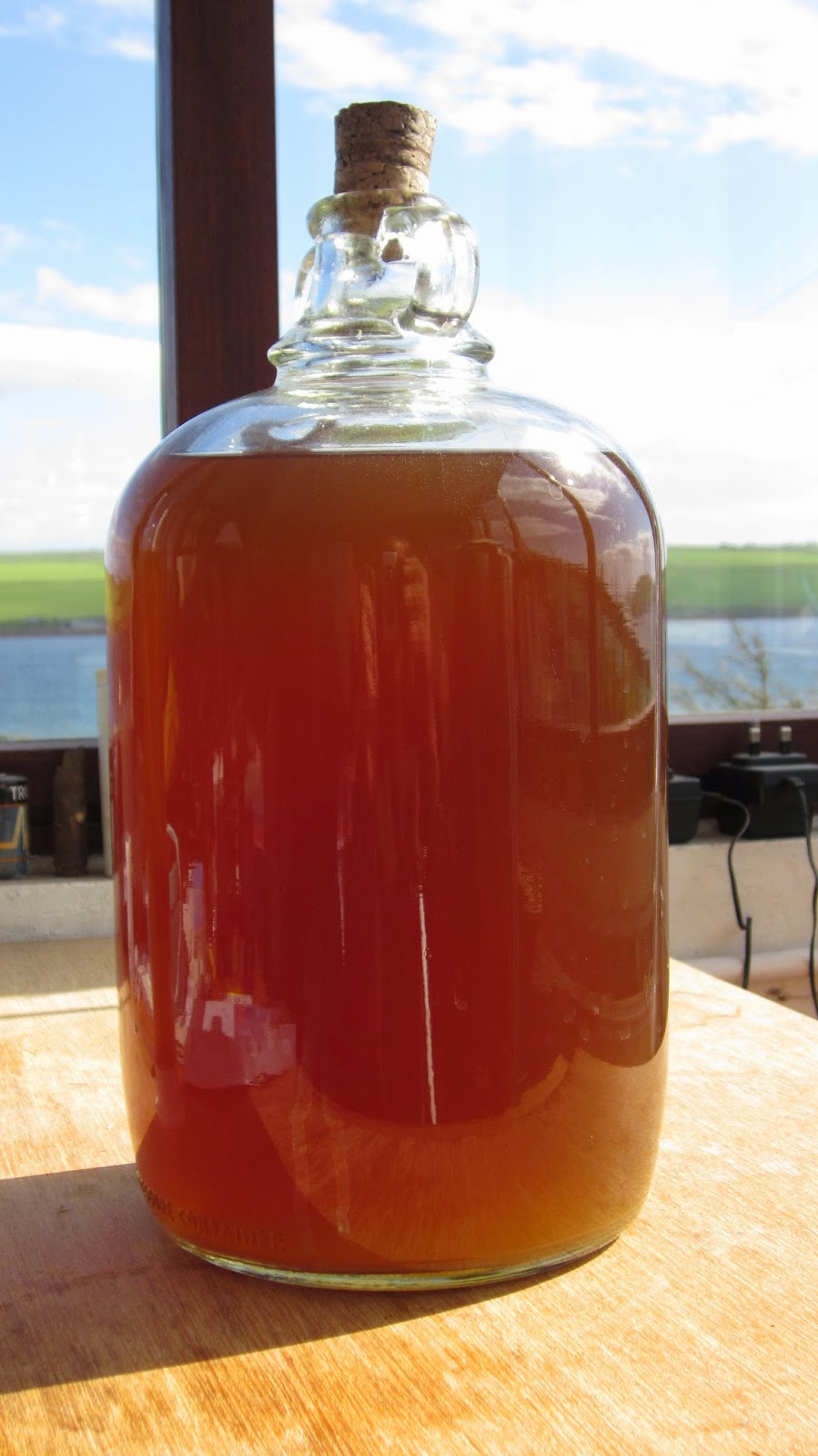
Wort (pronounced wirt, not wart ) is the Juice of the Barley, well not quite, but almost very nearly so. It is a thin, runny, very sweet but very sticky liquid, straw coloured through to brown. It is effectively a thin synthetic honey substitute. Ale made from wort without preservatives or flavouring actually tastes a lot like mead made from honey.

Wort is the liquid sugars extracted from malt, that is to say, partially germinated cereal grains - barley, wheat of all varieties, oats and even millet, but not rice or maize. It is the primary source of fermentable sugars in making ale or beer and always has been. It is relatively easy to make a sugar solution of at least 10% from malt, and then to wash further sugars from the grain down to a realistic level of 1-2%,  "small beer" level and, of course, anywhere in-between. This compares very favourably with other natural sources of sugar like birch sap, which is between 0.5 and 2% sugar, which would only make a small beer. So adding birch sap to a brew would only dilute it, not strengthen it as some scholars claim.

Wort is made by "hijacking" some of the natural processes of the grain's life cycle.

As part of the growing process the germinating grain must convert it's energy store, starch, into sugars so that these can then be built into cellulose, the structural skeleton of the roots and shoots. This requires the liberation of the two amylitic enzymes, alpha and beta, which are little like ptyalase, the enzyme in saliva that converts starches into sugars.

If this growing (germination) process is halted when the most enzymes are present and little of the growing structure has started, it will be good malt.

So, to make wort you lightly crush the malt and mix it with hot water at about 65 degrees Centigrade. Keep it at this temperature for anywhere between half hour to about 2 hours, depending on your style. This is called mashing. Then you drain the clear liquid sugars from this mash by lautering, which is yet another story. This gives you a strong wort. Then you can wash further sugars from this mash, sparging, to get a weaker wort.

Brewers measure the potential sugar and therefore alcohol of a wort using "specific gravity". Water is 1000. David Line in his book "The Big Book of Brewing" explains this in great detail in chapter 18.

This was my "Bible" when when I first began brewing beer 32 years ago. David Line was a pioneer in his time, explaining what the processes were, how they were done and why. He also explains different methods of mashing using simple equipment and this has been very valuable to me in re-creating the ancient and traditional crafts of brewing ale.

So to recap: wort is a golden brown, very sweet, very sticky, runny liquid that contains most of the potential sugars from the malt. It can be made to a variety of strengths e.g. Arctic Ale.

To illustrate this I will give you the results of one of my recent brews.

The recipe is loosely based on David Line's "Brewing Beers Like Those You Buy" page 88, Gales HSB. One of my favourite beers, sadly no longer made. I found his book to be an excellent collection of recipes for good Ales and Beers that could be bought in the late 1970s and 80s. Large brewery's methods have changed since then and sadly many of the modern renditions taste nothing like they used to.

15lb 8oz of crushed pale malt, Munton's Perl Blend, were mashed with 5 gallons of water, inside a grain bag, in a Peco Electrim mash-tun. The strike temperature was 70 degrees Centigrade and as the grain was added slowly, the temperature fell to about 60 degrees Centigrade, and was then raised back to 65 degrees Centigrade.

The mash tun was unplugged and covered with a sleeping bag to maintain the mash temperature. It was left like this for 2 hours.

From this I lautered 3.5 gals of wort which was nearly 1080OG.

wort: the first running
measuring the first running


This was followed by sparging. The first gallon of wort was 1062OG, the second 1048OG, and these, together with the 3.5 gallons, were boiled in an Buffalo 40 litre boiler with 1lb of dark soft brown sugar, and 4oz of molasses (these are the in the recipe and I think the molasses adds a certain something to the flavour) for one and a half hours. This produced 5 gallons of 1084OG. This was fermented in two fermenters.


A further 5 gallons of wort were sparged of 1036OG, 1020OG, 1012OG, 1006OG (this was very pale and weak) and finally 1014OG left to drain overnight. This was again boiled on the old hops, because there is an awful lot of sugars left on the hops. This gave 5 gallons of 1024OG, which was added to the two fermenters. At the end of primary fermentation this gave 10 gallons of 1008 final gravity.

The average of 1084 and 1024 gives an OG of 1054 for the 10 gallons. According to David Line's graph (on page 147 Big Book of Brewing) gives a strength of 7.5-1.1= 6.4% alcohol.

This was quite a surprise to me, for I haven't been measuring the gravities for some time, and I never expected to get this much beer from 15.5lbs of malt.

A recent comparison with a commercial beer, Scapa Special 4.6%, suggests that my beer was no stronger, so maybe there is something wrong with my figures.

But it did make me think that I may be over-sparging my wort and that this could be contributing to the haze, and tannin like bitterness. So I have increased the malt to 17lb 8oz, and now I am getting a much nicer beer.

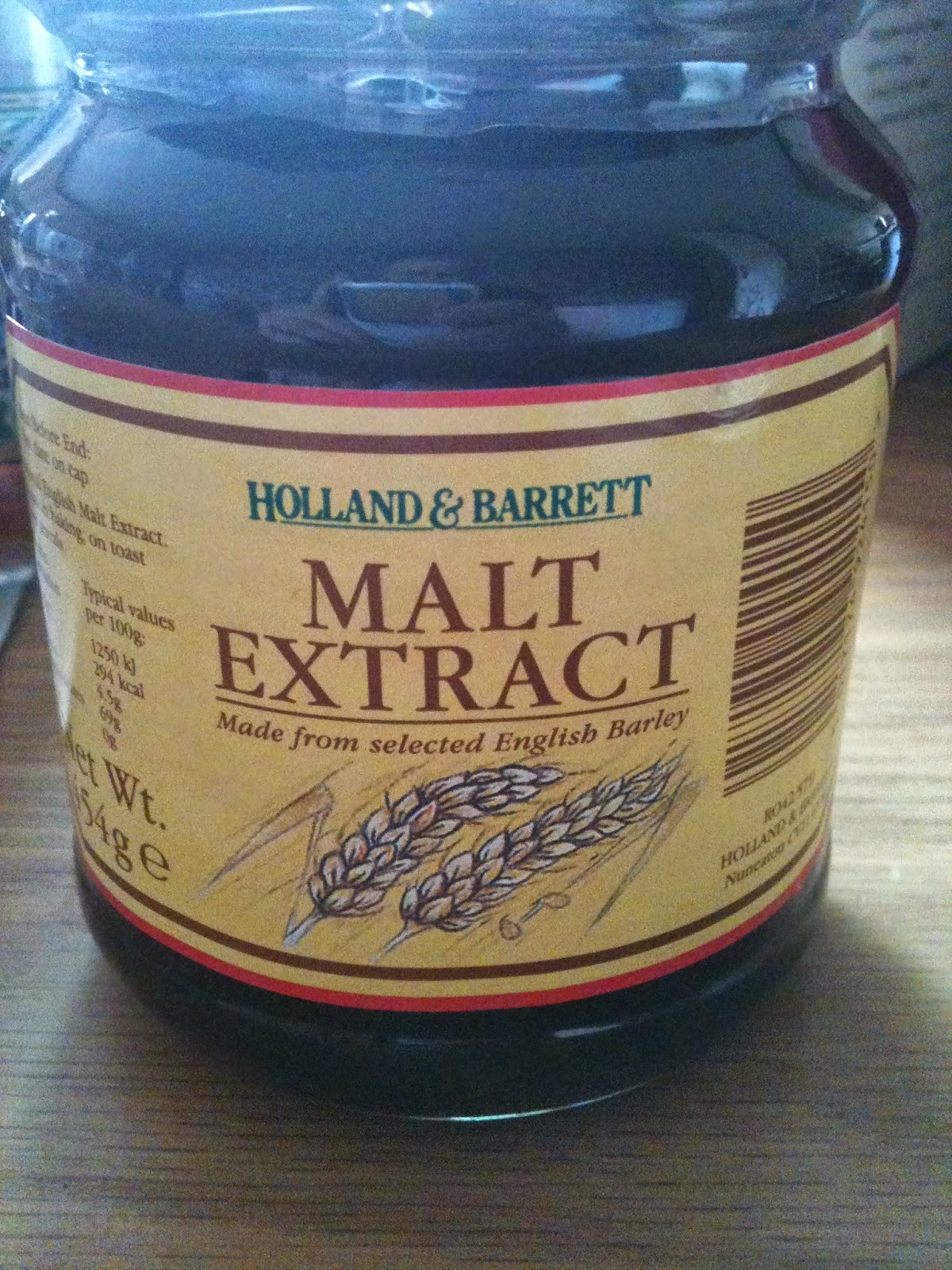
For those of you who will never meet malt, or a mash tun there is an alternative. Go to a whole food shop and buy one of these.


As best as I can estimate, this jar contains 11 fl oz of malt extract weighing 16oz, so this makes a density, specific gravity, or OG of 1450 or so. Dilute this with 4 imperial pints of water and you will have a re-hydrated wort of about OG1054.

Wort is a brown, runny, very sweet liquid that is extremely sticky when it dries. It could be described as a kind of dilute synthetic honey, that is very ancient in origin and is possibly the first process that was ever made with cereals. It could be that cereals were first cultivated, not for their staple qualities e.g. flour, gruel or bread, but instead for their status potential, sugars.

Many of the early settlements in the Fertile Crescent had special buildings with smooth floors, made of beaten earth, clay or lime plaster which are ideal as malting floors. All that is then required are containers within which to heat the crushed malt and water (the mash) to make a sweet wort. Merryn's M. Phil, entitled Barley Malt & Ale in the Neolithic (1999), looks at this, and the archaeological evidence for it, in some detail. One particular site, Beidha, was excavated in the late 1950s by Diana Kirkbride, a member of Robert Braidwood's team. She describes a smooth plaster floor with 'thousands of grain impressions'. This is probably a malting floor. The site is dated to the 8th millennium BC.

There is a Biblical expression: "The land flowing with milk and honey". Some Biblical scholars have made tortuous explanations to explain this phrase - they write about how wild bees' nests in cracks in the rocks would ooze honey in the hot sun. More informed scholars explain that this phrase refers not to bee honey, but rather to some kind of artificial sweetness, perhaps made from figs or dates, or maybe even made from grapes.

This must be because these scholars do not recognise nor do they understand that cereals can be a source of sweetness, if processed correctly.

I think that this phrase 'land of milk and honey' refers to milk and wort. It is a metaphor, or a description of a land that is good for both cows and for growing grain.

It seems that Biblical scholars have overlooked the fact that wort (liquid sugars made from the grain) was once commonplace in Egypt and Sumeria, otherwise they would not have been able to make beer. This was probably common throughout the whole Fertile Crescent and the Biblical Israel.

With the rise of Islam in this area, alcohol has been proscribed. There is no further use for malt or wort, so the practices and knowledge of malting and mashing have died out completely there. Archaeobotanists and archaeologists who have done field work on cereals in Turkey and the Ancient Near East seem to be unaware of the malting, the mashing and the wort. It is outside their experience and so it is understandable that wort has been overlooked in archaeological interpretation.

Today Bouza is made, it can be described as a type of beer, however it is a wheat based beverage made by lactic fermention. It is no longer alcoholic.

So, why do I bother to go to all the trouble of mashing, lautering, sparging, boiling and all that washing of brewing equipment? After all, it takes a whole day, a huge amount of effort. The answer is that all of the Beer Kits that I have ever used produce a beer with a kind of metallic flavour. The Kit contains a large can of Malt Extract. No amount of boiling with extra hops, or anything else will make it taste any better.

I make my beer with the simple, basic ingredients. I use traditional techniques to make the wort because I think it makes a better tasting beer. At least, when everything goes to plan, it tastes good. Even when it's bad it is often not much worse than some of the bad commercial beer available in supermarkets.

Beer is changing, with the way it is made. Some commercial beers, in cans, bottles and on draught have this unpleasant metallic flavour. They have been made from malt extract.

I was disturbed recently by looking carefully at the contents lists of commercial beers. Some like Scapa Special say that they are made from "maris otter pale ale malt", or others "a blend of pale and roasted malts". I know these are made "from the grain" and not with malt extract.

Some lagers and stouts are labeled as containing barley, wheat and oats, with no mention at all of the malt.  I can't help but wonder if they have been made from syrups, much like the high fructose corn syrup so popular in the processed food industry. This could explain the uniform blandness of some of these cheaper beers.


Tuesday, 13 May 2014

controversy in a grooved ware bucket

 The Larger Vertical Stone
Balfarg: an ancient site on a housing estate
The focus of my research changed suddenly, from the British Bronze Age to the Neolithic, one day in the summer of 1997. I was reading an excavation report about the prehistoric ceremonial site in Scotland, known as Balfarg. It was a large and complex place. As well as a neolithic henge and stone circle, which was preceded by a timber circle, there were the remains of mysterious rectangular timber built structures. There was also a ring cairn and a ring ditch. Lots of prehistoric pottery was found, ranging from neolithic bowls and large grooved ware bucket shaped pots to bronze age beakers, tripartite food vessels and bucket urns.

Pits contained what the excavators interpreted as "ritually charged" material. These so called "ritual pits" contained large quantities of broken and burnt pottery, mixed up with charcoal and burnt bone. Apparently, these things were deposited deliberately. In other pits there was no pottery, just charcoal, and the pit had been carefully sealed with closely packed stones.

Residues were noticed on a few sherds of neolithic grooved ware that had been buried in one of these pits. Analysis of these cereal based residues with meadowsweet pollen are similar to those found on Bronze Age pots, specifically, the Strathallan Food Vessel and the Ashgrove Beaker, which have both been interpreted as possibly being the remains of ale.

Were they making malt and ale in neolithic Britain? It seemed so to me. The Neolithic Revolution began in the British Isles around 4000 BC. Did it take people almost 2000 years, until the Bronze Age, before they realised or discovered that it was possible to make malt and ale with the barley and wheat that they were so keen to grow? Was the Neolithic really a time of growing grain to make flour, bread, porridge and gruel? Or were they making sandwiches for the feasts, as Professor Mike Parker Pearson seems to be suggesting. Or maybe he is just making a joke?

a few words about brewing residues
When making ale from crushed malted grain, two types of sludgy cereal based residues are generated during the brewing process. The first is a sludge, rich in barley chaff from the sparging process. Freshly sparged wort is cloudy at first. 

freshly sparged wort - settling out
the same wort, settled out with sludgy cereal residues accumulated
Once you have a clear wort, it is racked or syphoned off into a fresh clean vessel. Some chaff will inevitably get through. Boil the wort with selected herbs, flowers or hops and then ferment it. You can use the barm from previous brews to start a fermentation, it is ideal. A simple process, once you know how to do it.

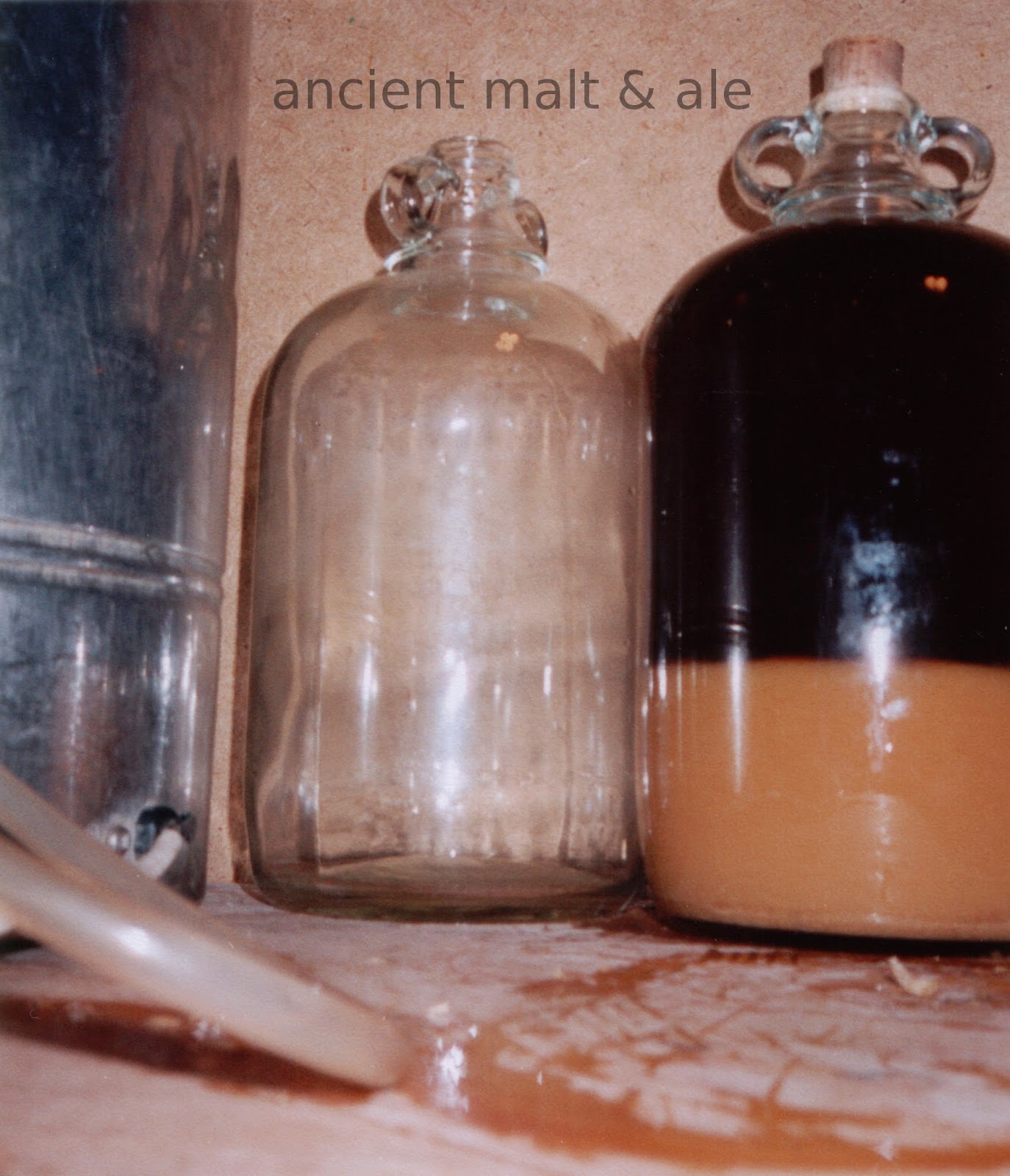
The second type of brewing residue is cereal based, but with traces of yeast and herbs, hops, flower heads, leaves, twigs or pollen that settle out during the fermentation of the wort in the fermenting vessel. If you are lucky enough to drink a bottle of traditionally made real ale, the kind that must be poured in one go so as not to disturb the sediment, then you will know roughly what I mean. 

cereal based residues on grooved ware buckets
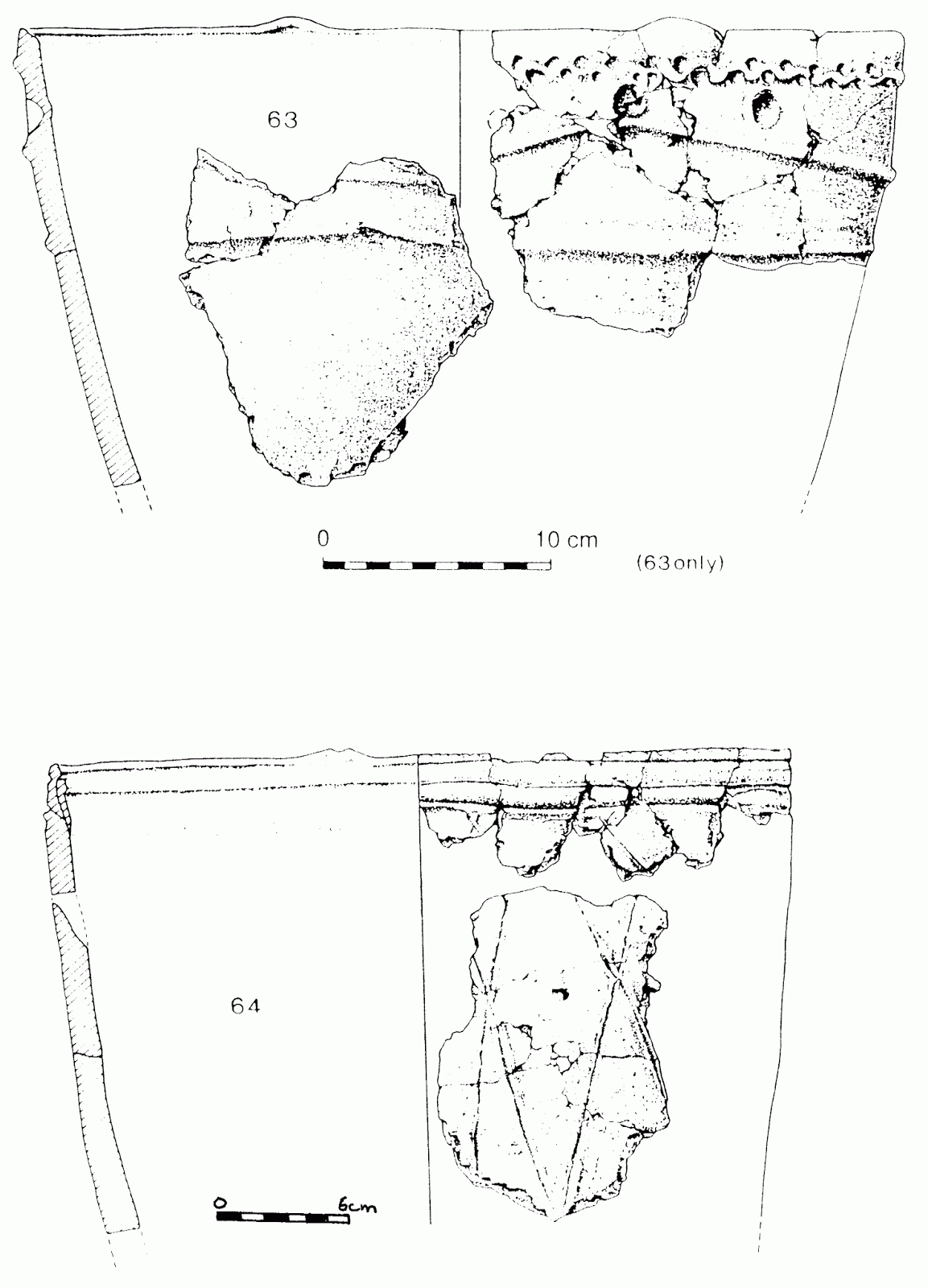
Let's go back to the Balfarg excavation report. The pots in question were numbers 63 and 64. Sherds from these two large grooved ware bucket shaped pots were found in a pit, close by one of the rectangular timber structures. Brian Moffat's descriptions of the cereal based residues make interesting reading for any all-grain brewer or archaeologist. I recognised immediately what these residues represented when I read them, way back on that summer's day in 1997. Not a sort of porridge with added herbs. Not a kind of gruel. These cereal based residues were probably the remains of brewing sediments from the fermentation bucket.

I was so excited by this! Ale in the Neolithic! I ran round to my best friend's house, just round the corner from where I lived, and told her all about it. She is a biochemist and was just as excited as I was. I told my supervisor the next day. He did not seem impressed at the prospect of malt and ale in neolithic Scotland. The previous year I had a short article published in British Archaeology, so I contacted the editor. He asked me to send him some details so that he could include it in the News section, September 1997. The Getafix and magic potions reference was not my idea! I do like it, though.

the original descriptions of the residues on pots 63 & 64

pots 63 & 64 from Balfarg (PSAS Vol 123)
Three broad, yet distinct types of burned cereal based residues were identified on the inside surface of sherds:
1. amorphous & burned
2. amorphous, granular & burned 
these two types were abundant in all samples.

3. burned cereal mash
both barley & oats, part grains, there was no entire carbonized grain since the grain had been thoroughly ground down, making taxonomic identification difficult.

"... a cereal based preparation ... with meadowsweet, indicated by both pollen & macroplant remains, clumps in one sample indicate a flowerhead was added ... fat hen ... cabbage/mustard? ... the single record of nightshade is puzzling ... pollen from hemlock ... the mix is coarse and crude ... like course porridge with potherbs and flavourings"

Another burned deposit was encrusted on the outer surface of one sherd of Pot P63. Both pollen and seeds of black henbane were identified.  
"... the seeds are robust and resilient and the breaks show mechanical rendering ... pollen and seed fragments were fairly well intermixed suggesting an incomplete process of homogenization ... the small cache of seeds is of black henbane alone."

Two separate organic residue deposits. One inside the pots, this one was cereal based with several different herbs added. The other residue was a burnt encrustation on the outside surface which, when first analysed, contained henbane pollen and several henbane seeds.
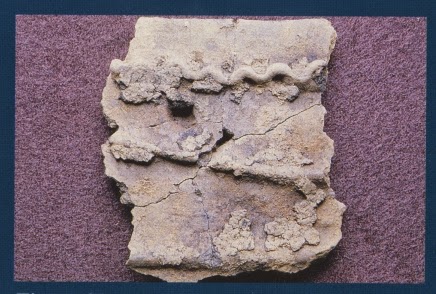
burnt encrustation on the outside of Pot 63 that contained henbane pollen and seeds

The above photo is from the booklet "Balfarg. The Prehistoric Ceremonial Complex" published by Fife Council, Glenrothes Development Corporation and Historic Scotland, 1993. I think it was intended as a guidebook for the site and is now out of print. There may be secondhand copies available. The original archaeobotanical report of the Balfarg residues is on pages 108-110 in Proceedings of the Society of Antiquaries of Scotland, Vol 123.

Henbane (hyoscyamus niger)
According to Culpepper, henbane should never be taken internally. More modern herbal reference books warn that it is a deadly poisonous plant. Do not use. This is very good advice. However, henbane does have its' place as a herbal remedy that was sometimes used in historical times, for example, to alleviate earache if applied externally, as a tincture. If consumed in small quantities, henbane induces intoxication, hallucinations, blurred vision, rapid heartbeat, euphoria and dizziness.

It is an effective painkiller, according to the herbal literature. All parts of the plant can be used and the seeds are about ten times more potent than the leaves or flowers. I am sure that, in the Neolithic, people knew about the medicinal and other properties of the henbane plant. It grows well in coastal regions and henbane seeds were identified at Skara Brae, a neolithic village in Orkney, Scotland. An intriguing aspect of the plant is that the active ingredients, the alkaloids, are more soluble in alcohol than in water.

henbane (hyoscyamus niger)

so what's the controversy?
This appeared to be not about the cereal based residues, but rather about the unusual identification of henbane seeds in the burnt encrustation on the outside surface of a neolithic pot sherd. It seems that, at first, there was not a problem. The excavation report, with its' rather interesting archaeobotanical report, sat quietly in the library journal section for a few years. It did not make any trouble. As more things were written about it, and as more archaeologists made reference to the possible "ritually charged" aspects of this rare residue discovery, it seemed that a re-analysis was required. This was commissioned by Historic Scotland. Two academic papers were rapidly produced.

The first was published in January 1999 in the Journal of Archaeological Science. This is a pay to view paper, with access available through University Libraries. Although the existence of henbane seeds within the residue was not confirmed, the residue was described as "a uniform and well processed substance, possibly something like a thick carbohydrate or protein based gruel". This description is consistent with the sludgy residues that accumulate at the bottom of an ale fermentation vessel - a well processed homogeneous mixture of cereal chaff, pollen, plant fragments and seeds.

The second paper was published in March, 2000 in Antiquity. This one, happily, is accessible online and is essentially a summary of the first paper. The focus is on disproving the "henbane ale" theory. The abstract makes this clear: "Were drugs in use in prehistory? Recent claims for the use of hallucinogenic substances have been made, and caused a stir. However, new work on a Scottish Neolithic ceremonial site suggests archaeologists (and the media) may have been jumping to the wrong conclusions!"

Whether or not henbane was added to the ale is clearly debatable. If such plants were being added to the brew, then it infers an understanding of their properties and some interesting ritual practices in prehistory. It might infer shamanistic practices, witchcraft, medicinal use of plants and more. A paper has been published recently in the Journal of Archaeological Method and Theory by Elisa Guerra-Doce of the Universidad de Valladolid in Spain. She argues that "far from being consumed for hedonistic purposes, drug plants and alcoholic drinks had a sacred role among prehistoric societies. It is not surprising that most of the evidence derives from both elite burials and restricted ceremonial sites, suggesting the possibility that the consumption of mind-altering products was socially controlled in prehistoric Europe."

My interest is in the cereal based residues on these ancient grooved ware pots and what they tell us about cereal processing techniques in the Neolithic. Flour, bread, porridge, gruel or was it malt and ale? What were they drinking at feasts? Was it sacred river water, or was it sacred ale? When searching for an image of grooved ware pottery online I found this comment on that well known online Encyclopedia - Wikipedia:

"Grooved ware comes in many sizes, some vessels are extremely large, about 30 gallons, and would be suitable for fermentation. The majority are smaller, ranging from jug to cup size, and could be used for serving and drinking. The theory that the first British farmers (c4000 BC) had the knowledge and ability to make ale from their crops with their pottery appears to be controversial and not yet widely discussed by the archaeological community."

There have been some amazing recent archaeological excavations and discoveries of ancient ceremonial and feasting sites, for example the Ness of Brodgar on Orkney and Durrington Walls, near Stonehenge in England, which was investigated by the Stonehenge Riverside Project. There is also evidence for beer brewing and feasting at Gobekli Tepe in Turkey, at the dawn of agriculture, some twelve thousand years ago.

It is surely time for the academic community to start talking seriously about how grain was being processed in prehistory. What were they were using it for? The options seem to be flour, bread, porridge, gruel or malt and ale, with added herbs.

----------------------------------------------------------------------------------------------------------------------

Balfarg Excavations
Balfarg was excavated before the construction of a housing estate. As a result, plans were altered to preserve the stones and build the houses around them. The excavation reports are online, thanks to the Archaeology Data Service, York University, so you can read it for yourself from the comfort of your own desk or armchair: Barclay, G J & Russell-White, C J (eds) 1993 'Excavations in the ceremonial complex at Balfarg/Balbirnie, Glenrothes, Fife' Proceedings of the Society of Antiquaries of Scotland Vol 123, 43-210.

Balfarg had been excavated earlier, in the 1970s. During those excavations a cist burial was found, containing the bones of an adult together with a dagger and a fine beaker with a handle - a rare find indeed. This excavation, by Roger Mercer, was published in 1981: The excavation of a late neolithic henge-type enclosure at Balfarg, Markinch, Fife, Scotland 1977-1978. Proceedings of the Society of the Antiquaries of Scotland Vol 111, 63-171.