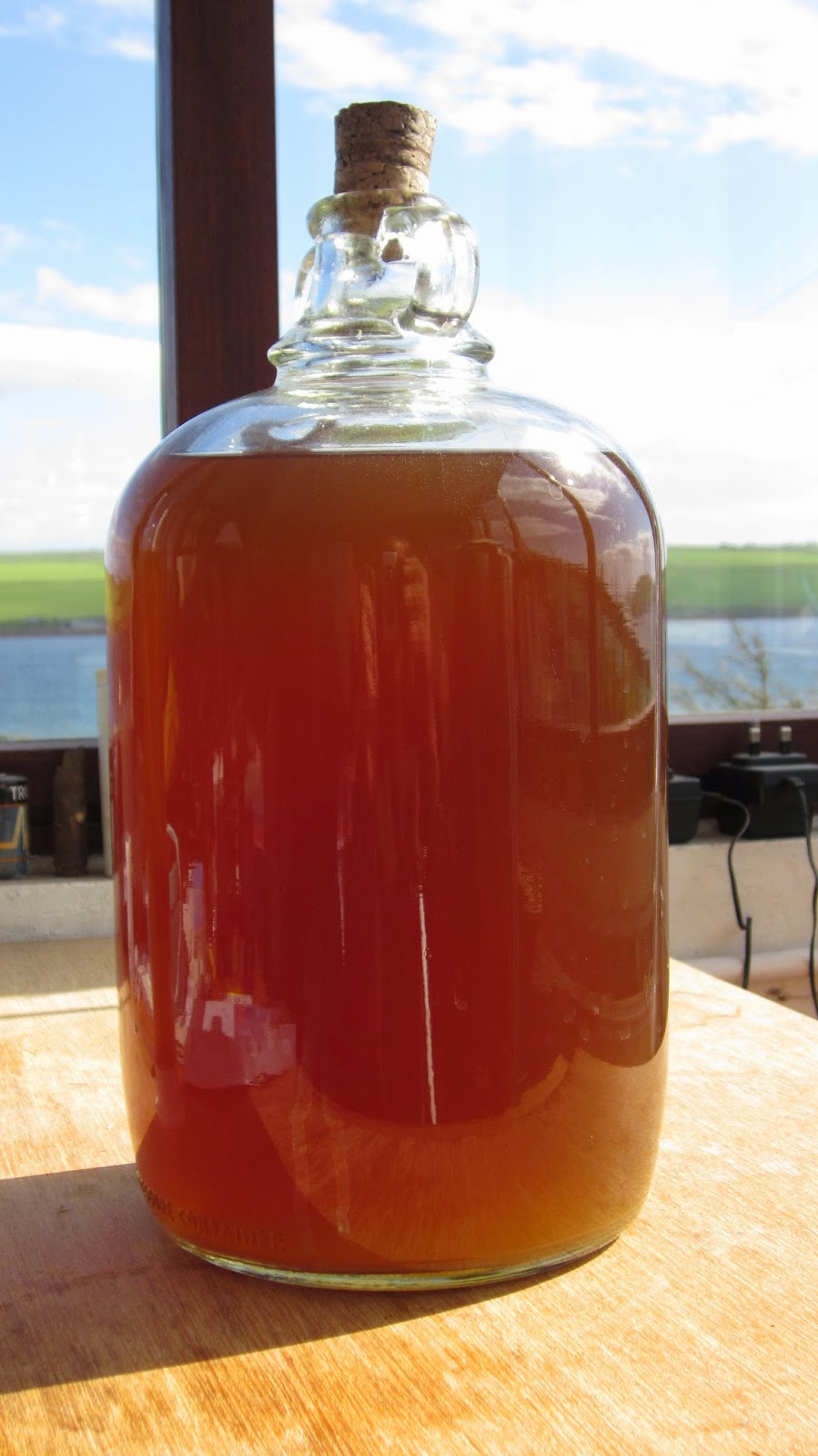
Showing posts with label lauter. Show all posts

Thursday, 7 July 2016

trough, mash and wort

How do you collect the wort when you have mashed in a trough in the ground?

The main problem, obviously, is that you can't lauter and sparge in the same way that you would if you had used a wooden tub as a mash tun with a spigot, or if you had a bespoke lautering and sparging vessel. When the trough is in the ground, it's a different story.

There are thousands of sites throughout the British Isles that archaeologists know as Burnt Mounds. All that remains is a large pile of fire cracked stones and the remains of a trough lined with either stone or wood. If you have never heard of burnt mounds before, I suggest you have a look at an earlier blog which explains what they are and some of the interpretations. Archaeologists agree that they were used to make water hot. This was achieved by heating rocks in a fire then putting them into the trough of water. What you do with that hot water is up to you. There are many possibilities. Some interpretations include bathing, others suggest cooking meat and some archaeologists think that they were used as a sauna. Another function is as a mash tun. With the discovery of chaff and grain in an oak trough excavated in Wales in 2008, a mash tun is a strong possibility.

Trough mashing at Bressay, Shetland

Replica trough at Bressay, Shetland, surrounded by fire cracked stones.


A few years ago, we mashed in a full sized replica stone trough, based on the one from the Bronze Age burnt mound site on the island of Bressay, Shetland.

The original trough and buildings were moved stone by stone, since it was in danger from coastal erosion.

A replica trough and hearth was built beside the Bressay Heritage Centre, for experimental archaeological work. It's been used to dye wool, it has been used as a bath and also as a mash tun by archaeologist Dr Lauren Doughton in her experimental work.

We were there in the summer of 2011 to mash some malt with her when she was working on her PhD about burnt mounds and troughs. 

The weather was rough, even though it was mid July. Buffeted by the wind and rain, we managed to run a mash and collect some of the wort. Our time was strictly limited because we had to catch the last ferry off the island and get back to our tent. A full set of pictures of the day's mashing, collection of wort and the final brew can be seen here on my Facebook page.

Brewers usually want to obtain as much wort as they can from the mash. There is potential for lots of waste from a trough mash unless you can find a way of maximising the wort extraction. The most obvious technique might be to let the grain settle to the bottom of the trough, then scoop the wort out using a jug or a bucket or something like that. It's tricky, as we discovered. Nevertheless, it works. Inevitably there will be bits of husk in the wort. This is not a problem. They will sink to the bottom again and it is easily possible to obtain a clear wort for fermentation from a trough mash.

Locally sourced clay was used to seal the corners of the replica trough before we began the mash.

Water was put into the trough. It became slightly murky, a grey colour from the clay luting that we had used to seal the trough. We were a bit worried, however, we did not need to be concerned because the resulting ale from this experiment was delicious, sparklingly clear and bright, perhaps the result of our accidental addition of clay to the water.

The hot rock rolling team, from the fire into the water.

The technique of rolling hot stones from the fire into the trough of water had been perfected by Lauren and her team in previous runs. Using garden forks and spades, the hot rocks were expertly rolled down the slope and into the water.

When the water reached strike temperature, 50 kilos of crushed pale malt was added to the 200 litres of water and stirred with a garden fork. You know when the water is the correct temperature for the strike, around 74 degrees Centigrade or thereabouts, because this is when you can clearly see your reflection in the water, no ripples, no steam. We double checked with a thermometer.

The strike:adding the crushed malt to hot water.

The saccharification takes about an hour and it's crucial to keep the mash temperature right for that time, adding hot rocks and stirring as necessary. We put a wooden board over the trough, to help keep the steam and the heat in. It was a good conversion of starches into sugars, a successful mash. The finished mash, when settled, was a deep dark brown and it tasted very sweet.

The finished and settled mash - the next job is to collect the wort and ferment it.
For non brewers, I should emphasise that wort is not alcoholic. Sugar ferments into alcohol, starch does not. The saccharification that happens during the mash is a crucial part of the beer brewing process. Fresh wort is very sweet and prone to all kinds of bacterial and fungal infections. On the three occasions when we have been too tired to process the mash after a demonstration, the next morning the mash was fizzy and sour. Wild yeasts and lactic bacteria infections had ruined it. It was useless. Wort must be collected as soon as it is cool enough to take the yeast. The yeast ferments sugars into alcohol. Herbs or hops preserve and flavour the ale or beer.

We were short of time and collected as much wort as was possible. The brewer used jugs, buckets and plastic containers to scoop from the trough. We had, of course, taken the stones out first, when they were cool enough to handle. The process of collecting the wort was hard work and we only managed to get about 6 gallons out of the trough before we had to pack up, load the van and catch the last ferry back to the Shetland mainland.

The brewer collects wort from the trough. The stones have been removed and are on the heap.

The wort was put into a fermentation vessel, yeast was added and the fermentation vessel was kept warm using sleeping bags as insulation. After about four or five days it had fermented into a fine, clear and strong ale. We used a handful of dried meadowsweet flowers as a preservative.

This is how we should have collected the wort
On the ferry back to mainland Shetland we realised that we had made a mistake. We should have piled the stones up in the trough to make a sort of dam, then we could have put the mash to one side and the wort would have been so much easier to collect. This is how the Moore Group archaeologists collected the wort at their trough mash demonstration at the Sixth World Archaeology Conference in Dublin, 2008.

They made a wooden trough and painted the bottom part with bitumen to ensure that it did not leak. They correctly assumed that the University authorities would not allow them to dig a big hole and set their trough in the ground.

Moore Group archaeologists filling the trough with water at WAC 6, Dublin
They heated the stones on a fire, dropped them into the water and added the crushed malt when the strike temperature was right. It was this hot rock mashing demonstration that inspired us to stop mashing in pottery vessels and start using troughs, wooden tubs and hot stones.

Here are some of my photos of the Moore Group's event:

1 heating the rocks
2 heating the water
3 saccharification: the mash


4 the stone dam, mash and wort separated

5 settled wort and mash

6 collecting the wort, it's cloudy because it has been stirred up.


Hot rock mashing is a spectacular process, the stones sizzle as they hit the water, the mash saccharification happens right before your eyes and the aroma from the mash smells delicious. This is a mysterious, magical transformation from grain starchiness into fermentable sweetness. Surely this would have been an event that would have amazed and impressed people in prehistory, just as much as it does in modern times.

Collecting the wort like this, by creating a dam of stones, is an extremely efficient way of doing it, perhaps even allowing for sparging. Once the first runnings have been collected from the trough, more hot water can be poured gently through the mash, thus releasing more wort for the brewer. There would be very little waste and a good quantity of wort could be collected.


Is there any archaeological evidence for the collection of wort like this?

It is rare that prehistoric troughs are excavated with the stones still within them. If you have excavated one like this, I would love to hear about it. Excavations in 2013 by Wessex Archaeology at Kingsmead Quarry, Horton, in Berkshire, England revealed the remains of four neolithic buildings. They were interpreted as having been 'houses', which is often the case with these discoveries. I do wonder how many of these neolithic 'houses' might have been used as barns or as buildings where the grain was stored and processed. But that's a story for another blog.

One of these four neolithic rectangular timber buildings at Horton caught our attention when we were looking at the pictures online. There appear to be some fire reddened rocks close by one of the buildings, in a heap. The buildings are, as always, interpreted as "houses". But were they dwellings? Or some other kind of building, like a barn or grain processing building? See Wessex Archaeology's page about them here


The red rocks look rather like modern bricks. There seems to be no mention or discussion of them on the web page. Maybe I missed it. However the stratigraphy indicates that they are contemporary with the building. So, are these stones an indication of hot rock water heating technology at neolithic Horton? Were they piled up in a wooden trough that has long rotted away? What were the people doing in and around this rectangular wooden building, over 5000 years ago?

I cannot answer these questions. I am nevertheless intrigued by this discovery. And so I finish this blog with a close up (thanks to Graham) of those mysterious fire reddened stones and welcome interpretations, comments and discussion.
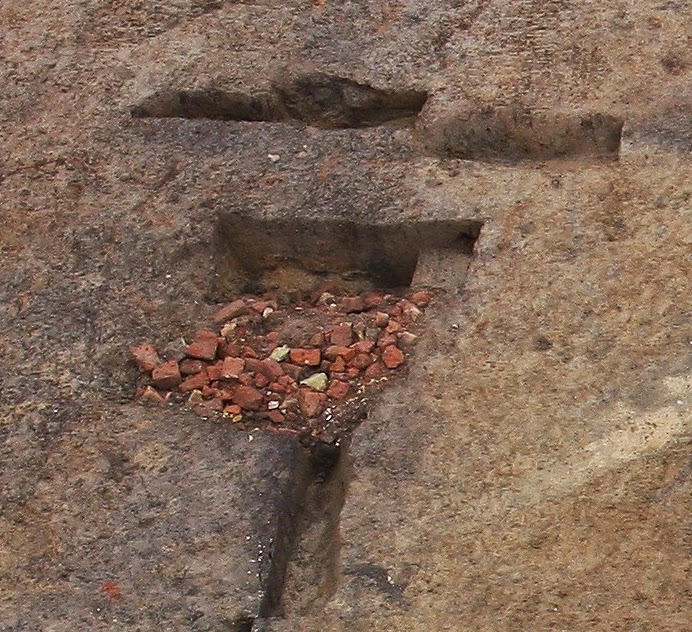
a close up of those mysterious fire reddened stones beside the neolithic building at Horton

 ------------------------------------------------------------------------------------

If you want to know what our Bronze Age Trough Ale, with meadowsweet, tasted like, we sent some to David Connolly of BAJR (British Archaeological Jobs & Resources). Although he struggled to open the parcel, he gave his opinion on the ale's flavour and strength.

It is sometimes said that prehistoric ale was weak, cloudy and sour and that it tasted disgusting. We disagree.

Here is the link: https://www.youtube.com/watch?v=wpvPi25TTOI

Quinn, B., & Moore, D. 2009 ‘Fulacht fiadh’ and the beer experiment’ in Stanley et al (eds) Dining & Dwelling. NRA Monograph Series No. 6, 43-53, NRA, Dublin.

Thursday, 16 June 2016

lauter and sparge

When the brewer has mashed in, he or she needs to separate the sweet wort from the grain husks. This is achieved by lautering and sparging.

It's a crucial part of the beer making process.

The previous blog was about the ancient magic of the mash tun, where the brewer transforms grain starch into sweetness. The saccharification, a process that is driven by the starch converting enzymes in the partially germinated grain, the malt.

At the end of the mash the contents of a mash tun are sweet, with the grain husks mixed up with the liquid. Although the brewer calls it the mash, it has not been physically mashed up, as you would mash potatoes for example. It's more like an infusion, when you put the leaf tea into the pot with hot water, then allow it to mash for several minutes.

In the brewer's mash tun you could be fooled into thinking that the grains are still whole - they look as if they are. But the starchy endosperm is gone, what looks like a whole grain is just the husk with very little left inside.

the contents of our mash tun: pale malt, roasted barley & wort

Lauter and sparge are wonderful words that mean nothing if you have never done it. They are a crucial part of the transformation of grain into ale. Many beer recipes don't use these words. You are just told to 'collect six gallons of wort'. The writer of the recipe assumes that you know how to do this.

Lautering is when you collect some of the wort and then, gently and carefully pour it, or trickle it, through the mash. Keep repeating until the wort runs clear, then collect the clear, strong first runnings. After that, you can begin to sparge. This involves running hot water through the mash to obtain several further gallons of weaker wort. How much wort you collect depends upon how much mash there is in the mash tun and what strength you want the resulting ale or beer to be.

For further details, see the brewer's post about wort which gives specific gravities and more information about wort.

There is a detailed explanation of some of the aspects of lautering and sparging by the brewer and writer John Palmer, from his excellent online book 'How to Brew'. It is,of course, the modern home brewer's perspective and one of the most comprehensive descriptions of how to lauter and sparge that I know of. His next chapter, about the importance of crushing the malt is also well worth reading.

The malt that goes into the mash tun should be lightly bruised, as they say in Orkney. Just enough to break the husk but not enough so that it has the consistency of flour. Too floury and you will have a stuck mash. This means that the hot water will not trickle through the mash and it's almost impossible to obtain the wort. No brewer wants that.

The interesting thing, for me, is how lautering and sparging was done in the past.

Today, a modern all grain home brewer can buy a mashing and sparging bag which sits neatly inside the mash tun. This is how we and many other home brewers mash, lauter and sparge.

First, the mash bag is put securely into the mash tun which has a tap near the bottom. Tie the string nice and tight. Add the required quantity of crushed malt and hot water, leave it for about an hour to mash, maintaining the temperature at around 67 degrees Centigrade. When the mash is done, all you need to do is collect some of the wort in a jug and pour it carefully through the mash. Keep doing this until the wort runs clear. This is lautering. Inside the mash tun, the bed of grain has settled and consolidated, creating a natural filter of grain husks that is held in place by the mesh at the bottom of the mashing and sparging bag.

Then you run off and collect the first runnings; this is very strong wort, very sweet. You can collect further wort by sparging. The more wort you collect the weaker it becomes. Hot water is trickled through the mash and several gallons of wort can be collected in this way. It's not absolutely essential to lauter. It's possible to go straight to sparging. The wort will be cloudy with lots of particles of grain in suspension. Leave it for a while, they will settle at the bottom of the container.


Lautering: we use a jug to collect the wort


Sparging: first runnings, the clear wort is collected

In the days before mashing and sparging bags, how did people collect the wort?

There would be a small hole in the mash tun, either at the bottom of the tub or at the side, very close to the bottom. They used a bed of straw, juniper branches or other fibrous material at the bottom of the mash tun, this would give the grain husks a place to settle and help the grain husks to form the natural filter. The fibrous material would be held down with stones, so that it does not float about in the mash. This traditional method of mashing (they call it masking) and drawing off the wort is described in the malt making and brewing chapter of Mary Scott's book (1967) Island Saga: the story of North Ronaldsay. It was written by her brother William, presumably because he was one of the island's brewers:

" The vat had been prepared beforehand by taking a good handful out from an oat sheaf and spreading it across the tap at the bottom of the vat, and then covering the straw with a stone shaped somewhat like a half moon - the straight side resting on the bottom of the vat and the rounded part fitting snugly to the round of it. The stone would be tilted to an angle of approximately 45 degrees. The stone was to keep the straw in place. 

Masking is then proceeded with using alternative pailfuls of water from the boiler and the first potful that had cooled off somewhat. If boiling water were put on the malt it was liable to stick - that is, it might all set in a gloggy mass, and no liquid could be drawn off. In the breweries I suppose they will put the water on at a certain temperature; there was no thermometer used here, just guess work."

After the mash, or masking, the wort must be drawn off. This is how it was done:

"The vat was allowed to stand for two hours. The boiler was by this time going full swing again ... when the two hours were up it was time to set about drawing off the wort. 

You put a pail under the tap, pulled out the plug, and, if everything was right, the liquid would run off in a beautiful amber stream. It was a great relief when you saw it was running off clear. The first pailful to be drawn off  might have some settlings or groot in it - that is some of the dust or fine stuff out of the malt - so you would tip that pailful back into the vat, for the groot would take a long time to seep to the bottom of the vat again."

I first came across this description of traditional mashing, lautering and sparging techniques when I was doing research in the Orkney Library over ten years ago. At the time I didn't imagine that there might be corroboration or that there are brewers still using these techniques today. Not in Orkney, but in Norway, Lithuania and Latvia. The tradition of making farmhouse ale continues in these, and other, countries and it's possible to meet the brewers and see how they make malt and ale, thanks to this blog by Lars Marius Garshol. He has been visiting them, talking to them and writing about them. It is wonderful research.

Straw, juniper branches and even raspberry canes can be used to help create the filter bed in the mash tun. In this blog, Brewing in Morgedal, Lars tells the story of how he found farmhouse brewing alive and thriving in eastern Norway. The brewers, Halvor Bjåland and Terje Haugen and their apprentice, Bjørn, make ale in the way of their ancestors. I am sure that these methods and traditions go back to medieval times, to the Viking era even. In this blog you can see photographs of the brewing process, including the stones at the bottom of the mash tun holding down the juniper branches and you can see the wort being collected by sparging.

In another of Lars' blogs he writes about farmhouse brewing in Denmark. Here the tradition has almost died out, but not quite. There are some great descriptions and images of lautering and sparging, using hot water and large wooden tubs as mash tuns. I recommend reading through his blogs. It might take you a while, there is a tremendous amount of detail. It's valuable information and an important record of local traditional malting and brewing.

Archaeologists and anthropologists, as well as maltsters and brewers, would benefit from reading, at the very least, some of these blogs. It tells a story that relates to the history and prehistory of making malt and ale in Northern Europe.

Excavations at Must Farm in the Fens of England are drawing to a close. Here, archaeologists from the Cambridge University Archaeological Unit are slowly uncovering a very well preserved Bronze Age village. It seems that there was a fire, the houses and contents burned and have been preserved in wet anaerobic conditions. Archaeologists are finding the remains of wooden buckets, pots with food contents intact and worked wood.

One of the most intriguing and exciting discoveries, for me, was the pot that contained both carbonised grain and some fibrous material. I wanted to include a link to the photograph here, however it's on their Facebook page and it does not seem possible to do that ... a few days later and now it seems to work see here

Why should a fairly large Bronze Age pot contain these two organic substances?

Could it be that the pot was being used in part of the ale making process? Not being involved in these excavations myself, all I can do is speculate. At this moment, I can't think of another reason why the pot contained fibrous material and grain, but there may well be another explanation. Please let me know what you think this might be.

That's all for now, in the next post I shall be looking at how to sparge when you are mashing in a large trough in the ground.

Sunday, 28 December 2014

What is Wort - a brewer's perspective

Hope you had a grand Yule and that you enjoyed the midwinter celebrations. We wish you all the best and A Happy New Year for 2015. There has been a bit of a lull on ancient ale blogging in the last couple of months, however we aim to correct this in the New Year and get back to writing again.

This one is about the Wort. Graham wrote it several months ago. It would make a good response to a short article "Beverage with heritage" that we read over the holidays. It was published in the Christmas and New Year Edition of New Scientist magazine, the 'one minute interview' with Patrick McGovern, director of the Biomolecular Archaeology Project for Cuisine, Fermented Beverages and Health at the University of Pennsylvania Museum. The question is asked: how does ancient booze compare with the modern stuff? The answer includes that "they wanted to be sure they had enough sugar to get the fermentation going, so they took whatever they had that contained sugar and mixed them together."
.
This idea of 'mushing loads of random sweet stuff together to make alcohol in prehistory' seems to be a commonly held view amongst non brewers. Merryn wrote a blog about desperately seeking sugars a few months ago, which tried to address the issue and dispel this myth.

Here is Graham's perspective, a beer brewer's explanation of what wort is:


Wort (pronounced wirt, not wart ) is the Juice of the Barley, well not quite, but almost very nearly so. It is a thin, runny, very sweet but very sticky liquid, straw coloured through to brown. It is effectively a thin synthetic honey substitute. Ale made from wort without preservatives or flavouring actually tastes a lot like mead made from honey.

Wort is the liquid sugars extracted from malt, that is to say, partially germinated cereal grains - barley, wheat of all varieties, oats and even millet, but not rice or maize. It is the primary source of fermentable sugars in making ale or beer and always has been. It is relatively easy to make a sugar solution of at least 10% from malt, and then to wash further sugars from the grain down to a realistic level of 1-2%,  "small beer" level and, of course, anywhere in-between. This compares very favourably with other natural sources of sugar like birch sap, which is between 0.5 and 2% sugar, which would only make a small beer. So adding birch sap to a brew would only dilute it, not strengthen it as some scholars claim.

Wort is made by "hijacking" some of the natural processes of the grain's life cycle.

As part of the growing process the germinating grain must convert it's energy store, starch, into sugars so that these can then be built into cellulose, the structural skeleton of the roots and shoots. This requires the liberation of the two amylitic enzymes, alpha and beta, which are little like ptyalase, the enzyme in saliva that converts starches into sugars.

If this growing (germination) process is halted when the most enzymes are present and little of the growing structure has started, it will be good malt.

So, to make wort you lightly crush the malt and mix it with hot water at about 65 degrees Centigrade. Keep it at this temperature for anywhere between half hour to about 2 hours, depending on your style. This is called mashing. Then you drain the clear liquid sugars from this mash by lautering, which is yet another story. This gives you a strong wort. Then you can wash further sugars from this mash, sparging, to get a weaker wort.

Brewers measure the potential sugar and therefore alcohol of a wort using "specific gravity". Water is 1000. David Line in his book "The Big Book of Brewing" explains this in great detail in chapter 18.

This was my "Bible" when when I first began brewing beer 32 years ago. David Line was a pioneer in his time, explaining what the processes were, how they were done and why. He also explains different methods of mashing using simple equipment and this has been very valuable to me in re-creating the ancient and traditional crafts of brewing ale.

So to recap: wort is a golden brown, very sweet, very sticky, runny liquid that contains most of the potential sugars from the malt. It can be made to a variety of strengths e.g. Arctic Ale.

To illustrate this I will give you the results of one of my recent brews.

The recipe is loosely based on David Line's "Brewing Beers Like Those You Buy" page 88, Gales HSB. One of my favourite beers, sadly no longer made. I found his book to be an excellent collection of recipes for good Ales and Beers that could be bought in the late 1970s and 80s. Large brewery's methods have changed since then and sadly many of the modern renditions taste nothing like they used to.

15lb 8oz of crushed pale malt, Munton's Perl Blend, were mashed with 5 gallons of water, inside a grain bag, in a Peco Electrim mash-tun. The strike temperature was 70 degrees Centigrade and as the grain was added slowly, the temperature fell to about 60 degrees Centigrade, and was then raised back to 65 degrees Centigrade.

The mash tun was unplugged and covered with a sleeping bag to maintain the mash temperature. It was left like this for 2 hours.

From this I lautered 3.5 gals of wort which was nearly 1080OG.

wort: the first running
measuring the first running


This was followed by sparging. The first gallon of wort was 1062OG, the second 1048OG, and these, together with the 3.5 gallons, were boiled in an Buffalo 40 litre boiler with 1lb of dark soft brown sugar, and 4oz of molasses (these are the in the recipe and I think the molasses adds a certain something to the flavour) for one and a half hours. This produced 5 gallons of 1084OG. This was fermented in two fermenters.


A further 5 gallons of wort were sparged of 1036OG, 1020OG, 1012OG, 1006OG (this was very pale and weak) and finally 1014OG left to drain overnight. This was again boiled on the old hops, because there is an awful lot of sugars left on the hops. This gave 5 gallons of 1024OG, which was added to the two fermenters. At the end of primary fermentation this gave 10 gallons of 1008 final gravity.

The average of 1084 and 1024 gives an OG of 1054 for the 10 gallons. According to David Line's graph (on page 147 Big Book of Brewing) gives a strength of 7.5-1.1= 6.4% alcohol.

This was quite a surprise to me, for I haven't been measuring the gravities for some time, and I never expected to get this much beer from 15.5lbs of malt.

A recent comparison with a commercial beer, Scapa Special 4.6%, suggests that my beer was no stronger, so maybe there is something wrong with my figures.

But it did make me think that I may be over-sparging my wort and that this could be contributing to the haze, and tannin like bitterness. So I have increased the malt to 17lb 8oz, and now I am getting a much nicer beer.

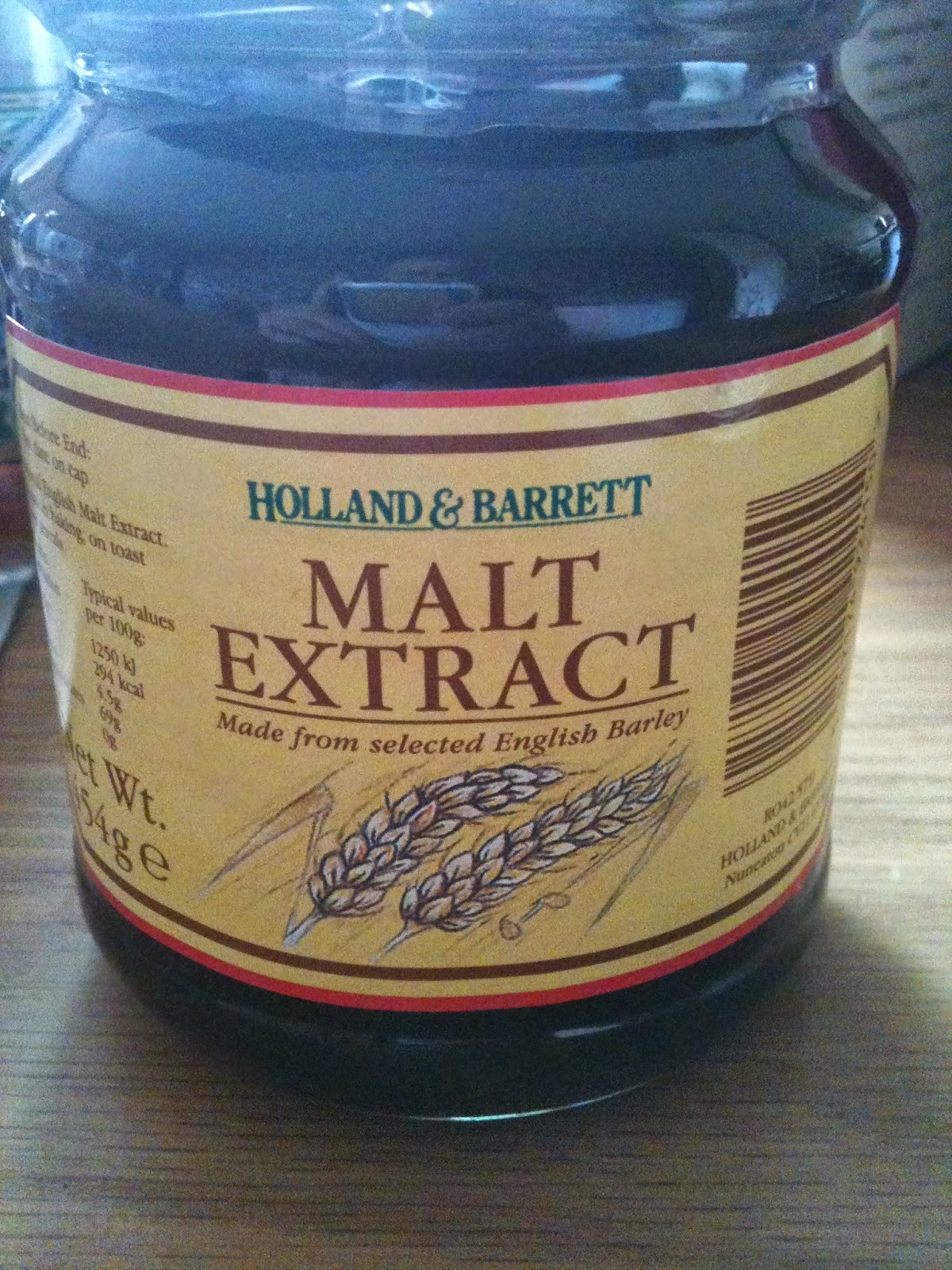
For those of you who will never meet malt, or a mash tun there is an alternative. Go to a whole food shop and buy one of these.


As best as I can estimate, this jar contains 11 fl oz of malt extract weighing 16oz, so this makes a density, specific gravity, or OG of 1450 or so. Dilute this with 4 imperial pints of water and you will have a re-hydrated wort of about OG1054.

Wort is a brown, runny, very sweet liquid that is extremely sticky when it dries. It could be described as a kind of dilute synthetic honey, that is very ancient in origin and is possibly the first process that was ever made with cereals. It could be that cereals were first cultivated, not for their staple qualities e.g. flour, gruel or bread, but instead for their status potential, sugars.

Many of the early settlements in the Fertile Crescent had special buildings with smooth floors, made of beaten earth, clay or lime plaster which are ideal as malting floors. All that is then required are containers within which to heat the crushed malt and water (the mash) to make a sweet wort. Merryn's M. Phil, entitled Barley Malt & Ale in the Neolithic (1999), looks at this, and the archaeological evidence for it, in some detail. One particular site, Beidha, was excavated in the late 1950s by Diana Kirkbride, a member of Robert Braidwood's team. She describes a smooth plaster floor with 'thousands of grain impressions'. This is probably a malting floor. The site is dated to the 8th millennium BC.

There is a Biblical expression: "The land flowing with milk and honey". Some Biblical scholars have made tortuous explanations to explain this phrase - they write about how wild bees' nests in cracks in the rocks would ooze honey in the hot sun. More informed scholars explain that this phrase refers not to bee honey, but rather to some kind of artificial sweetness, perhaps made from figs or dates, or maybe even made from grapes.

This must be because these scholars do not recognise nor do they understand that cereals can be a source of sweetness, if processed correctly.

I think that this phrase 'land of milk and honey' refers to milk and wort. It is a metaphor, or a description of a land that is good for both cows and for growing grain.

It seems that Biblical scholars have overlooked the fact that wort (liquid sugars made from the grain) was once commonplace in Egypt and Sumeria, otherwise they would not have been able to make beer. This was probably common throughout the whole Fertile Crescent and the Biblical Israel.

With the rise of Islam in this area, alcohol has been proscribed. There is no further use for malt or wort, so the practices and knowledge of malting and mashing have died out completely there. Archaeobotanists and archaeologists who have done field work on cereals in Turkey and the Ancient Near East seem to be unaware of the malting, the mashing and the wort. It is outside their experience and so it is understandable that wort has been overlooked in archaeological interpretation.

Today Bouza is made, it can be described as a type of beer, however it is a wheat based beverage made by lactic fermention. It is no longer alcoholic.

So, why do I bother to go to all the trouble of mashing, lautering, sparging, boiling and all that washing of brewing equipment? After all, it takes a whole day, a huge amount of effort. The answer is that all of the Beer Kits that I have ever used produce a beer with a kind of metallic flavour. The Kit contains a large can of Malt Extract. No amount of boiling with extra hops, or anything else will make it taste any better.

I make my beer with the simple, basic ingredients. I use traditional techniques to make the wort because I think it makes a better tasting beer. At least, when everything goes to plan, it tastes good. Even when it's bad it is often not much worse than some of the bad commercial beer available in supermarkets.

Beer is changing, with the way it is made. Some commercial beers, in cans, bottles and on draught have this unpleasant metallic flavour. They have been made from malt extract.

I was disturbed recently by looking carefully at the contents lists of commercial beers. Some like Scapa Special say that they are made from "maris otter pale ale malt", or others "a blend of pale and roasted malts". I know these are made "from the grain" and not with malt extract.

Some lagers and stouts are labeled as containing barley, wheat and oats, with no mention at all of the malt.  I can't help but wonder if they have been made from syrups, much like the high fructose corn syrup so popular in the processed food industry. This could explain the uniform blandness of some of these cheaper beers.