Wednesday, 18 June 2014

The origins of the Viking bathhouse myth

We have spent some 10 years arguing that that the "first farmers", the Neolithic culture that brought cows, crops and ceramics to Britain 6000 years ago, possessed the material culture necessary for turning cereals into ale, and that there is sufficient archaeological evidence to merit investigation. Nobody in the archaeological community could be convinced. It is still considered to be a controversial theory. We have no idea why. Maybe it is a paradigm shift too far for some archaeologists to bridge, that cereals were initially cultivated for their potential sugars, a status crop, and not for their starches, a staple crop. So we considered investigating an era in which there should be no controversy.

We visited the island of Wyre in Orkney, and inspected "Cubbie Roo's" castle. This was built by Kolbein Hrugr, hrugr means "heap", he was a big man. It is mid 13th Century and one of the older mortar and stone built castles extant in Scotland. It is a fascinating site on one of the now remoter islands of Orkney. We were surprised, amazed and overwhelmed to find a stone built "mash oven" in an outbuilding round the back. Our excitement was because this could be the oldest mash oven in Europe. This building has a stone bench, perfect as an ale store, and drains. It would be very suitable for making ale, but so far archaeologists have interpreted this as just an ordinary oven.

Cubbie Roo's mash oven, Wyre, Orkney.


the medieval brewer, stirring the mash

We are lucky on Orkney to have well preserved Viking sites. A friend and neighbour suggested that we might like to look at the drains at the site on the Brough of Birsay.

Birsay is the late 10th Century base of Sigurd the Stout and his son Thorfinn.  In the Orkneyinga Saga they are renowned for their hospitality. We can imagine the great feasts they had there. This might even be the site of Sigurd's Yule Feast, where Kari slew Gunnar Lambi's son in front of King Sigtrygg of Dublin ( pp xxvii-xxviii, Orkneyinga Saga, edited by Joseph Anderson.)

Drains are significant for brewing installations. The mashing process makes sugars from the malt and these are very sticky and messy. Any spillage or accidents have to be washed away, and the brewing equipment has to be kept clean. A brewery cannot function without effective drains.

one of the massive stone lined drains at Birsay

There is a massive drain running down the middle of what I think is the head of the Viking causeway, most of which has been eroded by the sea. To the right of this causeway, looking back to the mainland, is the so called "Viking Sauna" (see photo below) with stone slabs on edge, supposedly to support wooden benching. I heard an expert on TV saying that "they poured hot water down the drain under these benches, to keep their bums warm". I think it's far more likely to be the brew house and ale store.

not the sauna - this is the brew house and ale store
On the left of the causeway, looking towards the mainland, is a building interpreted as a "Bathhouse or Sauna", in the photo below. It looks more to me like a mash house. It has a bench and a large hearth and drains along the wall. One end has been lost to the sea, and it is thought that there was a large hall or langskaill further out to sea.

the mash house, with large stone shelf & several drains

I was puzzled. These installations are little different to the Orkney Brewery, which is just down the road at Quoyloo. Rob Hill's Swannay Brewery, also on Orkney, uses the same installations - a mash tun and fermenting vessels. How on earth could anyone think that these buildings were a Bathhouse and a Sauna? Maybe they knew absolutely nothing about how beer is made.

When I get puzzled by archaeology, I like to read the original excavation reports. This tells me what came out of the ground and there are usually nuggets of really useful information that are lost or not mentioned in summaries.

The earliest reference to 'Viking Bathhouses or Saunas' that I could find came from Dr Alexander Curle's excavations at Jarlshoff, Shetland, published in 1935, in the Proceedings of the Society of Antiquaries of Scotland (PSAS 69). He wrote that "...the presence of such a drain, and the condition of the ash deposited within it, suggest the possibility of the remains of a bath-house existing nearby." (page 284).

Curle explains that this is the first Viking settlement excavation in Britain, and that his interpretations are based upon the work of Thorsteinn Erlingsson, who wrote about Icelandic settlements. In his book  Ruins of the Saga Time, published in 1895. Erlingsson describes the components of the traditional farmstead house, including the bath-stofa or bathroom. He describes it as being part of the main structure and it is not a separate building.

Jarlshof, Shetland - is this the bath house, hof, a religious building or a brewhouse?

The structure in question at Jarlshof (see photo above) was beneath a mausoleum and it was not excavated until the 1950s by JRC Hamilton. Alexander Curle did not actually excavate it. In the foreground is a large longhearth and a substantial drain. To the rear of the building there is what looks to me like the bowl or footings of a grain drier.

So how on earth could Dr. Curle know that it was a bath-house, other than making the assumption that it was, because of the drains and and a means of heating water?

This remained a mystery to me until I stumbled across Dr. Alexander Curle's excavation report for another Viking age site, at Freswick, Caithness, Scotland, published in the Proceedings of the Society of Antiquaries in 1939, see PSAS 73 . In this, he describes a feature that, at first sight looks very much like a small Roman style bath-tub, with a large hearth and drains.

I was devastated, despite the complete absence of any mention of bath-houses in the Sagas, here was an archetypal bath-house. The Sagas describe the practice of bathing in streams, lakes and rivers. There were even open-air hot baths in Iceland, thanks to the natural hot springs there. Otherwise the Vikings habitually bathed in tubs of hot water in the andyri or porch. Even the King of Norway took his bath in a tub. 

reconstruction of Snorri Sturlussun's 'bath house' makes use of a hot spring, 
it is in the open air and is nothing like the buildings at the Brough of
Birsay & Jarlshof.

Then one day I re-read "The Vikings in Scotland" by James Graham-Campbell and Colleen E Batey. On page 198, the Viking settlement at Freswick is discussed:

"... as part of the re-examination of this building through  the surviving records, several problems became clear, the most significant being the complete stratigraphical separation between the secondary structure and the underlying drain. These could never have been associated and thus the secondary building is unlikely to have been a bath-house."

It was now obvious to me. Dr Alexander Curle was already aware of Freswick when he excavated Jarlshof, and this had influenced his interpretation. It has also influenced the interpretations of Viking sites for many other excavators and archaeologists since then. Whenever they find drains and a means of heating water, they interpret it as a "bath-house", even though the original archetype has been found to be wrong.

Interestingly the Brough of Birsay was excavated under the direction of Dr Curle's daughter-in-law, Cecil Curle, so she would have followed the family tradition and their interpretations. 

In short, most archaeologists do not know how to make beer from the grain. They certainly drink it, and they may even have made beer from kits, but they do not understand the processes, and so they do not recognise the installations in any era up until the late Mediaeval when monasteries brewed.

What a sad loss.
----------------------------------------------------------------------------------

further reading
We presented a poster at the 7th Experimental Archaeology Conference, Cardiff University. It can be downloaded here:

Where were the Viking Brew Houses? 


more reading (added June 25th 2014) 
We wrote a paper for the EXARC Journal, it has been peer reviewed and it is currently on the member's only section of the Journal. It will be released for everyone to access, download and read in the near future, probably later this year.

In the meantime, here is a shorter version of that paper, published in the Orkney Archaeological Society Newsletter. We called it 'Where did the Vikings make their ale?'.

Update

Lars Marius Garshol has been studying Norwegian Farmhouse brewing for a long time and is an expert in this field. The methods and equipment that he describes seem to us to have changed very little, if at all, from those of the 10C.
For anyone who wishes to understand or recreate Viking style brewing his work is an invaluable resource. Here is his Blog.

Lars' Blog


Monday, 9 June 2014

Ale or mead - a numerical and functional analysis

Mead is frequently mentioned in the early Germanic literature, more so than ale. This, together with the Saxon mead halls of the poetry, gives the impression that mead was widely available. Everyone drank mead because honey was widely available. However, a functional and numerical analysis does not support this.

Sugars ferment into alcohol. Mead is made from honey and ale is made from malt sugars. These malt sugars are made in the mash tun by heating crushed malt with hot water, 65C, for about an hour for the malt enzymes to convert the malt starches into sugars. In both cases the relative amounts are about the same:

2 to 3lbs of honey to make 1 gallon (Imperial) of Mead
2 to 3lbs of malt to make 1 gallon of Ale or Beer, or approximately 1kg to 3 litres.

Prior to 18th Century, bee keeping was unscientific and honey gathering was a destructive process. Thomas Wildman in 1768 describes these improvements. Traditionally bees were kept in voids of many sorts, skeps, hollow logs, and clay jars.

a traditional skep details here

The bees created their own combs inside, often cross attached. The only way to get the honey was to destroy the colony.

In 1860, L.L. Langstroth developed a design for hives with exchangeable combs and it was now possible to harvest honey without damage. Before then honey was a scarce and valuable commodity, and highly prized.

Langstroth hives - a Victorian invention details here
However malt is readily available. All that is needed is a crop of grain, preferably barley, and a malt barn to process it in.

Today honey is about 10 times the cost of malt, weight for weight. In mediaeval times it may well have been even dearer.

Bere barley is an early, primitive but very vigorous strain that was certainly grown by the early Viking farmers in Orkney and is still grown to this day. It is the only arable crop that will grow in the far North in places like Iceland. Gordon Childe noted that the impression of a grain of Bere was found on an Unstan Ware pot in Orkney, dating from the 4th Millennium BC.

Bere is a "skinny" grain. It does not contain as much starch as modern barley varieties. So to make ale from Bere malt the ratios will be more like 3-4 lb of crushed malt to make one gallon of ale

Svein Asleiferson was a renowned Viking warrior. He is mentioned in the Orkneyinga Saga. He was also known to be a fastidious farmer. He would spend the spring personally supervising the sowing of his crops, then spend the summer on raiding trips. When he returned in autumn he would again supervise the harvesting of his crops, and again go raiding until the start of winter, when he would return and spend the winter on Gairsay together with his 80 fighting men. They would probably not stay loyal and remain with him, unless he could provide some sort of hospitality for them.

I suggest that he was growing his grain to make malt and ale and not for bread, gruel or porridge.  I estimate that the warriors and retinue would drink the ale from about 4 tons of malt in this time, about 2,200 gallons or 30 barrels. This could easily be grown on 2 or 3 acres of good land, according to yield figures from Orkney Agronomy Institute. Finding 2 or 3 tons of honey on Orkney would not be easy.

It is interesting that the Viking poetry refers predominantly to mead, with very little mention of ale, whereas the Viking Sagas refer to ale far more than mead. I suggest that mead was quite scarce and highly prized, fit for the Kings and Gods. Ale was for the warriors and mortals.

this post was written by Graham


further reading

Eva Crane, The World History of Beekeeping and Honey Hunting
Eva Crane, The Archaeology of Beekeeping

The Bee Hive: a history of beekeeping

Wednesday, 4 June 2014

malt is a confusing thing

It seems that malt is a very confusing thing. The word 'malt' means different things to different people. Some people immediately think of malt whisky - a single malt or maybe blended malts. Others might think of a malted milky bedtime drink, like Horlicks. Other brands are, of course, available.

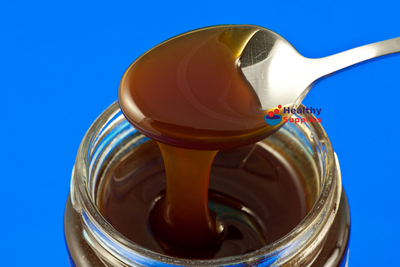
a sticky sweet spoonful of malt extract (photo: healthysupplies.co.uk)
a modern product
Or is it that sticky, viscous, sweet, dark brown syrup like stuff that you get in a tin in your beer kit? The stuff that you mix with water and boil? No, that is malt extract.

Malt extract is considered to be very good for you - it's an added ingredient in many breakfast cereals. When I do demonstrations, I always take a jar of malt extract for people to taste. They are reminded of their childhood, and of eating a spoonful every day, for the B Vitamins.

Malt extract is made by boiling wort in a vacuum and the technique was only discovered in the late 19th Century AD. Oh, and there is malt vinegar as well. And malt loaves. Many brewers use a liquid or a dry malt extract. Known as LME and DME, it's a main ingredient of beer kits in the 21st Century. Malt extract is also important to the modern food processing industry, particularly so in the USA it seems.

Prohibition forced maltsters to think of a different way to process and sell their malt, other than as alcoholic drinks, like beer and whisky. Prohibition was the death knell to many American breweries in the 1920s.

It's no wonder that so many people are confused about malt.

malt whisky. nice but not neolithic
I had a conversation about the archaeological evidence for malt with a fellow tour guide a few months ago. I thought we had a strange exchange of views, but it was only when they turned to go and mentioned that they were very surprised that the neolithic folk knew all about distillation. Did they use the pots for distilling? I realised that they thought I was talking about malt whisky manufacture in the neolithic. For this person, the word 'malt' meant whisky and nothing else.
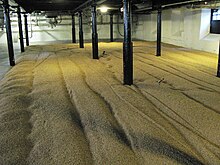
malt on a traditional malting floor

For me, 'malt' means partly germinated grain which has been carefully dried for further processing by brewers and/or distillers. It is traditionally made on the malting floor. The grain has been steeped and aerated, then it is spread out on the floor in a cool, dark, well ventilated building to begin to grow. Once the rootlet and shoot begin to show, it is gently dried in a kiln. We had been talking about two very different things. As part of writing this blog, I checked the  Encyclopedia Britannica for its' descriptions of what malt is, how it is made and what it is used for.

Much of the detail is correct, but there are a few salient details omitted. For example, there is no mention of the air rests that are an essential part of the steeping process. If you just leave the grain to soak or steep without air rests, then the grain will be killed. It will, effectively, drown. Ancient and traditional techniques include leaving the grain in a bag in a shallow stream. This provides the essential oxygen and water for the germination process to begin. Modern methods use huge steep tanks. 

Grain needs both water and oxygen to begin germination. If the steep is not aerated, then it will not take long for the water and grain to smell horrible and for the grain to be bad. It will not begin to germinate, you will not have any enzymes to convert starch into sugars and you will not be able to make ale. Or beer. Or whisky.

In the first stages of germination of any grain - wheat, barley, oats or rye - the enzymes necessary for the conversion of starch into sugars are liberated, and then the growth begins. If this continues, starches are used up, so it is important to stop the growth as soon as the shoot and root appear amongst most of the grains. This is usually when the acrospire (rootlet and shoot) are one third the length of the grain.

Often, descriptions in the archaeological and anthropological scholarly literature of how to make malt are not accurate. Some describe malt as 'toasted barley sprouts'. Anyone who says that malt is like toasted, sprouted barley, suggesting that it is something like dried bean sprouts, have obviously never handled proper malt.

It is very important to talk to a maltster to understand how to make malt, to ask the practitioners, the skilled people who make it. Craftsmanship not scholarship.

Graham brings a 25 kilo sack of crushed malt from the brewing suppliers into the house. Then he makes beer with it, using basic equipment - a mash tun, a boiler and fermenters. Lots of people have tried Graham's home brewed beer and it is considered to be top quality, good and tasty.

What is this crushed malt in the sack?

Where does it come from, who makes it and how?

As I was doing the mashing experiments in the garden, using beeswax sealed earthenware bowls as mini mash tuns, I became more and more interested in the malt and how it was made. I studied the science of grain germination physiology, learning about what happens inside the grain as it begins to grow. It is fascinating and complex, worthy of a blog post of its' own.


this post was co written by Graham and Merryn

Friday, 23 May 2014

trough mashing, tridents, fire cracked stones and ale

introduction and update
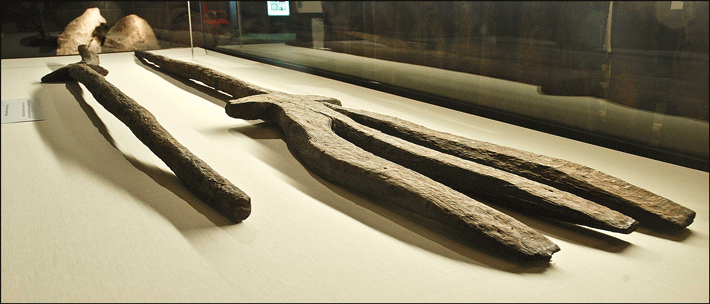
This blog discusses some of the practical and technical details of mashing in, Neolithic and Bronze Age style. It's about troughs and tridents, hot rocks and prehistoric burnt mounds. It was first published in the summer of 2014. I've edited it, added a few more details and brought it a bit more up to date. Why did I do this? Because it's now 17th February 2022 and the World of Stonehenge Exhibition has just opened at the British Museum in London. Among the 400 wonderful exhibits are two large wooden tridents, carved from solid oak and each measuring over two metres long. They were discovered near Stainton, Carslisle, in 2013. What were these mysterious objects used for? Archaeologists were puzzled. Suggestions at the time included eel spears or hay forks, neither being particularly convincing.

There was quite a lot of discussion on social media about the various possible and probable uses for these enigmatic objects made from solid oak. I'll try and find a link to it. It was a lively and, at times, argumentative discussion.

One suggestion that Graham and I made at the time was that these wooden tridents were ideal as mash forks, a traditional tool used for stirring the crushed malt into hot water in the 'mashing in' part of the ale and beer brewing process. Initially the idea was met with some negativity and suspicion. However, it now seems to be one of the accepted interpretations and, I am pleased to report, is included in the newly published book of the 'The World of Stonehenge' Exhibition:

"The tridents may have been used for fishing or eel trapping, or in agricultural activities as hay forks, and even as mashing forks in the process of beer brewing. It is likely that farmers were using some of their cereal harvests to make alcohol for social and religious gatherings rather than consuming only sober porridge and savoury foods." 

(Garrow, D. & Wilkin, N. The World of Stonehenge, published by The British Museum, 2022 page 50)

Neolithic-wooden-trident
(© Tullie House Museum and Art Gallery Trust)
This image is from a news item in Archaeology, Friday December 6th 2013. see:https://www.archaeology.org/news/1610-england-neolithic-wooden-tridents

At the World Archaeology Conference (WAC 6) in Dublin, 2008, archaeologists from the Moore Group demonstrated how to mash in a wooden trough using fire heated stones. They used a garden fork to transfer the stones into the trough.  Inspired by their brewing experiments Graham and I mashed in a replica stone trough at Bressay, Shetland, the site of a Bronze Age burnt mound, in the summer of 2011. We used a garden fork to stir the mash and, at the time, we wished that the handle of the fork could have been longer. Something like these tridents would have been perfect for the job. See our blog trough, mash and wort for more details of these experiments and demonstrations.

These two wooden tridents were carved from single pieces of oak and would certainly have been sturdy enough for the task of stirring the mash in a trough in the ground. They would also have been suitable to remove hot stones from a fire, transferring them into the trough of water in order to heat it and maintain a good mash temperature. The tridents have been dated to c3650 BC and were found in a palaeochannel at Stainton, a site associated with burnt mounds and much more. See here for more details of the excavations. 

And now, after this updated introduction, let's go back to the blog that we wrote in the summer of 2014:

what is a burnt mound?  

In Ireland, over 5000 burnt mound sites are known. In Scotland, about 1900 have been excavated so far. They also found in England and Wales. The burnt mound itself is a pile of fire reddened and cracked stones, often in a semi-circular shape as they have been thrown onto the heap. The stones were put into a fire to be heated up, then dropped into a trough of water in order to heat it. There are many things that hot water can be used for.

Archaeologists agree that burnt mound sites are something to do with hot rock technology - using hot stones to heat lots of water - but to what purpose? That's what archaeologists can't agree on. There have been several suggestions:

- they were used to cook meat. The idea is that you wrap a big piece of meat in straw and leave it in the heated water trough for several hours. You probably have to keep putting more hot stones in, as the water cools. There are easier and more efficient ways of cooking meat.

- they were a sauna or sweat lodge. I don't understand this. In my experience, a sauna has a few hot stones upon which water is splashed to make steam. You don't need a large trough of water and lots of hot stones.

- you can wash sheep fleece or wool in them. This seems to be a practical idea. Fleece must be washed before it is spun into wool for clothing.

None of these suggestions are controversial. Most people reckon that the troughs would have been multi functional - a bit like the kitchen sink only much bigger. When it was suggested that these sites could have been used for making beer, some archaeologists became ever so slightly annoyed. Although the idea was first put forward in 2007, backed by successful experimental work and sound brewing theory, it is still considered by some to be controversial. I don't know why. 

Hot rocks are ideal for heating large amounts of water to the perfect temperature for mashing, which is between 65 and 67 degrees Centigrade. Getting the water much hotter than this is very difficult. We found it impossible to get the water to boil. 

troughs as mash tuns
The possibility that they were used in the making of ale or beer was first suggested by Declan Moore and Billy Quinn of Moore Archaeological and Environmental Services Ltd. I first met them at a Conference about beer and brewing in prehistory and antiquity, held in Barcelona, October 2004. I gave a paper about the importance of malt in the brewing process. Billy and Declan asked me whether it was possible to make beer in a hole in the ground. We agreed they should have a go.

The following year, they came to Orkney to meet Graham and to learn a bit more about how to make ale and beer from the grain. They tasted the wort and were surprised how sweet it is. They tried Graham's beer and liked it. Then they went back to Ireland to do their own research into hot rock mashing in a trough. It went extremely well, and led to their now famous video on You Tube. They wrote an article for Archaeology Ireland and there have been several more articles online since then. The details of their subsequent work are on their web page.

They gave a demonstration of the technique at the Sixth World Archaeology Conference in Dublin, 2008. I was lucky enough to be there and it was spectacular. The smoke, the steam, the hot stones and the aroma of the mash! All of these things added to the magic and drama of the demonstration. If an archaeologist is looking for an impressive show of ritual, power and transformation in prehistory, then a hot rock mash ticks all the boxes. 

One day in the summer of 2009, I got a phone call from Billy. He told me that a trough with grain in it had just been found in Wales. The well preserved trough, with wood lined water channels, was excavated by Dave Chapman of Ancient Arts who went on to do some mashing and brewing experiments of his own. He was successful, as reported in British Archaeology news.

We had to try this for ourselves. So far, we had been mashing small amounts of crushed malt in earthenware bowls. It was clear that the 'hot rocks in a trough' technique worked much better. Graham made a small wooden trough, about one third the size of the real ones, and we had some fun mashing with hot stones. It is best to use stones from the land. Rocks collected from the beach explode when being heated in the fire. This is very dangerous.

We had an opportunity to mash in the replica trough at Bressay, Shetland in the summer of 2011. The same trough that was used to experimentally wash fleeces. We cleaned it well and luted the corners with local clay, to prevent water leakage. This explains the grey colour of the water in the photo below. There was initially some concern that there might be a problem. It turned out to be the clearest, sparkliest ale we have ever made. Bentonite powder, a derivative of clay, is used today to clear wine and beer.

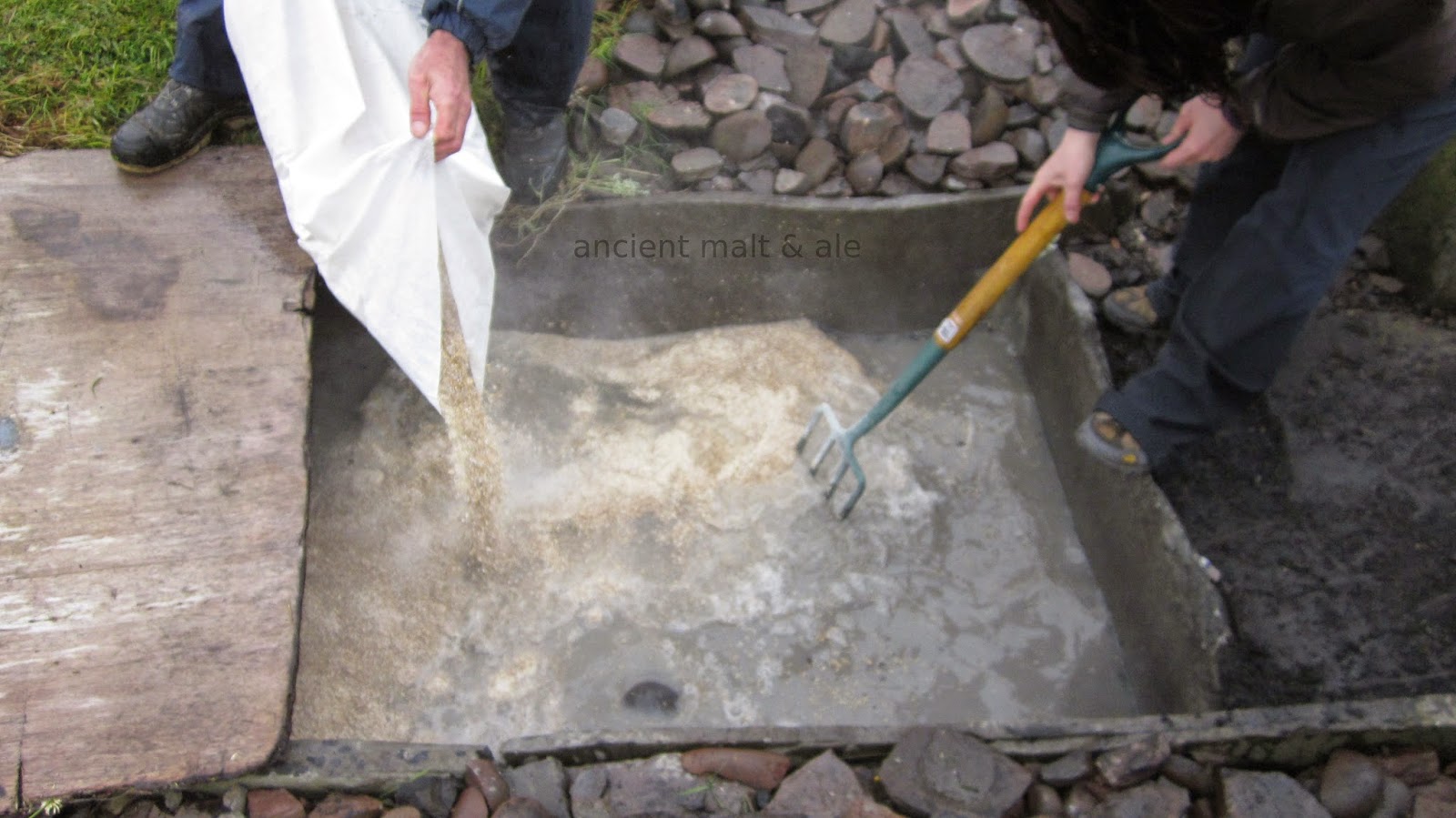
the strike: 50 kg of crushed malt is added to about 250 litres of hot water in the replica Cruester trough, Bressay, Shetland.
We used a garden fork to stir it about.
 
A successful mash. Adding a few hot stones kept the mash at an ideal temperature for the conversion of starch into sugar, which took about an hour. We put a piece of wood over the trough for heat retention. 

crushed malt & water transformed into 250 litres of wort in the trough, enough to make plenty of ale for a feast.
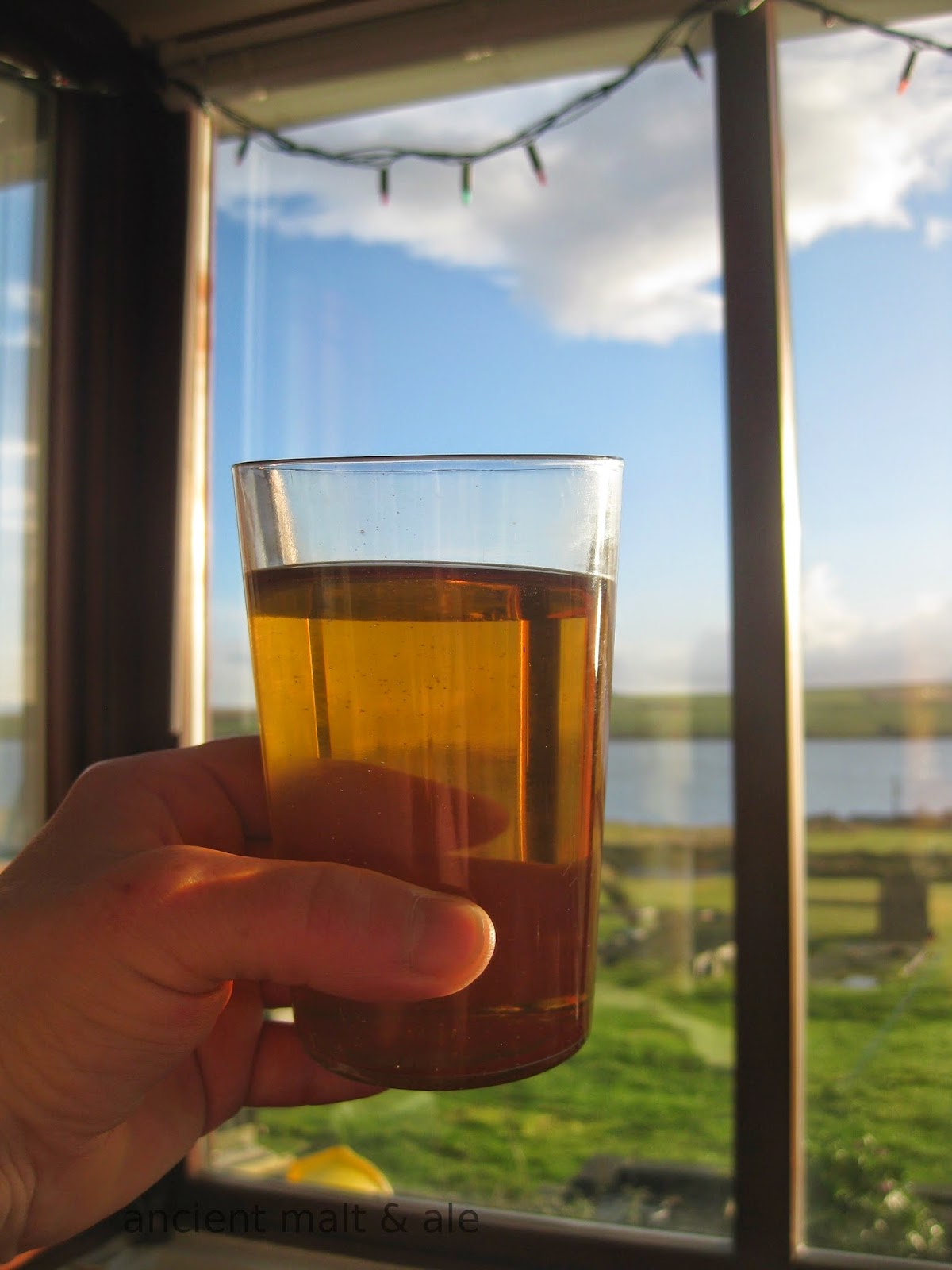
cheers! our clear and bright Bressay Ale.

After taking some of the wort from the trough using jugs, we added brewer's yeast and fermented it for several days. We only had one fermentation vessel, so we could not make use of more than 6 gallons of wort.

Next morning, when we went to empty and clean the trough, all the wort had drained away. Only the spent grain was left. Although we had clay luted it, the reconstructed trough is above the local water table. Meadowsweet flowers, about an ounce and a half, were added to the 6 gallons of wort when it had finished fermenting. Also, we had a ferry to catch and so our time was limited.

The result was a strong, clear ale. You can see all the pictures of our Bressay mashing and brewing adventure on my Facebook page. The ale kept really well.

We bottled it and sent some to the Past Horizons people to taste. It did take a while to open the parcel, but I think it was probably worth it.


neolithic burnt mounds, wooden tridents and fire cracked stones
There are excavations taking place in Northumberland, not far from Bamburgh Castle, organised by the Bamburgh Research Project. Several burnt mounds have been excavated and archaeomagnetromic dates that have so far been obtained indicate that these burnt mounds were in use during the Neolithic. Pottery finds support this interpretation. The dates obtained so far are 6,230 +/- 50 years BP at 95% confidence. There is a good summary of the excavations here.

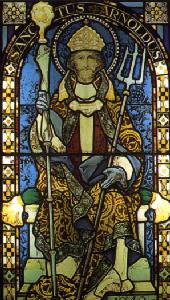
St.Arnoldus.jpg
Bishop Arnold of Soissons
In December last year, there was much discussion and argument on social media about some neolithic wooden tridents that had been found at a multi period site in Cumbria, which included several burnt mounds. What were these long handled wooden 'forks' used for? Fish prongs? Or maybe they were used for catching eels? Interpretations varied amongst archaeologists.

We think they would be a useful implement for stirring the crushed malt into the hot water - the strike. The crushed malt, also known as grist, clumps together when it is being added to the hot water. It is important to stir it about. It is also necessary to stir the mash when you add more heated stones. You don't want to have hot spots, you want to maintain an even temperature throughout the mash. The fork can also be used to move the hot stones about in the trough, if necessary.

In the Bressay trough, we used a garden fork. The handle was far too short and a long handled wooden trident would have been ideal.

Bishop Arnold of Soissons (who lived from 1040 to 1087) was the patron saint of brewers in Belgium. He is depicted with Bishop's mitre and a mash rake, which looks very much like those neolithic wooden rakes excavated in Cumbria.

Several neolithic buildings have been excavated at Kingsmead Quarry, Berkshire, England, by Wessex Archaeology. They have been interpreted as houses. This site is another very complex, multi period discovery, with finds ranging from the mesolithic, neolithic and Bronze Age through to post medieval structures.

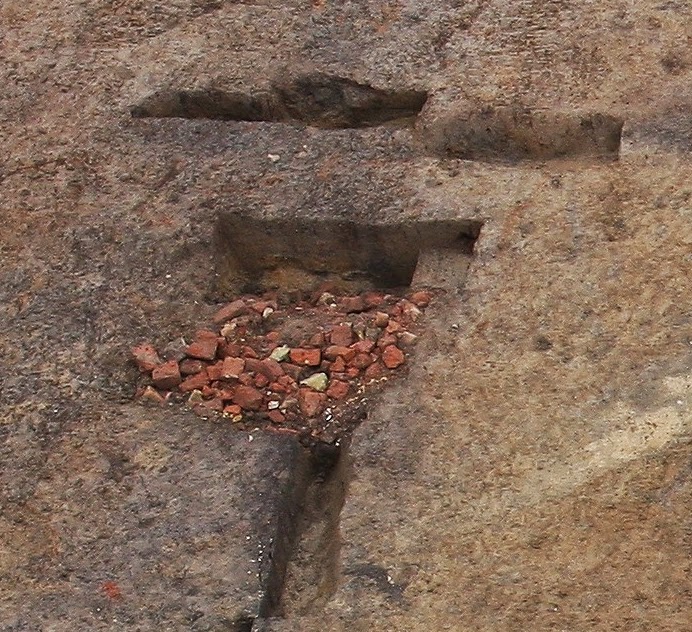
One of the four neolithic rectangular timber buildings, or 'houses' at Horton caught our attention when we were looking at the images online. There seem to be some fire reddened rocks close by the trenches that reveal the outline of the building in the photo below. What are they? They look rather like modern bricks, but the stratigraphy indicates that they are contemporary with the building. Are these stones an indication of hot rock technology at neolithic Horton? If so, exactly what were they doing in and around this wooden building, over 5000 years ago?

the footprint of a neolithic rectangular timber building at Horton, Kingsmead Quarry, with a big pile of fire cracked stones.
Details of the excavation here.


We looked through the reports online but could not find a reference to them. Quite a mystery! Graham managed to enlarge the section of the image with the rocks in and here it is. In close up they look even more mysterious. We look forward to reading the full excavation report to see what the interpretation of these rocks might be.

a close up of those mysterious fire reddened stones.

We would love to hear your ideas about burnt mounds, troughs, mash tuns and the possibilities of hot stone technology. This technique, of heating water and the mash with hot stones, is so successful that it has been done from the Neolithic to Viking times. Some burnt mounds provide dates that indicate this.

Monday, 19 May 2014

desperately seeking sugars

A few years ago, we were standing beside the trench of an excavation on Orkney. Lots of serious digging was going on. One of the diggers looked up, recognised us and said something like...

oh hello! Are you those brewing people?

Yes, that's us. 

Can you tell me how to make Heather Ale?

Of course, we replied. No problem.

Because we've got loads of heather growing around our house and we want to make some beer with it! 

But you can't make beer from flowers, we replied. Flowers provide the flavouring, the preservative ... you have to add sugar. That's what ferments into alcohol. 

beer made from flowers?
We began to think that, maybe, when some archaeologists had come across our work on prehistoric brewing and heard about our ancient style meadowsweet ale, they thought that we had made it from meadowsweet flowers. We had not considered that before. Later that month, our suspicions were confirmed when we did a prehistoric brewing demonstration at a neolithic feast, organised by the Orkney Archaeology Society. I think it was in 2008. Over an open fire, with just the hot ashes, we heated some water in an earthenware bowl. It was our mini mash tun.

When the water was clear enough for us to see our reflection, we knew it was the right temperature.We added the crushed malt. This is known as 'the strike'. The local hens came running when we got the malt sack out of the van. Soon, there was the sweet aroma of the saccharification, this is when the enzymes re-activate in the mash tun and turn grain starch into malt sugar. It smells delicious. Folk began to wander over to find out what was going on. Some of them tasted the mash.

We were asked how much sugar we had added. None, said Graham. All the sugars come from the malted barley in the mash tun. No, go on, there must be some added sugar in there! No, we assured them, there was no added sugar. Later a couple of ladies asked how many flowers we had used to make our ancient brew. The answer was about an ounce and a half for five gallons of ale. They walked away, shaking their heads in disbelief. I am quite sure that they had confused what we were doing with making a flower wine.

Check out the recipes for "country wines" online - they all have a couple of pounds of sugar per gallon in the list of ingredients.

Quite simply, it is not possible to make ale or beer from flowers.

beer made from birch sap? 
Birch sap contains very few sugars, less than one per cent. It is more like a sweet water. You could collect a lot of it, then boil it to make a syrup but it is hardly a practical way of obtaining sugars for fermentation. John Wright, writing in the Guardian, explains how to make birch sap wine. The ingredients include 1.8 kilos of sugar and grape juice concentrate.

beer made from bread?
Some archaeological and anthropological sources suggest that beer and ale were made from bread in ancient times. There is a common myth that beer was discovered when a loaf of bread fell into a bucket of water and fermented overnight.

If it was really possible to make beer from bread in ancient times, then why aren't we doing it now? Surely people would be queuing up to buy loaves of bread so that they could throw them into a bucket of water to ferment for a few days. Home brewed Egyptian beer. It might taste horrible. It might be a bit weak and sour. But that's what it was like in the past. Wasn't it?

Sorry to disappoint you, but it is not possible to make beer from bread. The biochemistry does not allow it. There are no sugars in bread to ferment into alcohol. However, a quick search on the internet shows how the idea that bread can be somehow transformed into beer still prevails. There are lots of different methods suggested. Here is just one example:

" Barley was used to make beer. The barley was combined with yeast and made into a dough which was part-baked in a stone oven. It was then crumbled into a large vat, mixed with water and allowed to ferment before being flavoured with dates or honey. Recent evidence suggests that barley malt may also have been used in the process."  www.historyonthenet.com

If you crush the barley into flour, then make a bread you have destroyed the fabric of the grain. There is no possibility of germination, no possibility of starches being turned into sugars. No beer or ale. Baking in a hot oven alone would be enough to destroy any enzymes. It would also destroy the yeast. This method would not work.

The recent evidence, referred to above, is that of Delwen Samuel. Analysis of residues on 3000 year old ancient Egyptian pottery showed erosion pits from the enzymatic action in the the individual starch granules. This proved that the grain had begun germination - it was malt.

Delwen Samuel's papers are available online. In 1997 she published 'Fermentation Technology 3000 years ago. The Archaeology of Ancient Egyptian beer'. The scanning electron microscope images of pitted starch granules can be seen there.

beer is made from malt
To make ale or beer, you need malt. This is grain - barley, wheat, oats or rye - that has begun to germinate. Germination stimulates the production of the starch converting enzymes. Making malt is a specialised craft in itself. There is far more to it than soaking grain in a bucket, then letting it sprout. The two crafts of maltster and brewer are separate today. The maltster supplies the brewer with malted grain.

mashing 
The brewer heats the crushed malt with hot water in the mash tun to make malt sugars. Sugars ferment into alcohol. It's a simple but very obvious thing. Over the years, we have given demonstrations of what happens in the mash tun, of how the crushed malted grain is heated up gently, to make malt sugars. This is known as the mash, or saccharification - the enzymes in the malt are active at about 65 to 67 degrees Centigrade, so this is the temperature to aim at in your mash tun. 

The mash tun can be an earthenware bowl, heated in the ashes of a fire. We have done this many times, the image below is from a demonstration at Eindhoven Museum. I went there in 2009, as part of a brewing forum organised by EXARC.

a mashing demonstration at Eindhoven,

Or the mash tun can be a wooden trough in the ground, heated by hot rocks. We have done this several times. The pioneers of the technique are the Moore Group archaeologists. The video of their hot rock mash in a wooden trough, first done in 2007, is now legendary.

Given that thermometers are a recent invention, brewers in the past learned how to judge this temperature by skill and experience. John Tyndall, giving a lecture on Fermentation at the Glasgow Science Lectures Association, October 19th, 1876 said

"Our prehistoric fathers may have been savages, but they were clever and observant ones ... the art and practice of the brewer are founded on empirical observation ... the brewer learnt from long experience the conditions not the reasons for success" 

In the scholarly literature and in many of the archaeological and anthropological academic papers about making beer in ancient times, a wide range of beer making ingredients have been suggested - barley, wheat, dates, figs, fruit, berries, birch sap or birch syrup, honey or flowers and leaves.

All that any brewer needs to make ale or beer is water, malt, herbs and/or hops and yeast.

Wort is the sweet liquid that comes from the mash tun after sparging. The exotic ingredients of the scholarly papers can enhance the ale in several ways, by preserving, flavouring or by providing medicinal or other properties. But they do not provide the primary fermentable sugars. This comes from the grain, which has been malted, mashed, lautered and sparged. Barley is a reliable source of sugars for fermentation. You just need to know how to make it.

There is no need to go desperately seeking sugars.

Just understand the malt, the mash and the saccharification that occurs in the mash tun.


further reading
The Big Book of Brewing by David Line
In our opinion, this is the best book to read on the processes of malting, mashing, lautering, sparging and fermentation.

------------------------------------------------------------

two years later 
I went to a talk recently, it was about the neolithic, grooved ware and the use of pottery. My impression, after talking to several archaeologists, is that it still seems to be a widely held belief among archaeologists that 'alcohol production' in prehistory was no more than guesswork. It involved mixing up random stuff to make 'something alcoholic that did not taste very nice'. No skill involved.